You just bought a Squier Debut Telecaster. You’re excited. You’ve got the look, the 75-year Fender legacy in your hands, and the itch to play.
But then you plug it into that cheap ass “starter” amp that came in a cardboard box, and the dream dies. It sounds thin. It’s fizzy. It’s uninspiring.
After 41 years of playing, I’m here to tell you: The amp is 40-60% of your tone(most popular opinion).
Let’s say you plug a $3,000 Custom Fender Strat into a bad amp, it sounds like a toy. If you plug a $150 Squier into a “Forever Amp,” your sound can chop down mountains!
By the end of this guide, you’ll understand why your current setup is holding you back and which is the best amp for your Squier.
I could tell you the amp is more important all day, but watch what happens when a $5,000 guitar meets a cheap amp vs. a Squier meeting a ‘forever’ rig!
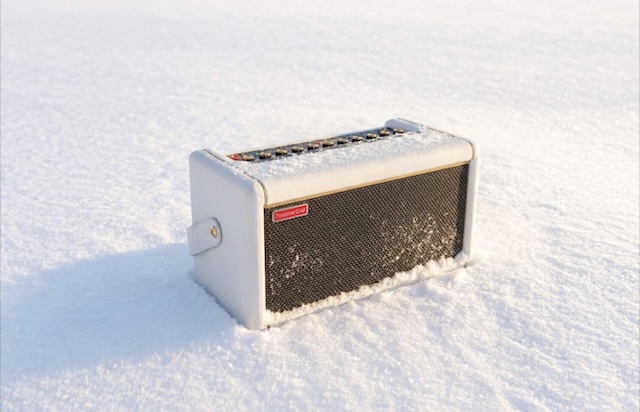
It’s probably not your guitar, it’s the cheap amp. Small speakers and flimsy cabinets make Tele tone sound thin and fizzy. A solid “forever amp” (like a Katana, Tone Master, or Spark) will make your Squier sound bigger, clearer, and more inspiring, so you practice more and improve faster.
Most of the time, when someone mentions a forever amp, they’re talking about a super versatile, all-in-one guitar amplifier.
The idea is simple; it covers such a wide range of sounds that you never need to look for another amp again.
It’s got clean, crunchy, and raging high gain tones, often all packed into one box and ready for whatever genre or gig comes your way.
The whole concept taps into the endless search players have for gear that really feels right.
I’ve heard friends joke about selling every other amp just to stick with their forever amp, simplifying things and saving a bunch of hassle (and cash) in the long run.
Most entry-level amps are built with 6-inch or 8-inch speakers housed in thin, semi-open particle board backings. In the industry, we call this the “bee in a jar” sound.
There is a physical reason for this: a small speaker cannot move enough air to produce the low-mid frequencies that make a guitar sound “thick.”
When you play a Telecaster, you are looking for that famous “twang” and “snap.” Check out my Squier Classic Vibe ’50s Telecaster review for more details.
On a cheap starter amp, that twang becomes a piercing, ice-pick-to-the-ear treble because the tiny speaker is screaming to be heard.
The psychological impact of this is devastating. When your gear sounds bad, you practice less.
When you practice less, you never develop the habits that build character and destiny. You think you’re bad at guitar, but the reality is that your equipment is lying to you.
A “Forever Amp” is an investment in frictionless practice. It’s the difference between struggling to find a decent sound and being inspired the moment you flip the standby switch.
There is a common misconception that you should buy an expensive guitar first and a “good enough” amp later. This is backwards.
Think of your guitar as the steering wheel and the amp as the engine. You can have a Ferrari steering wheel, but if it’s attached to a lawnmower engine, you aren’t going anywhere fast.
If you follow the standard beginner path, you will likely fall into the “Upgrade Treadmill”:
The “Entrepreneurial” approach and the one I’ve learned through four decades of gear acquisition, is to buy your Forever Amp asap! You spend $400-$600 once, and you never have to “upgrade” again.
This is how you live free from the constant cycle of buying and selling gear on the used market.
To qualify as a “Forever Amp,” a piece of gear must meet three criteria:
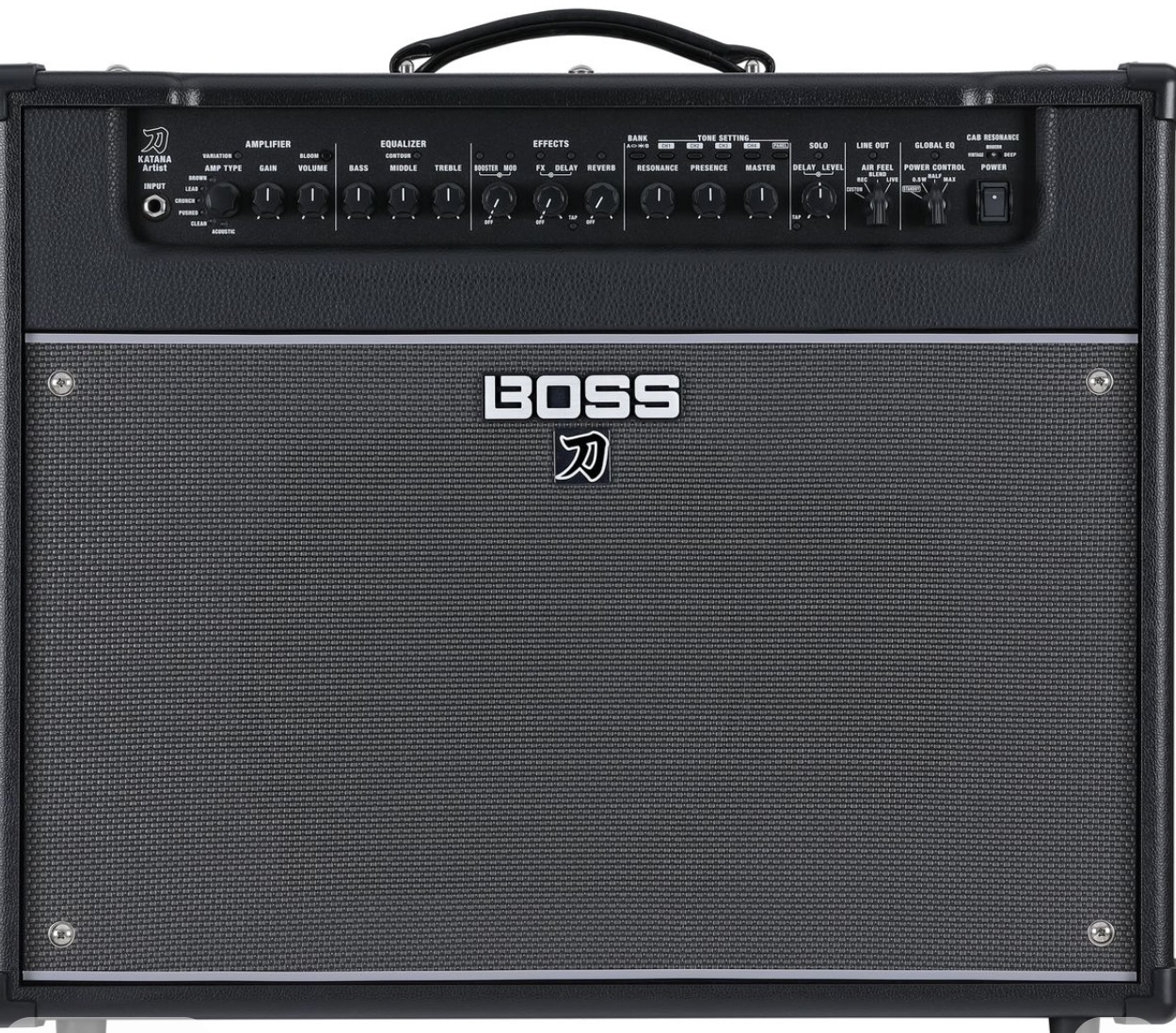
If you want one amp that does everything without a fuss, this is it. The Katana has become the industry standard for a reason. It uses an Analog Class A/B power section, the same tech found in high-end boutique amps, to push a full 12-inch speaker.
It removes “Choice Paralysis.” It has five distinct “characters” (from clean to high-gain) that are all usable.
What I love about the Katana is the “Power Control.” You can set it to 0.5 watts. This means you get the feel of a pushed, cranked-up amp while your family is sleeping in the next room.
It’s a habit-enabler. It allows you to practice at 11 PM without compromising the quality of your tone.
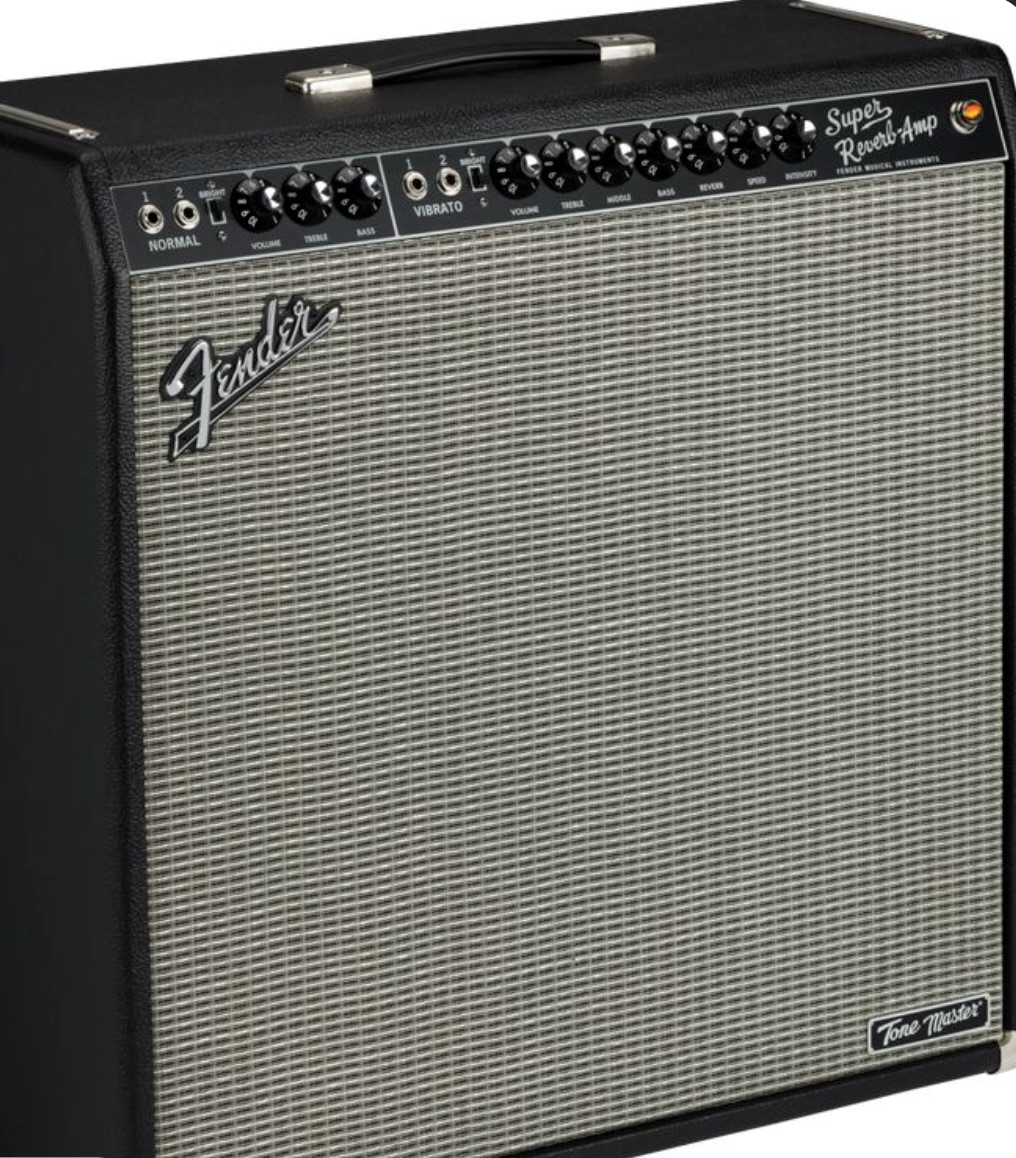
This is a high-ticket item, but it is the ultimate “Freedom” amp. It looks and sounds exactly like the tube amps I played in the 80s, but it uses massive digital processing power to emulate the tubes.
This is about Legacy. When you play through a Fender Deluxe, you are hearing the sound of 70% of the hit records ever made.
Whether you’re a “Silver Fox” like me, or a fresh young cub, you want the best sound that won’t break your back hauling gear. It weighs half what the original tube version weighs, and it has a “built-in attenuator” on the back.
It makes your Squier Debut sound like it cost $2,000 because it provides the harmonic richness that the Squier’s pickups are actually capable of producing.

⚡️I’m here to help you make affordable choices, especially when you’re just learning to play. Look at both options and decide what’s better for you. -Steve
| Amp Model | New (Amazon) | Pre-Owned (Reverb) |
|---|---|---|
| Boss Katana 50 Gen 3 | Check Price | Check Deals |
| Fender Tone Master Deluxe Reverb | Check Price | Check Deals |
| Positive Grid Spark 2 | Check Price | Check Deals |
This isn’t just an amp; it’s a practice partner. It’s a “Smart Amp” that connects to your phone via Bluetooth.
Beginners often quit because they feel “lonely” in their practice. They don’t know what to play or how to play along with songs.
The Spark uses AI to create a drum and bass track that follows your playing. It solves the problem of boredom. It turns a 20-minute scale exercise into a “Living Room Jam-out.”
For the entrepreneur on the go, it’s small enough to take on a weekend trip, ensuring your habits stay consistent regardless of your location.
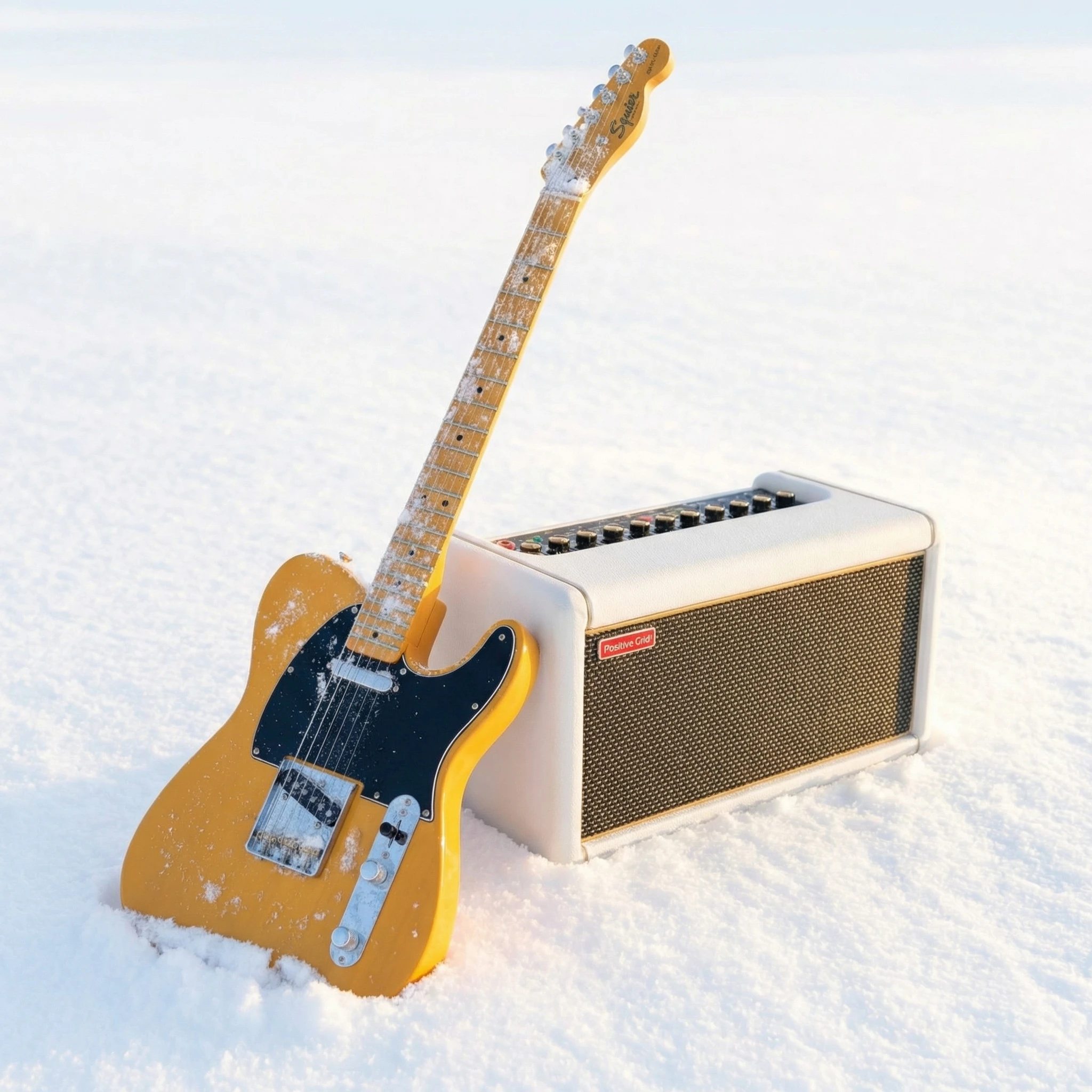
When you have a quality amp, you start to hear the “Soul” of your Squier Telecaster. You’ll notice the “snap” of the bridge pickup and the “warmth” of the neck. On a cheap amp, these nuances are flattened into a generic static.
⚡️One “Pro Tip” from my 41 years in the trenches: even a Squier can benefit from a $15 set of strings and a proper setup.
When you combine a well-set-up guitar with a Forever Amp, the barrier between your “thoughts” and your “words” (the music) disappears.
| Feature | Boss Katana-50 | Fender Tone Master | Positive Grid Spark 2 |
| Best For | All-around versatility | Pure vintage tone | Tech-heavy practice |
| Speaker Size | 12-inch (Full) | 12-inch (Jensen) | 4-inch (Stereo) |
| Weight | 25 lbs | 23 lbs | 11 lbs |
| Income Goal | Great Value | Premium Investment | Creative Tool, built-in looper |
| Amp | Verdict | Pros | Cons |
|---|---|---|---|
| Boss Katana-50 Gen 3 | The ultimate “set it and forget it” workhorse. |
✅ Incredible value for the price ✅ Massive variety of built-in effects ✅ “Power Control” lets you get tube-like grit at bedroom volumes |
⚠️ The software (Tone Studio) has a learning curve ⚠️ The sheer number of options can lead to “choice paralysis” instead of practicing |
| Fender Tone Master Deluxe Reverb | The “Forever Amp” for the tone purist. |
✅ Exact replica of the legendary 1965 tube sound but at half the weight ✅ No expensive tubes to replace ever ✅ Built-in power attenuator |
⚠️ Expensive (premium price tag) ⚠️ No built-in high-gain “metal” sounds without pedals |
| Positive Grid Spark 2 | The smartest practice partner you’ll ever have. |
✅ “Smart Jam” AI creates a backing track for you ✅ Thousands of cloud tones ✅ Doubles as a high-quality Bluetooth speaker |
⚠️ Small speakers lack the “thump” of a 12-inch cab ⚠️ Feels more like a tech gadget than a traditional amp |
After 41 years of playing, the biggest mistake I see is a guitarist with a $1,000 guitar and a $50 amp. You are effectively starving your talent.
Choosing one of these three “Forever Amps” isn’t just about gear, it’s a mindset shift. It’s an investment in your character as a player.
If you want the ultimate workhorse, go with the Boss Katana. If you want pure, vintage soul, the Fender Tone Master is your destiny. And if you need total freedom to practice anywhere, the Spark 2 is the answer.
Stop settling for “cheap” amps and start sounding like the rockstar you want to become.
You’ve already taken the first step by picking up a Squier(affordable not cheap). Don’t let that momentum die because of a cheapo amp.
If you are serious about sounding better so you can learn better, you know that the tools you use define your output.
My Recommendations:
Stop fighting your gear and start playing with passion. Your very identity as a player depends on it. Your destiny as a musician starts with the engine you choose to drive your sound.
?As always, I recommend NOT draining your wallet when first starting out. But, if you’re past the beginner stages, start saving up for that “forever amp.” Investing in yourself will pay back substantial dividends.
Read here for even more budget-friendly portable amps under $300.
Rock on my friends! -String Shock Steve ⚡️
Nope; what works as a forever amp for me may not fit your style. But certain amps come up over and over for a reason.
Some players love the “feel” of tubes, while others appreciate the flexibility and convenience of modeling amps. It’s all about your personal vibe and needs.
Rugged tube amps from the 1970s and 80s and some modern models are famous for surviving decades of use. Vintage Peavey and old Fender amps are especially known for being hard to kill. Modern digital amps are catching up but can have more parts to go wrong.
For some people, sure! If you only play super clean jazz or fuzzed out doom tones, you may only need one channel. Most players, though, want more options for changing things up over time.
Yes. This is the root solution for players who can’t crank a 50-watt amp. The Katana features a Power Control switch that allows you to drop the output to 0.5 watts. This means you get the “pushed” feel and harmonic richness of a loud amp without the neighbors calling the police.
It ensures your practice sessions are actually inspiring, not thin and “fizzy.”
If your goal is “The Forever Tone,” then yes. The root problem with vintage tube amps is weight and maintenance. The Tone Master uses massive computing power to model the exact behavior of a ’65 Deluxe Reverb.
You get the iconic “glassy” Fender cleans and organic overdrive, but at half the weight and with zero tube-replacement costs.
It’s an investment in a professional sound that never goes out of style.
Not at all. While the Spark 2 has deep AI features and an app with 50,000+ tones, it functions perfectly as a standard plug-and-play amp. The root benefit here is removing friction.
If you find yourself uninspired or bored, the “Smart Jam” feature creates a backing track for you instantly. It’s designed to get you playing more often, which is the only way to transform your character as a guitarist.
You can keep tweaking the knobs on a budget amp hoping for a miracle, or you can invest in a foundation that actually responds to your touch.
Your character as a guitarist is defined by the habits you build today. Don’t let mediocre gear be the reason you put the guitar down.
- The Workhorse: (Boss Katana) – For the player who wants every tone imaginable right now.
- The Purist: (Fender Tone Master) – For the player who wants the legendary sound of the ’60s without the tube maintenance.
- The Modernist: (Positive Grid Spark 2) – For the player who wants an AI-powered practice partner that fits on a desk.
| Amp Model | New (Amazon) | Pre-Owned (Reverb) |
|---|---|---|
| Boss Katana 50 Gen 3 | Check Price | Check Deals |
| Fender Tone Master Deluxe Reverb | Check Price | Check Deals |
| Positive Grid Spark 2 | Check Price | Check Deals |
I’ve been playing guitar 40 years now; writing, recording, and rocking in bands. Randy Rhoads, Warren DiMartini, and of course, Jimi Hendrix all lit the fire for me, and I’ve been chasing that passion ever since.


Stop "practicing" and start playing. Grab the daily blueprint I use to keep my fingers stage-ready in just 15 minutes.
Join 1,000+ guitarists mastering the fretboard. No spam, just tone.


