Transparency: After 40 years of playing, gigging, and chasing tone, I know what it’s like to pick up a guitar that fights your hands. I don’t care about regurgitating spec sheets. My reviews are NOT sponsored, so I can keep it real for you. This is my unfiltered, veteran take on whether the Boss Katana 50 or the Fender Mustang LT50 is right for whatever style of rock you’re playing.
Stuck between the “industry standard” Katana and the preset-packed Mustang?
Both of these 50-watt titans claim to be the ultimate beginner solution, but they offer completely different experiences under the hood.
Picking the right amp is vital, but it’s only one half of the equation. Make sure you’ve checked out my updated list of the best electric guitars for beginners to ensure your gear isn’t holding your progress back.
I’ve spent decades testing guitars and gear, and today I’m giving you my HONEST Boss Katana 50 Gen 3 vs Fender Mustang LT50 comparison after using both through my standard test rigs.
My first reaction? The Boss Katana 50 feels like a high-end amp that happens to have effects, while the Fender Mustang LT50 feels like a high-end computer that happens to be an amp.
This comparison is based on real hands-on experience, not just specs on a page.
Feel is the Deciding Factor: Tube amps offer a physical, touch-sensitive “sag” that modeling amps strive to mimic. If you prioritize the tactile connection with your guitar, tubes are the winner.
Modeling is the Practical King: For apartment players, late-night practice, and home recording, modeling amps are superior due to power scaling and built-in USB-C connectivity.
Versatility vs. Specialization: A modeling amp is a “Swiss Army Knife” with hundreds of sounds; a tube amp is a specialized tool that does one or two sounds perfectly.
Maintenance Reality: Tube amps require periodic tube replacements and biasing; modeling amps are digital and virtually maintenance-free.
2026 Technology Gap: The audible difference between high-end modeling and real tubes has narrowed to the point where they are often indistinguishable in a recorded mix.
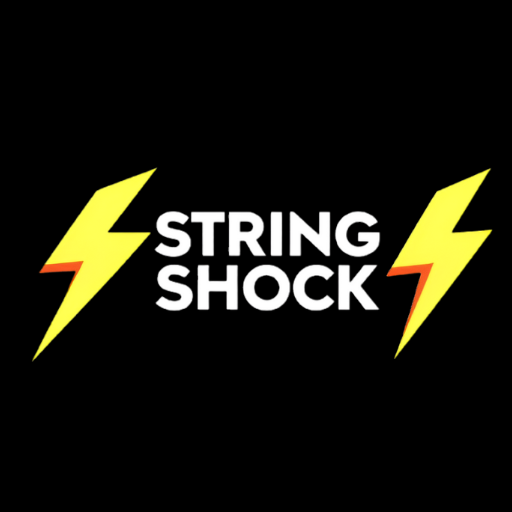
| Category | Winner |
|---|---|
| Best Overall | Boss Katana 50 Gen 3 |
| Best for Total Beginners | Fender Mustang LT50 |
| Best for Serious Beginners | Boss Katana 50 Gen 3 |
| Best Value | Fender Mustang LT50 |
| Best if You Hate Tweaking | Fender Mustang LT50 |
| Best Long-Term Buy | Boss Katana 50 Gen 3 |
The Boss Katana 50 Gen 3 wins the overall title because of its Tube Logic technology. It reacts to your playing dynamics like a much more expensive tube amp, meaning it grows with you as your “touch” improves.
| Feature | Boss Katana 50 Gen 3 | Fender Mustang LT50 |
| Circuit Type | Solid State (Tube Logic) | Digital Modeling |
| Best For | Rock, Metal & Pedals | Cleans, Blues & Presets |
| Tone | Organic & Dynamic | Glassy & Balanced |
| Feel | Reacts like a Tube Amp | Consistent Digital Response |
| Build Quality | Rugged & Professional | Lightweight & Portable |
| Ease of Use | Physical Knobs (Traditional) | LCD Screen & Dial (Modern) |
| Features | 60+ Boss Effects | 60 Presets / 20 Amp Models |
| Versatility | High (Stage & Studio) | High (Practice & Home) |
| Value | Professional Standard | Budget-Friendly Explorer |
| Spec | Boss Katana 50 Gen 3 | Fender Mustang LT50 |
| Price | $340 | $289 |
| Output Power | 50W (Switchable to 0.5W/25W) | 50W |
| Speaker | 1 x 12″ Custom Katana | 1 x 12″ Fender Special Design |
| Onboard Controls | 5 Amp Types + Variation | 1.8″ Color Display |
| Connectivity | USB-C, Aux, Headphone/Rec | USB, Aux, Headphone |
| Weight | 25.6 lbs | 19.8 lbs |
| Best Use | Practice, Recording and Small Gigs | Bedroom Practice, Home Studio |
One of the biggest frustrations for beginners is feeling like your gear is holding you back. You want a “rock” sound, but you end up with a thin, buzzy mess that makes you want to put the guitar down.
When you first plug into the Fender Mustang LT50, you’ll notice the screen immediately. It’s welcoming. You don’t have to guess what “Lead” means; you just scroll to a preset named “70s Rock” and go.
For a total beginner, this eliminates the fear of the unknown.
However, a comeback player or a “serious” beginner will likely notice something different about the Boss Katana 50. It has a weight and a physical “push” to the air that feels like the big stacks you see on stage.
While the Mustang feels like a very clever piece of software, the Katana feels like a piece of musical equipment. It’s more inspiring because it rewards the way you pick the strings.
Play soft for a clean sound and hit it hard for more grit.
⚡️My Personal Note: I’ve found that while the Mustang is easier to use on day one, the Katana is the one you’ll still be happy with on day 1,000.
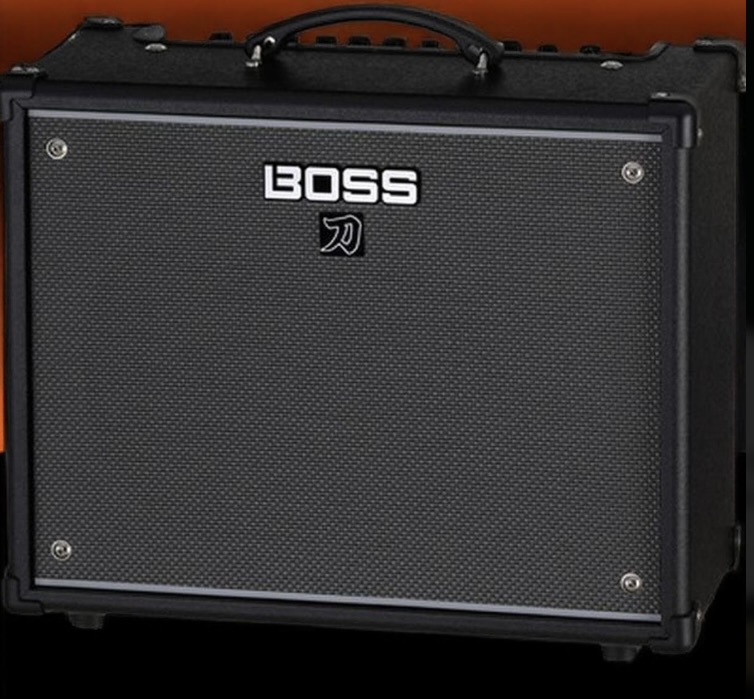

Verdict: If you only care about the upfront price, the Mustang wins. If you care about what you get for the money in terms of professional growth, the Katana is the smarter long-term buy.
The immediate difference is “Air” vs. “Presets.” The Katana sounds like an amp in a room and the Mustang sounds like a produced record.
The Katana has a thick, midrange-focused punch that is legendary for rock. With the new Gen 3 “Pushed” setting, you get that elusive “edge-of-breakup” sound where the amp stays clean until you dig in hard.
The Brown setting is the gold standard for high-gain, providing a crushing, “modded-stack” distortion that doesn’t get fizzy.
This is where the Fender heritage shines. The clean models based on the ’65 Deluxe Reverb and ’57 Champ are glassy, articulate, and beautiful.
However, when you crank the gain for heavy metal, the Mustang can sound a bit “digital” and thin compared to the Katana’s roar.
Whether you lean toward the Katana’s organic grit or the Mustang’s polished versatility, remember that the amp is only half the battle.
The real magic happens when you start developing your personal sound by experimenting with how these tones react to your touch. Your gear should inspire you, but your unique ‘voice’ is what makes the riffs stick.
This is the most important section for a beginner’s development.
The Katana uses Class A/B power and Tube Logic technology. This means it has “sag”—it reacts to your pick attack. If you play light, it’s sweet; if you slam the strings, it barks. This teaches a beginner how to control their dynamics.
The Mustang LT50 feels more “static.” It’s a very high-quality digital model, but the response is consistent regardless of how hard you pick. It’s easier to play initially because it “evens out” your mistakes, but it doesn’t challenge you to improve your touch like the Katana does.
The Katana is a tank. It’s significantly heavier (25.6 lbs vs 19.8 lbs) because of the beefier power transformer and a more rugged cabinet. The knobs feel professional and have a nice resistance.
The Mustang feels like high-end consumer electronics. The wraparound cabinet is sleek and incredibly portable, but the top-mounted screen feels like something you need to be careful with. It’s perfect for a bedroom, but I’d be nervous taking it to a rowdy basement jam.
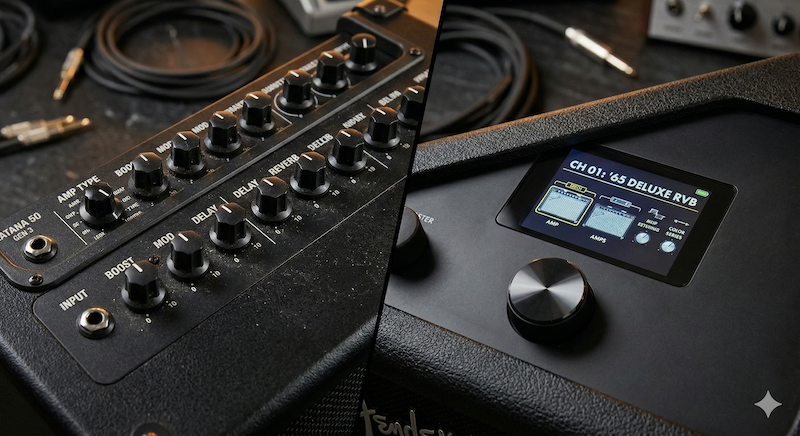
If you hate technology, the Mustang LT50 is your best friend. The 1.8″ color screen allows you to see exactly what amp and effect you are using. You can dial in a full signal chain without ever touching a computer.
The Katana is “knob-based” on the surface, which is easy for basic EQ, but to get into the “real” magic (the 60+ Boss effects), you must plug it into a laptop using the Tone Studio software. For a “techie,” this is great; for someone who just wants to play, it’s a hurdle.
It’s easy to get lost in the endless menus of a modern modeling amp. While you’re dialing in that perfect ’80s hair metal lead, make sure you aren’t neglecting the fundamentals.
I’ve found that developing good guitar playing habits early on, like consistent practice routines and proper posture, is what separates the people who just own gear from the ones who actually master it.
If this were your only amp, which one gives you more room to move?
The Mustang is a specialist in variety—it covers everything from jazz to country cleans perfectly. The Katana is an all-rounder that leans toward rock, metal, and blues. Because the Katana handles external pedals much better than the Mustang, it ultimately has a higher “ceiling” for gear expansion later on.
| Boss Katana 50 Gen 3 | Fender Mustang LT50 |
|---|---|
Pros:
|
Pros:
|
Cons:
|
Cons:
|
⚡️Both of these amps excel at low-volume playing. If you’re building a silent practice rig, don’t miss my guide on the best quiet electric guitars for midnight shredding without the noise complaints.
⚡️If you’re pairing this amp with a classic rock machine, my Epiphone Les Paul Studio E1 review explains why that guitar/amp combo is a beginner’s dream for thick, saturated tones.
Choosing between these two heavyweights is a great first step towards unleashing your inner rockstar.
However, an amp is just one piece of the puzzle. To make sure you have everything else you need to start making real noise, take a look at my guitar checklist for learning rock music.
It’ll ensure you don’t miss any of the essential tools required to unleash your inner rockstar.
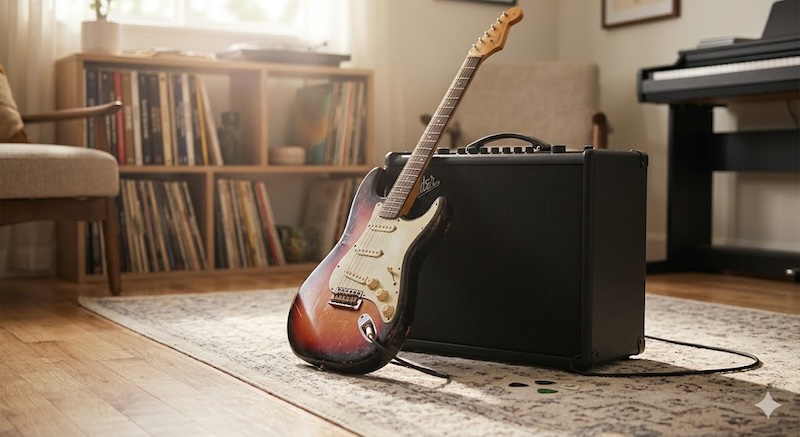
Choosing between these two comes down to your “Identity” as a player.
If you want an amp that feels like a professional tool, one that challenges you to play with better dynamics and offers tones that can actually hold their own on a stage, buy the Boss Katana 50 Gen 3.
It is the industry standard for a reason; it’s an investment in your long-term sound.
However, if you find technology intimidating and just want to sound like your heroes at the push of a button, the Fender Mustang LT50 is the winner. It removes the barriers between you and a “finished” sound, making those early practice sessions much more fun.
The Bottom Line: If you want a rock-solid foundation for a lifetime of playing, buy the Katana. If you want the easiest path to enjoying your practice today, buy the Mustang.
| Category | Boss Katana 50 | Fender Mustang LT50 |
| Tone | 4.5/5 | 3.5/5 |
| Feel / Playability | 5/5 | 3/5 |
| Build Quality | 4.5/5 | 3.5/5 |
| Ease of Use | 3.5/5 | 5/5 |
| Features | 4/5 | 4.5/5 |
| Versatility | 4.5/5 | 4/5 |
| Value | 5/5 | 4.5/5 |
| String Shock Overall Rating | 4.6/5 | 4.0/5 |
This review isn’t based on a five-minute demo in a loud shop. I put these amps through their paces using my 40+ years of experience to judge them on “Real World” metrics.
⚡️Written and reviewed by String Shock Steve⚡️
The Mustang is easier to use initially due to its screen, but the Katana is better for a beginner’s long-term tonal development.
The Boss Katana 50. Its “Brown” channel is specifically designed for high-gain rock and metal and sounds much fuller than the Mustang’s high-gain models.
Yes, but the Katana 50 is widely considered a better “pedal platform” because its power amp section responds more naturally to external drive pedals.
The Fender Mustang LT50 is significantly lighter at roughly 19.8 lbs, compared to the Katana’s 25.6 lbs.

I’ve been playing guitar 40 years now; writing, recording, and rocking in bands. Randy Rhoads, Warren DiMartini, and of course, Jimi Hendrix all lit the fire for me, and I’ve been chasing that passion ever since.


