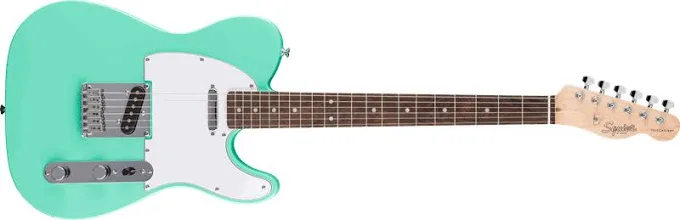
Most people think a $150 guitar is just a “disposable” instrument, a toy designed to be replaced in six months. After 41 years of playing, from 1950s vintage gems to $3,000 Custom Shops, I’ve developed a “BS detector” for cheap gear.
I picked up the Squier Debut Series Telecaster expecting to find a lifeless plank of wood. Instead, I found something most budget guitars lack: Soul.
Whether you’re twelve or fifty-two, the fear is always the same: “Will this guitar stay in tune, or will it frustrate me until I quit?”
Behind the 75-year Fender legacy is a guitar that actually respects the player. It’s not just about the classic shape, it’s about a neck that doesn’t fight you and a tone that makes you want to keep playing long after you should have gone to bed.
I’m going to tell you exactly where this guitar punches above its weight, and more importantly, where the $150 price tag shows its face. Let’s see if this is truly your first “real” guitar.
⚡️You can also see how this guitar stacks up in my full guide to beginner electric guitars worth buying.
The Squier Debut Series Telecaster is perfect for beginners—fun, easy to play, and feels just right whether you’re twelve or fifty-two.
The neck and fretboard are smooth and comfy. No sore hands, even after long jam sessions.
It’s lightweight, so you won’t get tired, and the classic shape looks sharp everywhere.
Fender’s 75-year legacy backs this guitar. You get real quality without spending a fortune.
Simple controls mean less fiddling, more playing. Low action makes chords and riffs easier for new players.
The sound is clean and punchy on its own, with plenty of grit if you hit the distortion.
At this price, it’s hard to beat for solid sound and out-of-the-box build quality.
Downsides? The materials and hardware are basic. Tone is a little thin compared to pro-level guitars. If you want crazy sound options, you’ll need to upgrade later.
This guitar is mod-ready. Switch out pickups, electronics, and hardware if you ever want to customize your sound or look.
Real pros started with affordable guitars too. Play, grow, and move up when you’re ready. No stress.
Start with a guitar made for you. Plug in, crank up, and enjoy every strum. You’ll be glad you did.

Stand in front of your mirror, hit a power chord, and try not to smile, I dare you. Tune it once, plug it in, and off you go.
Don’t get lost in comparing every guitar out there. You want to PLAY, right? This Squier Tele lets you do exactly that, minus the weird stress.
Grab a strap, mess around, maybe even pretend you’re on stage for a minute (no shame).
In short, skip the headaches. Start with a guitar designed for you, by people who actually get music. I started here and haven’t looked back.
If you’re thinking about picking up this Squier Telecaster, do it.
You’ll thank yourself every time you strum.
If you’re picking up a Squier Tele, I recommend testing your skills with the Simply Guitar app(read my full Simply Guitar review here).
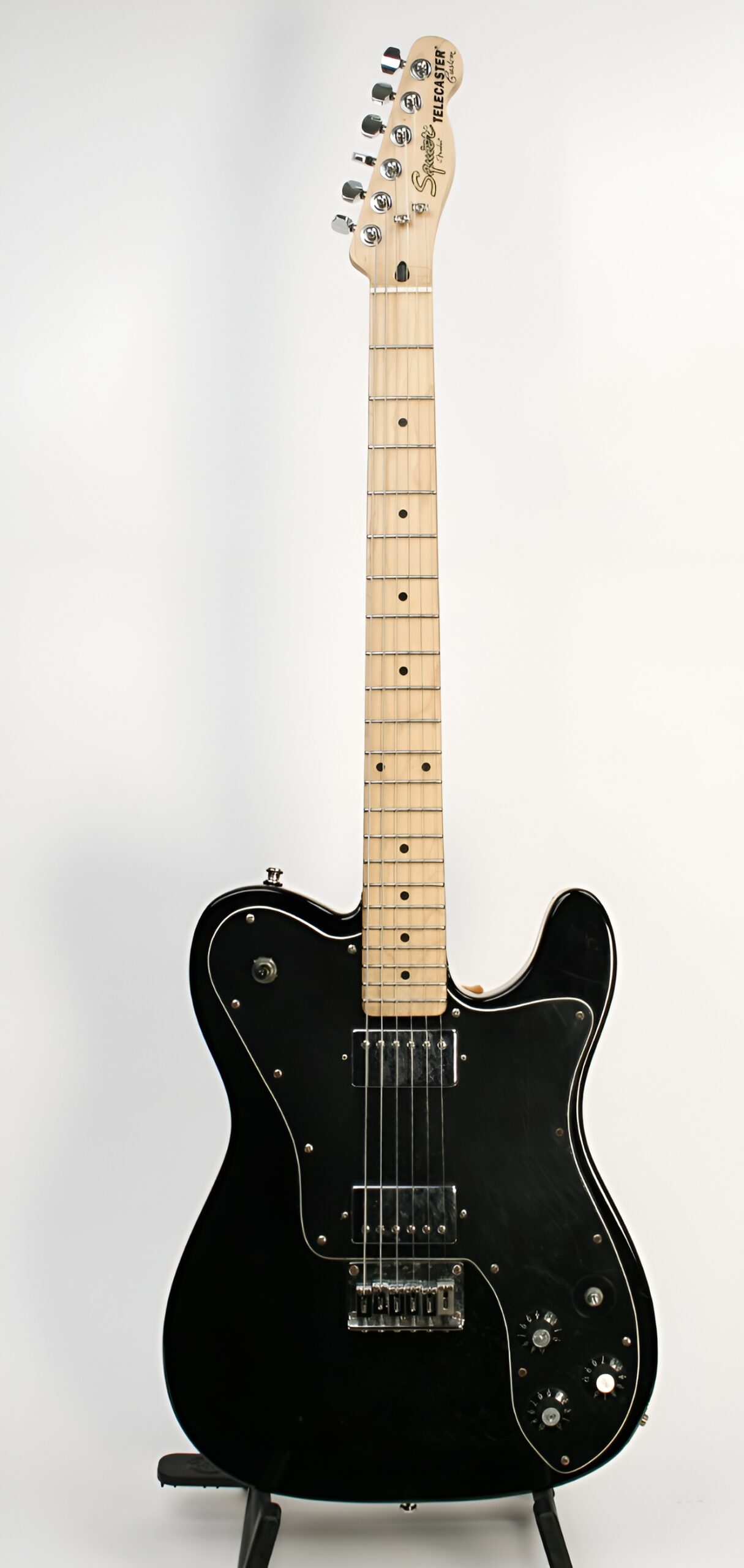
I know what you’re thinking, “But these icons own the higher-end telecasters.” This is true but I’m sure they didn’t start off like that. Look, it doesn’t make much sense to go purchase a guitar for thousands of dollars when you’re not sure if it’ll stick.
Get some playing time under your belt before going all out! What’s the rush?
Start with a budget friendly guitar like this Squier telecaster. You get a quality instrument that won’t steal your wallet. You can always modify or eventually upgrade…when you’re ready.
?If you want a guitar that stays in tune for a 3-hour dive-bombing set, don’t buy this. But if you want the best ‘modding’ platform for under $200, nothing else touches it.
| 1. Pickup Upgrades: Replace stock pickups with Seymour Duncan, EMG, or Tonerider. Nashville Mod: Add a strat-style middle pickup with a 5-way switch for more tonal options |
| 2. Enhance the Electronics: Install a high quality wiring kit such as a Tone Shaper, to improve reliability. Features also include treble-bleed circuits and/or additional pickup combos. Switch Upgrades: Try a 4-way switch for series/parallel pickup options, or add a push/pull knob. Upgrade Pots and Jacks: Swap out for higher quality pots and a Switchcraft output jack for longevity. |
| 3. Hardware Mods: Replace the bridge by swapping the stock bridge for one with brass saddles. This is for improved sustain and tuning. Nut and String Trees: Better tuning and playability when switching to a graphic nut and better string trees. Tuners: Hipshot or locking tuners help with tuning stability and make string changes faster. |
| 4. Improve Playability: Leveling and crowning the frets and smoothing fret ends will enhance the feel and reduce buzzing. Setup: A thorough setup for the truss rod, action, intonation, and nut slots is beneficial foe ease of playing. |
| 5. Cosmetic Mods: Swap the pickguard to personalize it. Control Knobs & Switch Tips: Add some flair with custom hardware. |
| 6. Other Mods: Add a sustainer kit for enhanced experimental sounds. Custom Wiring Options: Unique configurations like Les Paul dual jacks or specialty out-of-phase wiring. |
Start off with an affordable guitar like this, and over time, modify anything you want to. Mods are a cool way to personalize your axe and make it stand out in the crowd.
After four decades of playing, I’ve realized that the most expensive guitar in the world is the one that stays in its case because it’s too difficult to play.
The Squier Debut Telecaster isn’t perfect, the tuners are basic and the pickups won’t win a Grammy, but it solves the “Root Problem” for every new player: Accessibility.
It provides a professional-feeling neck and that unmistakable Telecaster “snap” at a price point that used to only buy you a plastic toy.
⚡️If the Telecaster feels a bit too ‘old school’ for your taste, check out my comparison of the Yamaha Pacifica 112V vs. Ibanez GIO GRG220PA1 to see two modern rock alternatives.
The Bottom Line: If I had started my journey 41 years ago with a guitar this good, I would have reached “Rockstar” status a lot faster. It’s not just a budget buy; it’s an investment in your future character as a player.
Check out this Gibson vs Epiphone for Beginners Review for other affordable alternatives to the Fender Squier line.

I’ve been playing guitar 40 years now; writing, recording, and rocking in bands. Randy Rhoads, Warren DiMartini, and of course, Jimi Hendrix all lit the fire for me, and I’ve been chasing that passion ever since.


