

I started out with big dreams of sounding like my rock idols(I wanted to be the next Hendrix), but soon found myself frustrated, stuck, and even a little bored. The guitar ended up in the corner, gathering dust, as I pondered why I gave up so quickly.
It’s tough. Bad guitar lessons, a poorly set up guitar, or lifeless strings can make the learning process feel impossible. Practice routines get confusing, motivation drops, and what once felt fun now feels like a chore.
I’m telling you right now, the only way to fail is to quit. Let me help you.
In this post, you’ll learn how I learned to play guitar and what causes so many to give up. I’ll show you how to have fun, stay inspired, and free yourself of rigid rules that hold you back.
I learned by chasing songs I loved, learning from other players, taking a few focused lessons, recording myself, and playing in bands. Most beginners quit because of sore fingers, bad setup, confusing practice, lack of time, and slow progress. The fix is simple: make practice fun, keep it basic, stay connected to other players, and do not quit.
I first picked up the guitar over 40 years ago, drawn in by a passion for music that still drives me today.
?Note: There are no shortcuts, you have to put in the work. Check out my guitar practice routine that’ll keep you on a path to success.
I learned to play songs from my favorite bands by reading guitar magazines, music books, and also by ear(pre-internet).
The guitarists in my neighborhood became my mentors and friendly competitors. Trading ideas and feeling inspired by others kept me pushing forward.
As I got more serious, I spent a summer taking private lessons focused on improvisation. This opened new doors for my playing.

I began to experiment by recording myself on a dual cassette player(boombox). Layering rhythm and lead tracks turned practice into a new creative experience and encouraged me to write my own music.
A year later, me and my high school buddies started our first garage band. This led to me breaking off and forming more garage bands, which brought with it a new energy and a stronger bond with my bandmates.
Moving from cassette decks to a four-track recorder let me refine my sound and deepen my songwriting. Every step made my passion stronger and my music more personal.
Looking back, the journey has always been about more than just mechanics.
For me, it’s about channeling emotion through every note and creating a connection with listeners.
Whether you’re just beginning or a fellow lifelong player, my hope is you’ll feel inspired to let your love of music light the way.
Learning guitar sounds exciting, right? Then reality kicks in.
Most beginners hit a few roadblocks that make them want to quit or lose interest. What used to be fun, is just not fun anymore. Take a look at these fun rock guitar practice ideas.
Here’s what trips up thousands every year:
If any of these made you nod in agreement, you’re in the same boat as every player who ever fought through sore fingers and frustration.
Plenty have felt lost right where you are now, including me. Beginner guitarists everywhere feel discouraged and sometimes make learning too complicated.
Know this – You belong to a brotherhood of guitarists who get it. There’s a whole music community online that can help, but only if you stay connected. -Steve
Join the String Shock family:

Let’s talk about sore fingers, the first badge of honor for every guitarist. Fingers feel like you slammed them in a car door. Wrists get tired, or your posture gets weird due to a poor posture.
Playing guitar can literally be painful if you’re just starting out.
The good news? This goes away with practice. Stay motivated. Your fingers will toughen up and making mistakes is not a big deal. If you’re not making mistakes, you’re not trying. Don’t beat yourself up!
What happens when motivation fades? Practicing guitar stops being fun if you lose momentum or feel discouraged by slow progress or self-doubt.
Motivation is fragile, especially if you’re learning alone or feel disconnected from a music community. Don’t give up, find ways to make learning guitar fun again.
Most beginners quit guitar because of self-doubt, perfectionism, and unreasonable expectations. Here’s where dreams get stomped:
We want results fast. But trying advanced music theory or complex songs too soon will leave you frustrated and discouraged, feeling like you have no musical talent.
Baby steps first. Celebrate the simple wins, like learning new chords or playing a beginner song (even badly). 10 Easy Rock Songs For Guitar Beginners is a great guide for this. That’s how you’ll start to feel successful and keep your inspiration alive.
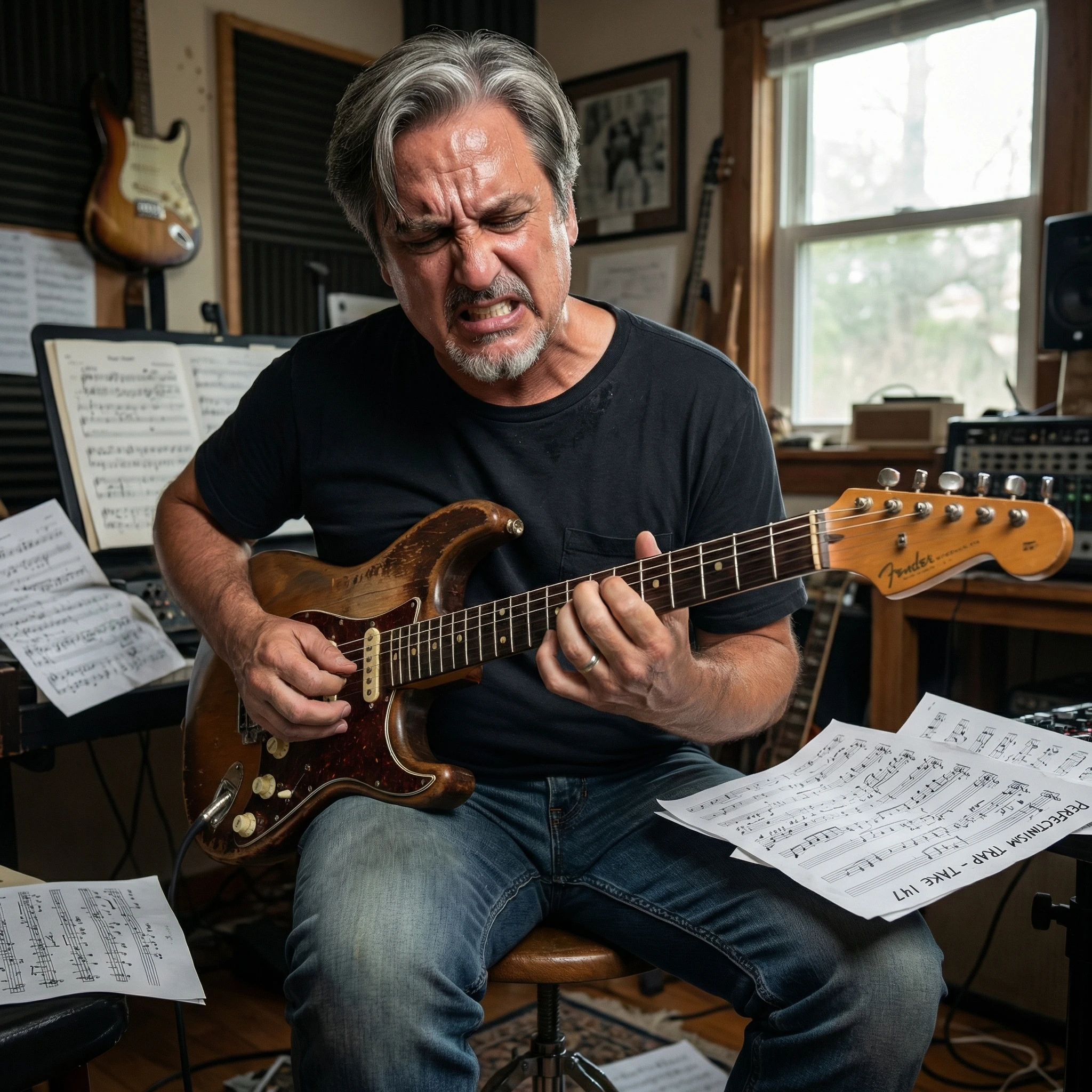
Perfection is another trap for beginner guitarists. Many give up because one mistake hurts their confidence or makes them doubt their musical talent. Perfectionism stalls your progress.
Here’s some good news: most of these beginner problems can be fixed! Try these simple tips:
Momentum comes from showing up, even when you make mistakes.
Here’s the truth bomb: most beginners quit guitar because they run into pain, discouragement, bad guitar lessons, or push themselves too hard too fast.
Add in a poor guitar setup, self-doubt, and a lack of a friendly music community or online community to stay accountable, and quitting seems almost expected.
But now you know the real reasons beginners quit. Keep your inspiration alive. Practice consistently.
Play songs you love, even simple ones. Celebrate tiny wins. Replace bad lessons with ones you enjoy. Share your progress or struggles with other guitarists.
If you keep your guitar journey fun and realistic, your odds of success soar. Your future self, and maybe your future band, are already cheering you on.
Keep playing, stay patient, and let your inspiration grow.
Most quit when sore fingers, lame lessons, or slow progress kill the buzz. Comparing yourself to TikTok shredders and chasing perfection only makes it worse. Don’t let these rookie struggles stop you!
Set wild, simple goals. Jam to music you love. Track every win, no matter how tiny. Find your tribe, online or off, and remember, guitar should be fun, not a grind.
Get your axe set up right. Start slow. Stick with it, your fingers will toughen up. Play every day, but don’t overdo it. If your guitar is fighting back, get a pro to look at it.
Don’t sweat slow progress. Learn easy songs first and switch things up if you’re bored. Ask a teacher or buddy for fresh tips. Every small win gets you closer to rocking out.
Absolutely. Nobody shreds alone. A solid teacher and a cool community keep your drive alive, help you dodge bad habits, and make the whole ride way more fun.

I’ve been playing guitar 40 years now; writing, recording, and rocking in bands. Randy Rhoads, Warren DiMartini, and of course, Jimi Hendrix all lit the fire for me, and I’ve been chasing that passion ever since.


