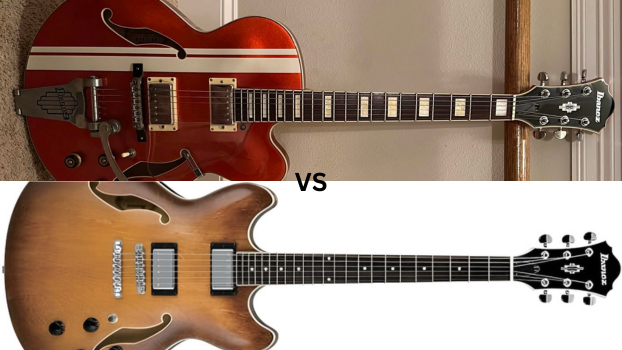
Transparency Quote: After 40+ years of playing, I’ve learned that the air inside a guitar matters just as much as the pickups. Most “reviewers” just read spec sheets, but I’ve pushed the Ibanez Artcore AFS80T and AS73 through a Mesa Boogie stack to see which one actually holds its ground when the volume goes up. This is my unfiltered veteran take.)
You’re looking for that vintage “vibe”, the classic look that screams rock history.
But for a beginner or a player returning after a decade off, the choice between the AFS80T and the AS73 isn’t just about color, it’s about how much “fight” you want in your hands.
One is a “breathing” acoustic machine that needs to be tamed, while the other is a “stiff” rock workhorse that feels like a solid-body with a soul.
I’m going to help you choose the one that actually makes you want to practice. This is my HONEST AFS80T vs. AS73 review.
First, let’s breakdown the facts on the hollowbody and semi-hollowbody.
This is where beginners get tripped up.
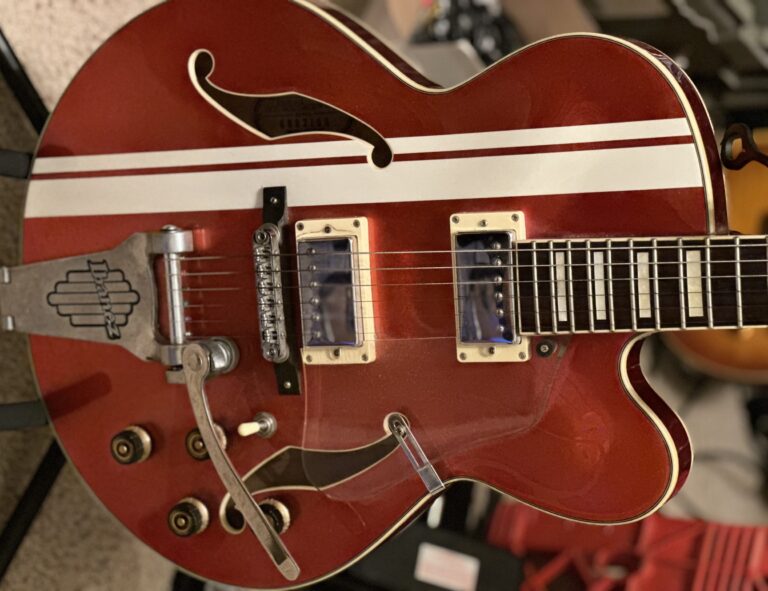
A Full Hollowbody (AFS80T) is essentially an acoustic guitar with magnets. There is no solid wood inside.
This gives you a “living” vibration against your chest, but it also means that if you stand too close to your amp with high gain, the air inside starts to feedback uncontrollably. Read more about this in the AFS80T Review.
A Semi-Hollowbody (AS73) has a solid block of maple running down the center. The wings are hollow, but the bridge and pickups are mounted to a solid piece of wood.
This kills the “howling” feedback and gives you the sustain of a Les Paul, while keeping enough air in the “wings” to give you that classic thinline growl. Check out the full AS73 Review here.
Construction is Everything: The AS73’s center block makes it a rock machine, while the AFS80T’s hollow build is a resonance king that hates high gain.
Vibrato vs. Stability: Choose the AFS80T for “shimmer” and the AS73 for “set-it-and-forget-it” tuning.
The Weight Factor: If you have a bad back, the AFS80T is one of the lightest thinline guitars you’ll ever strap on.
Genre Fit: Rockabilly and Jazz players should lean toward the AFS80T, Alternative and Modern Rockers should grab the AS73.
Access Matters: The AS73’s double-cutaway provides much easier access to the 17th fret and beyond compared to the AFS80T’s single-cut.
| Quick Verdict: AFS80T vs AS73: Which Artcore Wins Your Tone? | |
|---|---|
| Category | Winner |
| Pure ‘Airy’ Resonance | Ibanez Artcore AFS80T |
| Rock & Sustain Stability | Ibanez Artcore AS73 |
| Comfort & ‘Feather’ Weight | Ibanez Artcore AFS80T |
| Tuning Stability & Low Maintenance | Ibanez Artcore AS73 |
| Modern High-Gain Rock | Ibanez Artcore AS73 |
While both guitars offer incredible Artcore value in 2026, the Ibanez AS73 wins for sheer rock versatility and sustain thanks to its solid center block. However, for the player seeking pure, feedback-prone vintage mojo and Bigsby-style vibrato, the AFS80T is an unbeatable choice.
| Feature | Ibanez Artcore AFS80T | Ibanez Artcore AS73 |
|---|---|---|
| Internal Construction | Full Hollow (Max Resonance) | Semi-Hollow (Maple Center Block) |
| Tailpiece Style | Bigsby-style Vibrato (VBF70) | Quik Change III (Fixed) |
| Bridge Type | ART-2 Roller Bridge | Gibraltar Performer |
| Cutaway Style | Single Cutaway (Classic Jazz/Rock) | Double Cutaway (Better High Access) |
| Ideal Genre | Rockabilly, Blues, Jazz, Surf | Arena Rock, Alternative, Pop, Blues |
| Feature | Ibanez Artcore AFS80T | Ibanez Artcore AS73 |
| Body Construction | Full Hollowbody | Semi-Hollowbody (Center Block) |
| Body Material | Linden | Linden |
| Body Depth | 2.625″ | 2.625″ |
| Neck Type | AFS Nyatoh (Set-in) | AS Artcore Nyatoh (Set-in) |
| Scale Length | 24.7″ | 24.7″ |
| Pickups | Classic Elite (H) | Classic Elite (H) |
| Bridge | ART-2 Roller Bridge | Gibraltar Performer |
| Tailpiece | Bigsby-style Vibrato | Quik Change III |
| Fretboard | Bound Walnut | Bound Walnut |
| Fret Count | 22 Medium | 22 Medium |
Choosing between these two isn’t about which guitar is “better”, it’s about which one matches the vibe you’re chasing.
If you buy the wrong one, you’ll spend more time fighting feedback or wishing for more sustain than actually playing.
I know that your gear budget is just as important as your practice schedule. Both of these guitars sit in that high-value “Goldilocks” zone: professional enough for the stage but affordable enough for a beginner or comeback player.
The AFS80T is currently harder to find(only offered 2011-2012), often making it a “treasure hunt” on the used market, while the AS73 remains a staple that you can grab any day of the week.
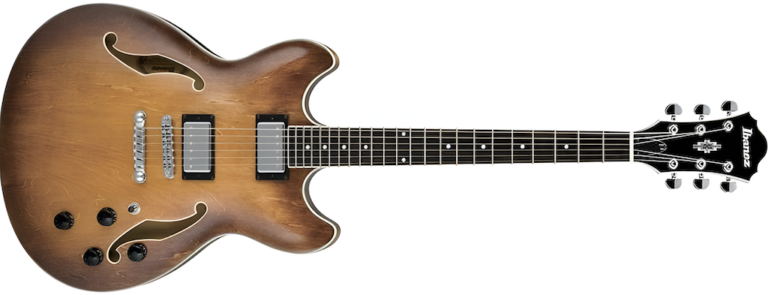
| Platform | Ibanez Artcore AFS80T | Ibanez Artcore AS73 |
|---|---|---|
| Amazon (New) | Currently Unavailable | View on Amazon |
| Reverb (Used/Mint) | View Deals on Reverb | View Deals on Reverb |
Note: AFS80T not available new
Playing the AFS80T is an immersive experience. Because it’s a full hollowbody, you feel every note vibrate against your ribs. It has an airy, three-dimensional quality that makes simple chords sound like a cathedral.
Sounds “woody” and expensive, but when you crank up the gain, the guitar starts to breathe and howl. It’s perfect for the player who wants to hear the guitar’s “acoustic” personality even when it’s plugged into a small tube amp.
The AS73 sounds like a finished record. Because of that maple center block, the tone is compressed, punchy, and incredibly focused. It doesn’t have the “bloom” of the AFS80T, but it has a percussive “snap” that cuts right through a mix.
If you’re playing along to your favorite rock tracks, the AS73 will feel more familiar. It handles overdrive like a champ, giving you that creamy sustain you’d expect from a solid-body.
It gives you just enough thinline “honk” to let people know you aren’t playing a standard Les Paul.
It provides a punchier alternative for those who find the single-coil snap of a Squier Classic Vibe 50s Stratocaster a bit too thin for arena rock.
⚡️As always, I love to hear what electric guitars sound like unplugged. Both of these sound full and robust without a ton of wattage added. I can play either one for hours and pay no attention that I’m not plugged in. -Steve
| Ibanez Artcore AFS80T (Hollowbody) | Ibanez Artcore AS73 (Semi-Hollow) |
|---|---|
Pros:
|
Pros:
|
Cons:
|
Cons:
|
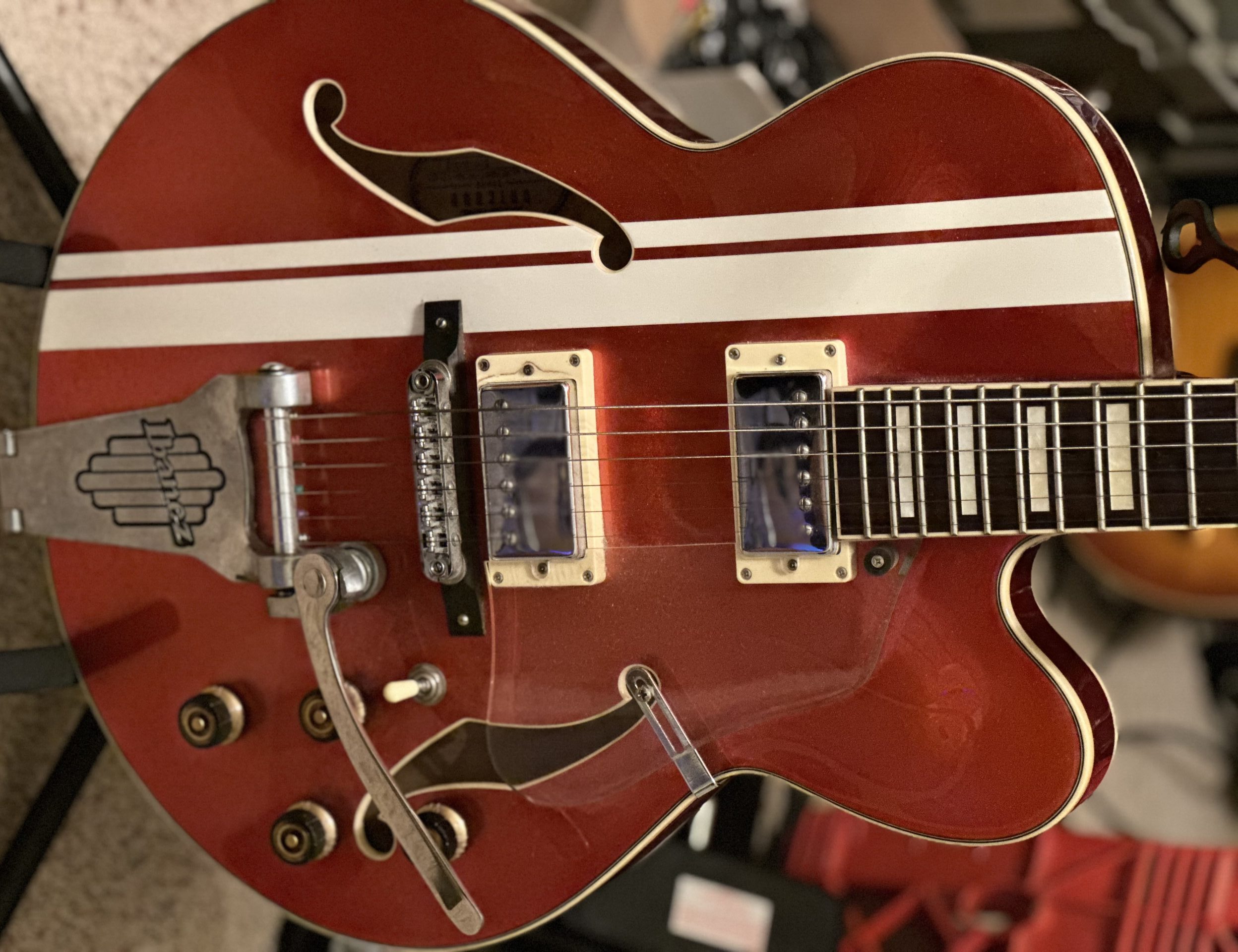
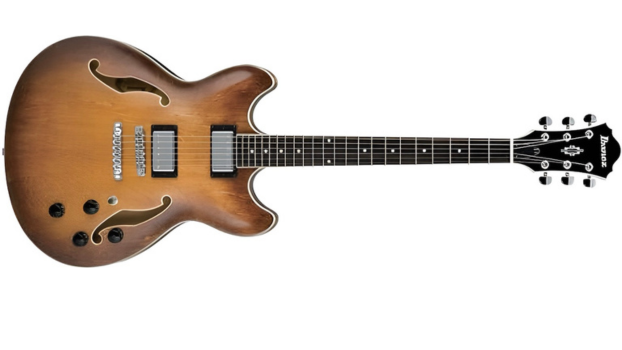
At the end of the day, your choice between the Ibanez AFS80T and the AS73 comes down to your Identity as a player.
If you are the “Vibe Master”, the player who loves the nuances of jazz, blues, and that 60s rockabilly shimmer, the AFS80T is your time machine. It’s light, it breathes, and it has that vintage vibrato that makes chords “shake” just right.
However, if you are a “Modern Rocker” who needs a guitar that can handle a thick overdrive pedal without howling like a wounded animal, the AS73 is the winning formula.
It’s the more predictable, stable, and versatile machine for the beginner or comeback player who wants to cover everything from The Beatles to Foo Fighters.
I’ve played hundreds of instruments over the last 40 years, and while both of these made my list of the best electric guitars for beginners, they serve two very different masters.
The String Shock Recommendation:
| Category | Ibanez Artcore AFS80T | Ibanez Artcore AS73 |
| Comfort & Playability | 4.8/5 | 4.5/5 |
| Tone Versatility | 4.0/5 | 4.9/5 |
| Tuning Stability | 3.8/5 | 4.7/5 |
| Build Quality | 4.5/5 | 4.6/5 |
| Overall String Shock Rating | 4.3/5 | 4.7/5 |
I don’t believe in “desktop reviews.” To give you the straight talk on these two Artcores, I put them through the String Shock Stress Test:
| Platform | Ibanez Artcore AFS80T | Ibanez Artcore AS73 |
|---|---|---|
| Amazon (New) | Currently Unavailable | View on Amazon |
| Reverb (Used/Mint) | View Deals on Reverb | View Deals on Reverb |
Most Artcore models do not include a hardshell case from the factory. You’ll usually need to purchase an Ibanez AS100C or a high-quality gig bag separately.
While it’s a semi-hollow, the center block allows it to handle more gain than a typical hollowbody. It’s great for hard rock (think Foo Fighters), but for extreme high-gain metal, a solid body is still a better bet to avoid microphonic squeal.
It takes a little practice. Because the strings wrap under a tension bar, using a small foam wedge or a capo to hold the string in place while you wind the tuner will save you a lot of frustration.
Absolutely. It’s one of the most recommended “intermediate” guitars for beginners because it feels like a professional instrument but is priced like a starter kit.
I’ve been playing guitar 40 years now; writing, recording, and rocking in bands. Randy Rhoads, Warren DiMartini, and of course, Jimi Hendrix all lit the fire for me, and I’ve been chasing that passion ever since.


Stop "practicing" and start playing. Grab the daily blueprint I use to keep my fingers stage-ready in just 15 minutes.
Join 1,000+ guitarists mastering the fretboard. No spam, just tone.


