
Rock Guitar Lessons For Beginners: Rock 201
I started out just like you, full of curiosity, a bit nervous, and hungry to play real rock songs.
This post for rock guitar lessons for beginners will give you simple steps to make clear progress without wanting to smash your guitar on the ground.
I’ll show you all the essential equipment you need, jump straight into easy chords/scales, and build habits that stick with you.
Every time you pick up your guitar, you move closer and closer to releasing that inner rockstar.
Every rock legend started where you are now so let’s get your hands on those strings and start rocking!
⚡️FREE: The 15-Minute Rock Momentum Routine
Stop “practicing” and start playing. Grab the daily blueprint I use to keep my fingers stage-ready in just 15 minutes.
Key Takeaways
-
Start with a comfortable, budget-friendly electric guitar and basic gear like picks, strap, tuner, and a small amp.
-
Basic chords (E, A, D, G, C) and the A minor pentatonic scale will open up tons of rock songs. Play them daily and your fingers will start to get strong and smart fast.
-
Focus on clear, relaxed finger placement. Don’t press too hard and let those calluses build up.
-
Use sites like Ultimate Guitar or Songsterr to learn songs you love. This keeps things fun and gives you fast wins.
-
Power chords and classic rock riffs from bands like Deep Purple, Cream, and Sabbath? Total confidence boosters. Practice them slow, then crank it up.
-
Keep time with a metronome. Nailing the beat is what makes you sound like you actually know what you’re doing.
-
Explore dynamics. Don’t just play loud all the time. Clean, soft parts make the heavy stuff sound huge.
-
Finger exercises boost speed and control. Do them a little each day and you’ll be shocked by your progress.
-
Jam to backing tracks or record yourself on your phone. Listening back will show where you should tighten up and where you shine.
-
Most important: Make playing fun. Mess around, set a tiny goal for each practice, and don’t sweat mistakes. That’s how legends start.
What’s one song you’d love to play if you could learn it in a week?
What is the First Thing a Beginner Guitarist Should Learn?
Before you start shredding like your favorite rock stars, you need the right gear and a solid foundation. Here’s a beginner guitar checklist to check out.
The first big choice to make is finding your guitar. For beginners, it’s important to find a decent quality budget friendly electric guitar that won’t break the bank and still provide a solid rock tone.
Look for brands like Squier, Epiphone, or Yamaha. They offer reliable models perfect for a new player. Check out this guide to the best beginner electric guitars under $500.
Hold it, strum it, see how it feels in your hands. Listen to see if it sounds as good unplugged as it does channeled through a stack of Marshall’s.
Next, you’ll need the basics like picks, a comfortable strap, a reliable tuner, and an amplifier. Guitar picks come in different thicknesses, starting with a medium gauge is a safe bet. Over time, you’ll get a feel for the right pick for you.
A strap should keep the guitar at a comfortable height, and a clip-on tuner will ensure you’re always in tune, making practice far more pleasant.
And last but not least, a decent amp. It’s such an exciting feeling hearing your first power chord rip through speakers after adding some wattage! Here’s a review on portable guitar amps under 300 bucks.
Find one in your budget and get ready to crank it it up!

Is Rock Guitar Easy To Learn?
It can be, sure. Start learning the fundamentals on a daily basis and soon enough you’ll be rocking out with your favorite tunes.
Now, onto the fun part: chords and scales. Start with the basic open chords (E, A, D, G, C) and the A minor pentatonic scale.(A, C, D, E, G) These are the building blocks of countless rock songs.
Spend time getting your fingers used to the positions and transitions.
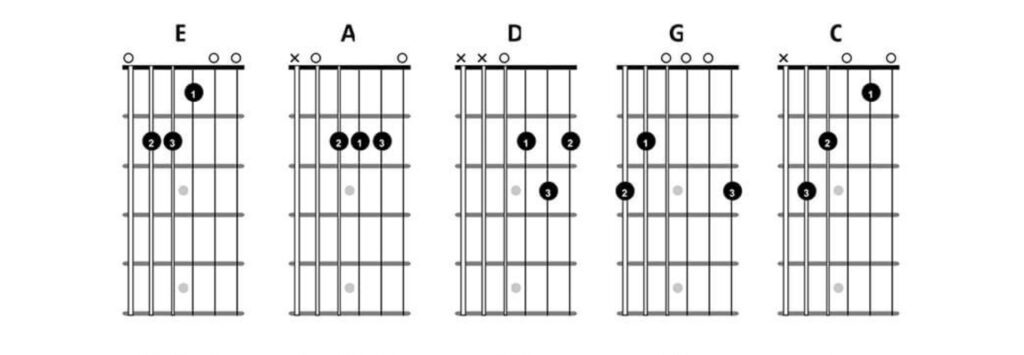
Proper finger placement is essential to sounding good and avoiding injury. Keep your fingers close to the fret and press down just hard enough to get a clean sound.
Avoid the tendency to unnecessarily overload pressure, which strains your hand. Your fingertips will eventually build up your guitar calluses the more you play. This will help with placing the proper amount of pressure on the strings and avoid any buzzing sounds.
Lastly, understanding guitar tabs and sheet music is a game-changer. Tabs are straightforward and show you exactly where to place your fingers.
Websites like Ultimate Guitar or Songsterr are fantastic resources for finding tabs for your favorite songs. Dive into the world of rock by learning simple songs you love, and before you know it, you’ll be playing along with them.
Mastering Fundamental Rock Riffs and Playing Styles

Nothing screams rock ‘n’ roll like those bone-rattling riffs and power chords. Start with the classics.
Songs like ‘Smoke on the Water’ by Deep Purple, ‘Sunshine of Your Love’ by Cream, and ‘Iron Man’ by Black Sabbath have riffs that are both iconic and beginner-friendly. These riffs will build your confidence and improve your timing.
Perfecting your rhythm playing is key to rock guitar. Begin by practicing with a metronome. Start slowly and increase the tempo as you get more comfortable. It’s all about consistency. Being able to play in time with the beat is what sets the best apart from the rest.
Power chords are the bread and butter of rock music. They are simple, yet pack a punch.
The power chord is like a king and queen entering into their castle with a standing ovation and trumpets blaring. Practice moving these shapes up and down the neck. Focus on getting a clean sound with minimal finger movement.
Rock is not always about playing loud. Did I just say that? ?
But seriously, dynamics add flavor to your music. Experiment with playing softer clean sections and then switching to louder, distorted ones.
This contrast can create a powerful sound. Don’t be afraid to push your amp and guitar to see what kind of tones you can create.
Finger strength and agility are necessary for playing more challenging sections. Include finger exercises like the spider walk, where you move each finger independently across strings and frets.
Over time, you’ll notice a big improvement in your finger strength and coordination.
This will also build up your muscle memory. One day, your fingers will develop a mind of their own and instinctively know what to do. TRUST ME! – String Shock Steve
Taking Your Rock Guitar Skills to the Next Level

Nailing that solo and the ability to improvise, are where rock guitar really comes to life. Start simple with blues and minor pentatonic scales. Experiment with bending strings, slides, pull-offs, hammer-ons, and pinch harmonics.
These techniques add expressiveness to your solos. Dive into different rock genres. Each one has its own style and influential players.
From classic rock legends like Jimi Hendrix to modern rock heroes like Slash, study their techniques and incorporate their styles into your playing.
Not necessarily to copy them note-for-note but try and capture their energy and passion.
Structured practice routines are your ticket to noticeable improvement. Set aside a specific time daily for different aspects of playing – scales, chords, riffs, and improvisation. This consistency will pay off.
Backing tracks are a fantastic tool for practice. They help you develop timing, rhythm, and the feel of playing with a band. Websites and apps offer backing tracks in various keys and styles to jam along with.
Recording yourself is a great way to track progress. Use basic recording tools like your phone or computer. Listen critically to identify areas that need improvement and celebrate the progress you’re making.
Consider sharing your recordings to get feedback from other musicians.

Get the #1 guitar learning app: Simply Guitar
Learn how to play the guitar in no time with fun and easy courses, tutorials, and songs. I highly recommend this app to take your guitar playing to the next level.
Conclusion
In closing, beginner rock guitar lessons 201 opens up a world of musical exploration. With the basics mastered, you’re now on the path to rocking harder and honing your unique sound.
Keep strumming and experimenting because that’s how legends are made. Set a practice goal for the next month.
No need to force it, let it happen naturally and have fun with it. Your future self will thank you. Rock on man!