
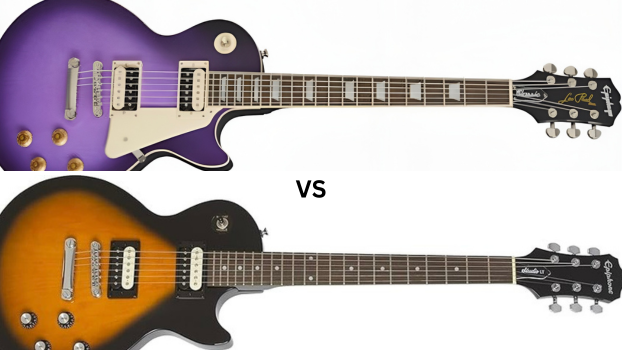
Epiphone Les Paul Classic vs. Epiphone Les Paul Studio E1: Which Beginner Icon Wins in 2026?
Transparency Quote: After 40+ years of feeling the difference between a guitar that works and a guitar that inspires, I’m giving you the unfiltered truth on the Epiphone Les Paul Classic and the Epiphone Les Paul Studio E1: one of these is a starter tool, the other is a lifelong partner.
Imagine you’re finally ready to pull the trigger. You’ve got the budget saved, you’ve watched the videos, and now you’re staring at two Les Pauls that look. At first glance they’re nearly identical.
But there’s a subconscious loop playing in your head: “What if I buy the cheap one and it sounds like a toy?” vs “What if I buy the expensive one and I’m not ‘good enough’ to deserve it yet?”
That “not good enough” fear is a lie. After 40 years in the trenches, I can tell you that a subpar guitar is the #1 reason beginners quit. It’s not your talent, it’s a hardware failure.
The Crossroads of a Rockstar
- The Studio E1 situation: You’re a “comeback” player or a total newbie who needs to keep the investment low, but you’re terrified of a neck that feels like a 2×4 and tuners that slip every time you try a power chord.
- The Classic situation: You want the “forever” guitar. You want the mahogany “thump” that vibrates against your ribs, but you’re worried the extra weight and price are just for “pro” features you won’t even use.
Today, we aren’t just comparing specs. We are figuring out which of these instruments will actually make you want to pick it up every single morning.
Because the best guitar isn’t the most expensive one, it’s the one that makes your future as a guitar player feel inevitable.
This is my HONEST review on the Epiphone Les Paul Classic vs. Epiphone Les Paul Studio E1.
Let’s go!
⚡️FREE: The 15-Minute Rock Momentum Routine
Stop “practicing” and start playing. Grab the daily blueprint I use to keep my fingers stage-ready in just 15 minutes.
Key Takeaways
- The Weight Factor: The Studio E1 is significantly lighter (poplar body), making it easier for long practice sessions, while the Classic offers the traditional heavy mahogany “thump.”
- Electronics Mastery: The Classic features Alnico Classic PRO™ humbuckers with coil-splitting, offering far more tonal versatility than the E1’s basic ceramic pickups.
- Hardware Durability: The Classic utilizes Grover® Rotomatic tuners, providing superior tuning stability for aggressive rock playing compared to the E1’s budget tuners.
- Finish & Feel: The E1 features a “worn” matte finish that feels fast but thin, while the Classic boasts a premium gloss finish and a “SlimTaper” neck profile for a more substantial “In the Room” feel.

Build Your Total Rock Rig
| Quick Verdict: Classic vs. Studio E1: Which Les Paul Wins? | |
|---|---|
| Category | Winner |
| Legendary Rock Sustain | Epiphone Les Paul Classic |
| Comfort & ‘Feather’ Weight | Epiphone Les Paul Studio E1 |
| Tonal Variety (Coil-Splitting) | Epiphone Les Paul Classic |
| Tuning Stability & Pro Hardware | Epiphone Les Paul Classic |
| Modern High-Gain “Chug” | Epiphone Les Paul Studio E1 |
While both guitars deliver that iconic Les Paul silhouette in 2026, the Epiphone Les Paul Classic is the clear winner for those wanting a “forever” instrument with pro-grade electronics. However, if you are a beginner on a strict budget who values a lightweight, fast-playing neck over traditional mahogany heft, the Studio E1 is a surprisingly capable entry point.
Comparison Table: Head-to-Head: Tone, Tech, and True Potential
| Practical Feature | Epiphone Les Paul Classic | Epiphone Les Paul Studio E1 |
| Sustain & Resonance | Superior (Set-neck and Mahogany) | Moderate (Bolt-on neck and Poplar) |
| Tone Versatility | High (Coil-splitting & Phase Switching) | Standard (Pure Humbucker Grit) |
| Tuning Reliability | Rock Solid (Grover Rotomatics) | Basic (May require frequent tweaks) |
| Body Weight | Heavy (Traditional “Thump”) | Lightweight (Great for long sessions) |
| Electronics Quality | Pro-Grade (CTS Pots/Alnico PROs) | Budget-Grade (Ceramic High-Output) |
| Future-Proofing | High (A “Forever” instrument) | Low (Likely to be traded up later) |
| Neck Stability | Excellent (Deep Glued-In Joint) | Standard (Standard Bolt-on) |
The Spec Sheet: Beyond the Marketing Fluff
| Spec | Epiphone Les Paul Classic | Epiphone Les Paul Studio E1 |
| Body Wood | Mahogany with Maple Cap | Poplar (Thinner Profile) |
| Neck Joint | Set-Neck (Glued) | Bolt-On (4-Bolt) |
| Pickup Type | Alnico Classic PRO™ Humbuckers | 700T/650R Ceramic Humbuckers |
| Nut Material | Graph Tech® NuBone® | Synthetic Bone (Plastic) |
| Fretboard Inlays | Pearloid Trapezoids | Dot Inlays |
| Scale Length | 24.75″ | 24.75″ |
| Bridge Quality | LockTone™ Tune-o-matic | Standard Tune-o-matic |
| Controls | 2 Vol (Coil-split), 2 Tone (Phase) | 1 Volume, 1 Tone |
Should You Buy the Les Paul Classic or the Studio E1?
Choosing between these two isn’t about which guitar is “better” on paper, it’s about which one matches the future version of the player you’re becoming.
Your brain wants to play it safe and save money, but your inner rockstar wants the gear that removes every hurdle between you and the music.
Here is the situational “why” to help you decide which reality you’re stepping into.
Buy the Epiphone Les Paul Classic If…
- You want a “Forever” Guitar: You have the budget and you don’t want to deal with the “upgrade itch” six months from now. You want the Grover tuners and CTS electronics that are usually reserved for pro-level rigs.
- You crave the “Real” Les Paul Experience: You want the weight, the mahogany thump, and the infinite sustain of a set-neck. You want to feel the vibration of the wood against your ribs when you hit a power chord.
- Tonal Variety is a Priority: You aren’t just playing high-gain rock; you want those sparkly, “thin” Fender-style cleans that the coil-splitting feature provides.
Buy the Epiphone Les Paul Studio E1 If…
- Weight is a Dealbreaker: You’re a smaller player, or perhaps a comeback guitarist with a bad back. The lightweight poplar body and thinner profile make this guitar feel like a part of you rather than a heavy burden.
- You’re on a Strict Entry-Level Budget: You need to get up and running today without overextending. You just want the Les Paul look and a fast neck to start building your finger strength and calluses.
- You Play High-Gain “Chug”: If your goal is strictly heavy rock or metal, the ceramic pickups in the E1 actually thrive. They are aggressive and “hot,” meaning they drive an amp into distortion easier than the more polite Alnico pickups in the Classic.
⚡️Veteran Insight: I’ve seen too many beginners quit because they bought a guitar that felt like a chore to play. If you can handle the weight and the price, the Classic is the investment that pays dividends in inspiration.
But if the weight of a traditional Les Paul makes you dread practice, the Studio E1 is the smarter tool for your survival as a player.
Epiphone Les Paul Classic vs. Epiphone Les Paul Studio E1 (Price Comparison)
The $500 gap between these two isn’t just for show, it’s an “insurance policy” against the hidden costs of budget gear. While the Classic is a heavier lift upfront, it’s a one-time investment in pro hardware that won’t bottleneck your progress.
You’re paying for a tool that stays out of your way so you can focus on the music.
If the Classic’s price tag keeps you on the sidelines, the Studio E1 is your green light. It’s a gig-worthy rig for less than the cost of a weekend getaway.
It won’t hold its resale value like the Classic, but it gets your hands moving today, and in the world of rock, action beats specs every time.
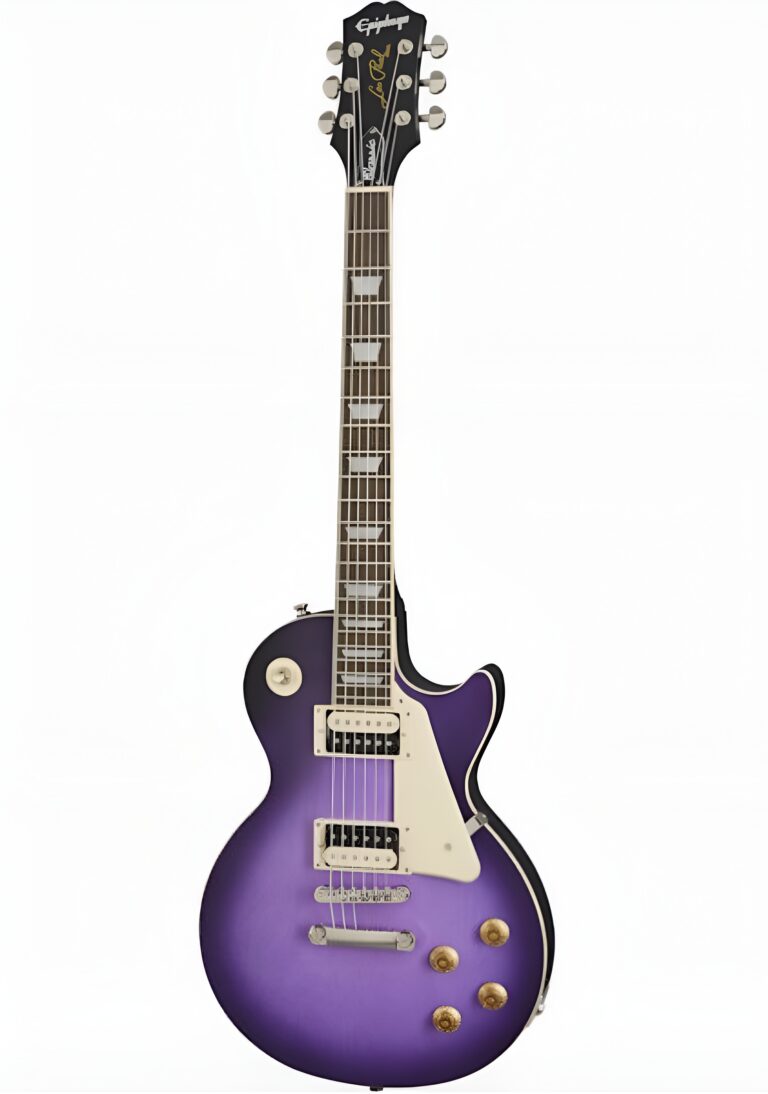
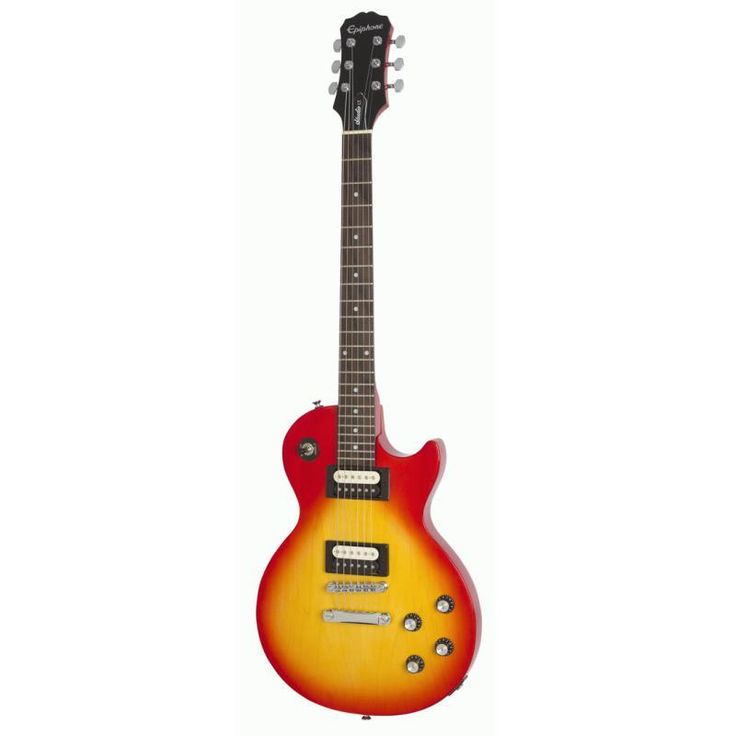
| Retailer | Epiphone Les Paul Classic | Epiphone Les Paul Studio E1 |
|---|---|---|
| Amazon (New) | Check Price | Check Latest Price |
| Reverb (New & Used) | View Deals on Reverb | View Deals on Reverb |
Tone Comparison
Epiphone Les Paul Classic: “In the Room”
The Alnico Classic PRO pickups provide a warm, vintage-inspired growl. When you engage the coil-splitting, the guitar thins out beautifully, mimicking a single-coil snap that is perfect for funk or cleaner rock verses. It feels “produced” even before it hits the amp.
It sounds “expensive.” You can hear the wood. The coil-splitting isn’t just a gimmick either, it thins out the sound to give you a glassy, “snap” that’s perfect for those clean blues licks or funk rhythms.
It’s a sophisticated sound that makes you want to play cleaner and better.
Epiphone Les Paul Studio E1: “Produced”
The Studio E1 doesn’t care about “nuance.” It uses Ceramic magnets, which are inherently “hotter” and more compressed. This means when you click over to your high-gain channel, the E1 sounds massive and aggressive right out of the gate.
It has a “produced” quality, meaning it sounds like a rock record without much effort.
However, you lose the touch-sensitivity. If you play softly, it doesn’t “clean up” as well as the Classic.
It’s built for the player who wants to stay in the “Rock/Metal Zone” and needs a pickup that can push an amp hard.
| Epiphone Les Paul Classic | Epiphone Les Paul Studio E1 |
|---|---|
Pros:
|
Pros:
|
Final Verdict: Which One Should You Buy?
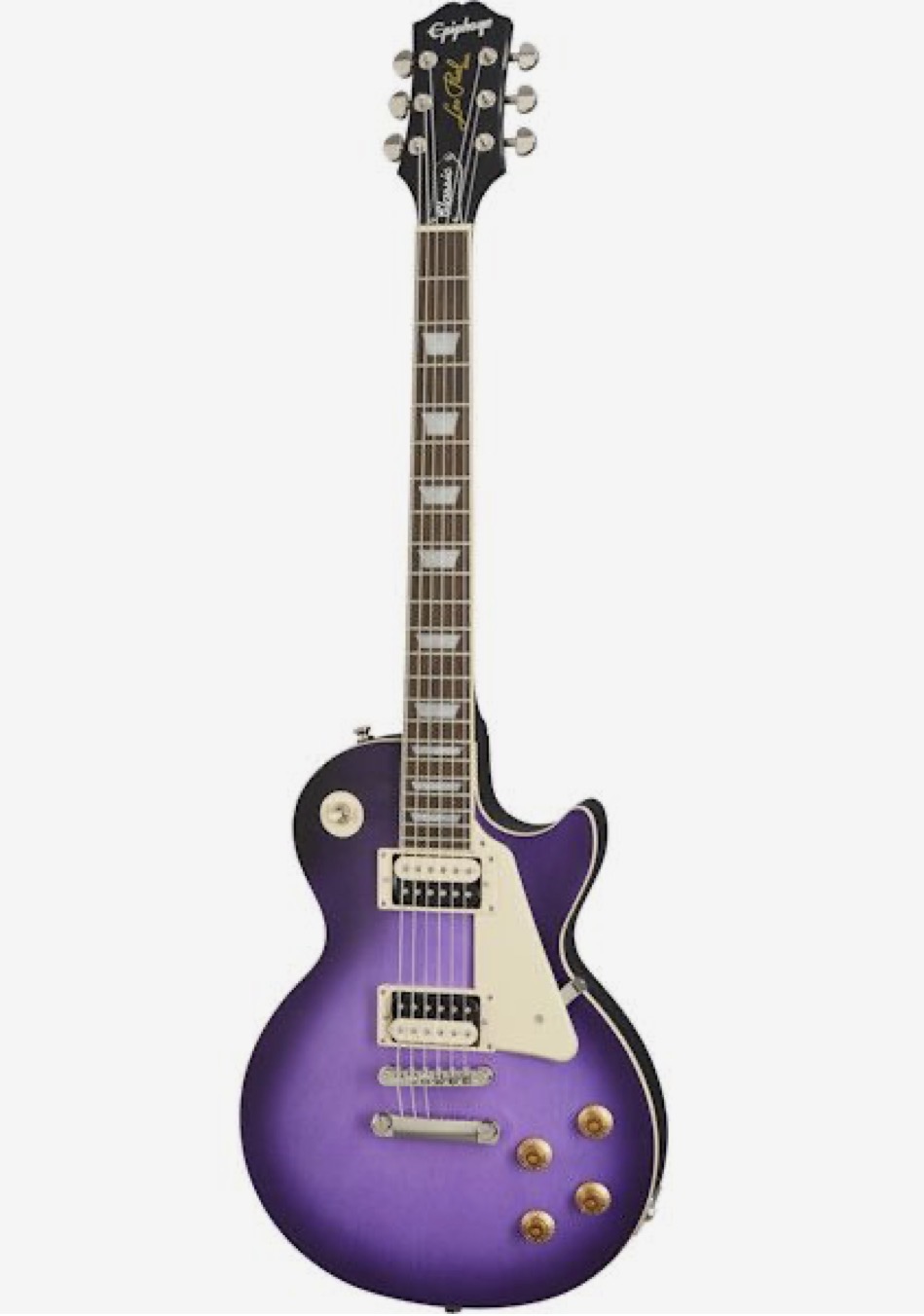
If you can stretch your budget, the Epiphone Les Paul Classic is the clear winner. It’s a “forever” rig that removes the technical bottlenecks, like tuning slips and muddy tone, that cause most beginners to quit.
By choosing the Classic, you are investing in a professional-grade partner that rewards your progress and matches an identity of excellence from day one.
However, if you need a lightweight, no-excuses tool to start right now, the Epiphone Les Paul Studio E1 is the smarter tactical choice.
It prioritizes action over marketing fluff, ensuring that a heavy price tag or a literal heavy guitar doesn’t stop you from showing up. It’s a functional gateway for the gritty action-taker who refuses to let anything stand in the way of their rockstar dreams.
The Bottom Line: Pick the instrument that makes your daily practice feel inevitable. Once you’ve made your choice, stop comparing specs and start playing.
Comparison Review Scores
| Category | Classic Score | Studio E1 Score |
| Tone Quality | 9/10 | 6/10 |
| Playability | 8/10 | 7/10 |
| Hardware | 9/10 | 5/10 |
| Total Average | 8.7/10 | 6.0/10 |
How We Tested: The String Shock Comparison Methodology
I don’t believe in “desktop reviews.” To give you the truth, I put both the Classic and the Studio E1 through my String Shock 4-Pillar Stress Test:
Pillar 1: The “Live Hour” Ergonomic Test
I strapped each guitar on for 60 minutes of standing play. For the Classic, I was looking for the “back-breaker” threshold, how quickly the solid mahogany weight transitions from “reassuring” to “painful.”
For the Studio E1, I tested the balance. Often, lightweight guitars suffer from “neck dive,” so I checked to see if the poplar body was heavy enough to keep the neck from dipping toward the floor.
Pillar 2: The “Deep Bend” Stability Stress
A guitar that won’t stay in tune is a guitar that kills your motivation. I performed a series of aggressive, 1 to 2 step bends on the G and B and high E strings across the entire fretboard.
I was looking to see how those Grover Rotomatics on the Classic held up against the standard die-cast tuners on the E1. I measured the cent-variance using a strobe tuner after every ten bends to see which one “slipped” first.
Pillar 3: The “Electronic Sweep” and Noise Floor
I opened the control cavities on both instruments to inspect the “guts.”
On the Classic, I was looking for the sweep of the CTS potentiometers, do they roll off smoothly, or is it an “all or nothing” volume jump?
On the E1, I tested the noise floor of the ceramic pickups. Ceramics can be noisy under high gain, so I ran them through a high-wattage lead channel to see which guitar hummed the loudest when the hands were off the strings.
Pillar 4: The “Dynamic Response” Sweep
A great rock guitar should “clean up” when you roll the volume down. I tested both guitars through a slightly overdriven tube amp. I set the gain to a “crunch” and then rolled the guitar volume back to 3.
I wanted to see if the Alnico PROs in the Classic could produce a bell-like clean tone, or if the Ceramics in the E1 would stay compressed and muddy.
This tells us if the guitar is a “one-trick pony” or a versatile tool.
| Retailer | Epiphone Les Paul Classic | Epiphone Les Paul Studio E1 |
|---|---|---|
| Amazon (New) | Check Price | Check Latest Price |
| Reverb (New & Used) | View Deals on Reverb | View Deals on Reverb |
Frequently Asked Questions
1. Is the Epiphone Les Paul Classic better for metal than the Studio E1?
While the Studio E1 features “hotter” ceramic magnets that excel at high-gain “chug,” the Classic is the superior choice for metal. The Alnico Classic PRO pickups offer more clarity and definition under heavy distortion, ensuring your riffs don’t turn into a muddy mess.
2. Why is there such a big price difference between the Classic and the Studio E1?
The price gap reflects the “bones” of the guitar. The Classic uses a traditional glued-in (set) neck and mahogany body for better sustain, plus premium Grover tuners and coil-splitting electronics. The E1 uses a bolt-on neck and lighter poplar wood to keep costs and weight down.
3. Does the Epiphone Studio E1 stay in tune?
For light practice, it’s fine. However, because it uses budget, non-locking tuners, aggressive string bending or heavy rock playing will likely knock it out of tune faster than the Classic, which is equipped with industry-standard Grover Rotomatics.
4. Can I upgrade the pickups in an Epiphone Studio E1 later?
Absolutely. Many players buy the E1 for its lightweight body and eventually swap in higher-end pickups. However, by the time you pay for new electronics and a professional installation, you’ll have spent nearly as much as if you had bought the Classic from the start.