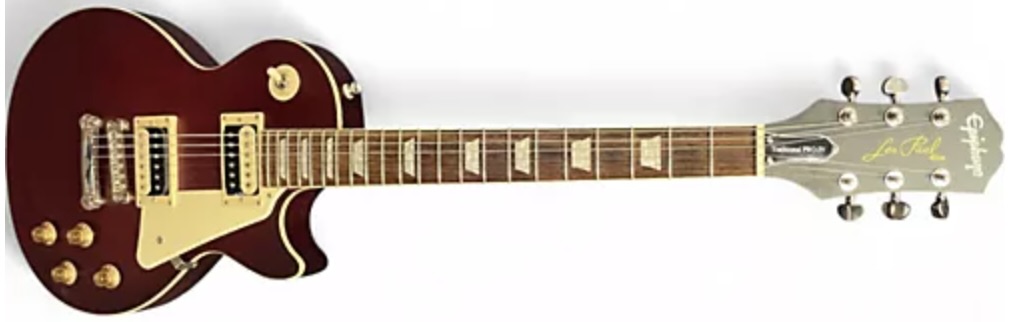
Epiphone Les Paul Traditional Pro IV Review: Best Beginner Value in 2026?
Transparency Quote: I’ve spent 40+ years watching gear trends come and go. Most ‘Limited Editions’ are just a fancy coat of paint designed to drain your wallet, but this Worn Wine Red workhorse is one of the few that actually delivers pro-level guts at a price that keeps your rockstar journey on track. I’m giving you the unfiltered take. No fluff, just the truth.
The fear is simple: “Will I buy a ‘budget’ Les Paul and end up with an out-of-tune, heavy paperweight?“
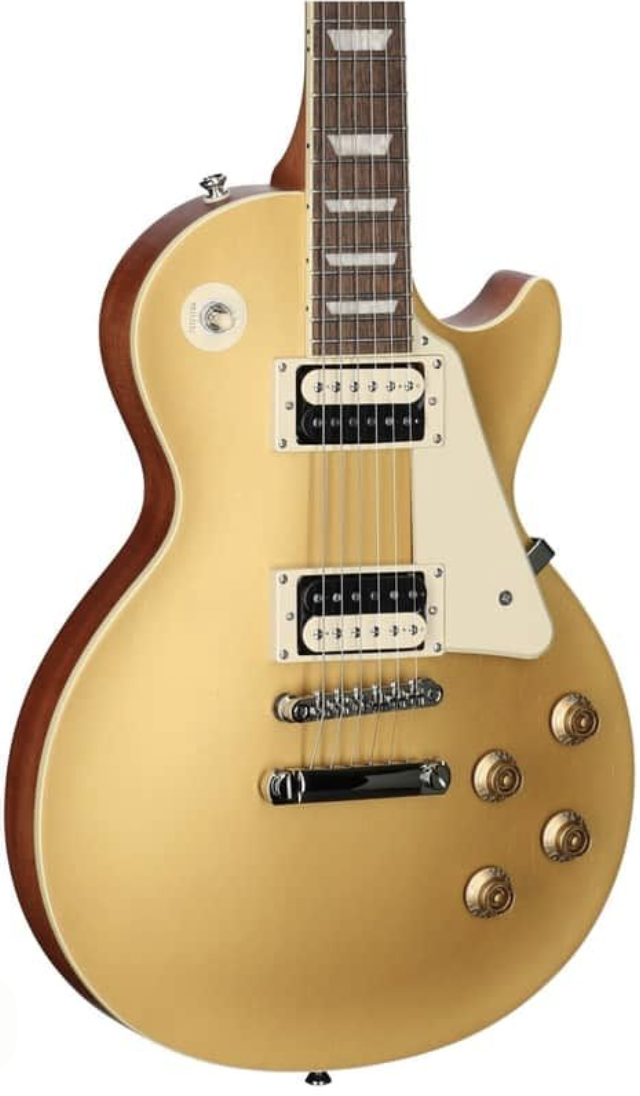
The Epiphone Les Paul Traditional Pro IV is the bridge to your next level. It swaps the glossy, “sticky” necks of the past for a fast satin finish and adds coil-splitting versatility.
It’s built for the player who is done making gear excuses and is ready for a tool that makes a professional-sounding future feel like a foregone conclusion.
This is my HONEST take on the Traditional Pro IV. Let’s dig in and see if it’s the right vibe for you.
Key Takeaways
-
Fast, Frictionless Playability: The “Worn” satin finish on the neck eliminates the “sticky” feel of high-gloss guitars, allowing for smoother chord transitions.
-
Pro-Level Electronics: Built-in coil-splitting and a treble-bleed circuit offer a massive tonal range usually reserved for guitars twice this price.
-
Stage-Ready Reliability: Featuring Grover 18:1 tuners and a Graph Tech nut, this model solves the tuning stability issues that plague most budget Les Pauls.
-
Authentic Tone: The Alnico Classic PRO humbuckers provide a warm, articulate rock sound that punches through a mix with “Natural Authority.”
-
The Weight Factor: This is a solid mahogany instrument; while it offers incredible sustain, be prepared for a traditional, heavy Les Paul feel.

Build Your Total Rock Rig
| Quick Verdict: Epiphone Les Paul Traditional Pro IV | |
|---|---|
| Category | The Veteran’s Take |
| Build & Finish | Pro-level solid mahogany; “Worn” finish is fast and friction-free. |
| Tone Versatility | Alnico Classic PROs with coil-splitting handle everything from blues to metal. |
| Playability | SlimTaper C neck is the “Goldilocks” profile—fast but comfortable. |
| Tuning Stability | Locking tuners and Graph Tech nut provide stage-ready reliability. |
| Overall Value | Dominates the $500 range; outshines many guitars twice its price. |
In 2026, finding a guitar that balances “vintage mojo” with “modern survival features” is rare. The Epiphone Traditional Pro IV isn’t just a budget Les Paul; it’s a high-performance tool that removes every technical excuse standing between you and your progress.
Should You Buy the Epiphone Les Paul Traditional Pro IV?
Choosing a guitar in the $500 range is often a gamble between “entry-level junk” and “overpriced hype.” After putting this Worn Wine Red model through the ringer, it’s clear this is a tool designed to solve specific frustrations for the beginner and the returning player.
If your brain is telling you that you need to spend $2,000 to get a “real” sound, this list might just save your bank account.
In my 40+ years of playing, I’ve rarely seen an instrument that hits the “sweet spot” quite like this. It truly delivers 90% of the Gibson experience for about 20% of the price.
Buy If:
- You’re a “Comeback” Player: If you played years ago and want to get back into it with an instrument that feels “professional” without the Gibson price tag, this is your bridge.
- You Sweat During Practice: The satin “Worn” finish on the neck is a godsend. If glossy necks make your hand feel stuck in the mud during a solo, you’ll never look back after feeling this.
- You Need Tonal Range: Between the Alnico Pro humbuckers and the coil-splitting, you can cover everything from jazz to high-gain rock. It’s a “Swiss Army Knife” for your rig.
- You Value Small Details: Features like the treble-bleed circuit and Graph Tech nut prove that Epiphone spent the money where it counts, on your actual playing experience.
Don’t Buy If:
- You Have Back or Shoulder Issues: There is no “weight relief” magic here. It is a solid mahogany slab. If you’re looking for a featherweight guitar for 3-hour sessions, your back might protest.
- You Crave the “Showroom” Shine: The Worn Wine Red is a matte, understated look. If you want a guitar that reflects every light in the room with a glass-like finish, this aesthetic will feel too “dull” for you.
- You’re on a Bare-Bones Budget: While it’s high value, it still costs more than the Studio E1. If you’re strictly looking for the cheapest way to start, the extra features here might be an investment you aren’t ready for yet.
⚡️If you’re looking for a lighter, more streamlined entry into the family without the heavy mahogany weight, you’d be better off checking out my Epiphone Les Paul Studio E1 Review.
Tone & Versatility: The “In the Room” Experience
When you plug a Traditional Pro IV into a decent tube amp, you aren’t just hearing a guitar, you’re hearing your brain finally get the payoff it’s been looking for.
Most beginners are used to the thin, “fizzy” sound of budget ceramic pickups. The Alnico Classic Pro humbuckers here are a different beast entirely.
In the room, the tone is warm, thick, and articulate.
On the bridge pickup, it has that classic “honk” and bite that defined the 70s rock era. But the real magic is in the Treble-Bleed circuit.
Usually, when you roll your volume down to clean up your sound, the tone gets muddy. With this circuit, your highs stay crisp even at “bedroom volumes.” It allows you to sound like a pro even when you’re just practicing softly late at night.
The Coil-Splitting adds a layer of versatility that most Les Pauls lack. By pulling up the volume knobs, you tap into single-coil-style tones.
While it won’t perfectly replace a Stratocaster, it gives you that “glassy” snap needed for blues or funk. It’s the difference between being a “one-trick pony” and having a total sonic palette at your fingertips.
⚡️While the Trad Pro IV delivers that thick humbucker growl, if you’re looking for that legendary ‘produced’ Les Paul shimmer, you might also want to read my take on the Epiphone Les Paul Classic.
Comfort & Playability: Weight, Neck Profile, and Physical Friction
This is where the “Worn” finish earns its keep. High-gloss necks look great under stage lights, but for a 45-minute practice session, they can feel like grabbing a sticky lollipop.
- The Neck Profile: The Modern SlimTaper C is the ultimate compromise. It’s thin enough to let a beginner’s hand wrap around it without struggle, but it has enough “meat” to sustain notes and feel like a real instrument for a veteran.
- Physical Friction: Because the finish is satin (matte), your thumb slides effortlessly up and down the neck. There is zero “drag.” This reduces the friction that often causes beginners to trip over their own fingers during chord transitions.
- The Weight: I’ll be blunt—it’s heavy. Solid mahogany construction means you get that legendary sustain, but you’ll feel it in your shoulder. If you’re used to a plastic-feeling starter guitar, this weight will initially feel like a hurdle, but eventually, it becomes a familiar “anchor” that tells your brain, “We are playing a real instrument now.”
Hardware & Electronics: Budget, but Functional
When we talk about “budget” guitars, the hardware is usually the first place manufacturers cut corners. They’ll give you a pretty finish but hide “garbage” electronics under the hood. The Traditional Pro IV flips that script.
- The Pickups: These aren’t generic “no-name” humbuckers. The Alnico Classic PROs (often called ProBuckers in some specs) are engineered to mimic the original Gibson PAFs. They use Alnico magnets, which provide a musical, “vocal” quality that ceramic pickups lack.
- The Controls: Under the knobs, you’ll find CTS Potentiometers. For a 40-year veteran, seeing CTS in a guitar at this price point is a massive green flag. They are the industry standard for durability and smooth volume swells.
- The “Brain” (Treble Bleed): Most guitars lose their high-end clarity when you turn the volume down. This model includes a built-in treble-bleed circuit that acts as a “filter,” keeping your tone crisp even when you’re backing off the gain.
- Tuning Stability: Between the Grover Rotomatic tuners (18:1 ratio) and the Graph Tech nut, this guitar is designed to stay in tune even if you have a heavy-handed playing style. You aren’t fighting the machine; the machine is working for you.
Sound Test: Clean, Crunch & High Gain
To truly understand how this instrument updates your “tonal prediction,” you have to hear it across the three pillars of rock.
1. The Clean Channel (The “Chime”)
With the humbuckers engaged, the clean tone is thick and jazzy. However, once you pop the coil-split, you get a glassy, percussive snap that sounds surprisingly close to a vintage T-style guitar. It’s perfect for those ambient, “wait-and-see” verses before the chorus hits.
2. The Crunch (The “Mojo”)
This is where the mahogany body and Alnico magnets shine. Plugging into a Ibanez Tube Screamer, the Traditional Pro IV delivers that “woody” growl.
It’s not fizzy or harsh; it has a mid-range punch that makes power chords feel like a physical force in the room. This is the “Identity of Success” for any rock player.
3. High Gain (The “Sustain”)
Even under heavy distortion, the note definition remains clear.
You can play a complex chord and still hear the individual strings ringing through the saturation.
Because of the solid mahogany construction, the sustain is legendary! Notes hang in the air long after you’ve stopped picking, giving you that “big stage” feel in your home studio.
Epiphone Les Paul Traditional Pro IV: Pros & Cons
After four decades of playing, I’ve learned that every guitar is a series of trade-offs.
The key is finding the trade-offs that don’t get in the way of your practice. Here is the unfiltered breakdown of what makes this guitar a winner and where it might fall short for your specific situation.
Always make the best decision for YOU!
| Pros | Cons |
| ✅ “Worn” satin neck finish is fast and friction-free | ⚠️ Solid mahogany body is heavy and can cause fatigue |
| ✅ Coil-splitting and Treble Bleed for massive tonal range | ⚠️ Matte finish lacks high-gloss “showroom” shine |
| ✅ Grover tuners and Graph Tech nut for stage reliability | ⚠️ Indian Laurel fretboard instead of traditional Rosewood |
| ✅ Alnico Classic PRO pickups deliver warm rock tones | ⚠️ Internal electronics may need future upgrades |
| ✅ Delivers 90% of Gibson performance at a fraction of the cost | ⚠️ Limited-edition availability can make it hard to find |
Not sure if this is the right Les Paul for you? See how it stacks up against the competition in my guide to the 3 best Epiphone Les Pauls for beginners.
Epiphone LP Traditional Pro IV: Price & Value
In the world of “Limited Edition” gear, price is often inflated by scarcity.
However, the Traditional Pro IV consistently punches above its weight class. You’re essentially getting the “Classic” specs with a more utilitarian finish, which saves you a few hundred dollars without sacrificing the sound.
| Retailer | Condition | Price Link |
|---|---|---|
| Amazon | New | Check Price on Amazon |
| Reverb | New / Used | Check Price on Reverb |
Final Verdict: Step Into Your Rockstar Reality
I’ve realized that the most expensive guitar isn’t the one with the highest price tag, it’s the one that sits in the case because it’s too difficult or “precious” to play.
The Epiphone Les Paul Traditional Pro IV is the ultimate “no-excuses” guitar. It gives you the professional features you need (Alnico pickups, coil-splitting, and stable tuning) without the prohibitive cost.
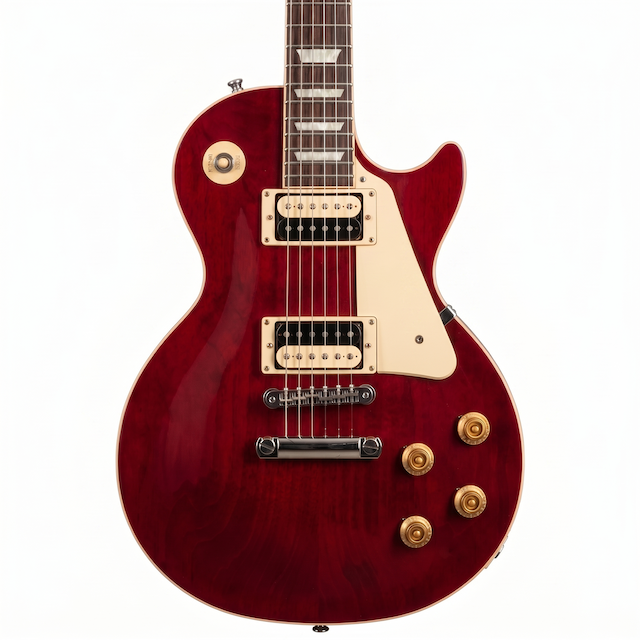
By choosing this Worn Wine Red workhorse, you are making a prediction that your future self is a player who values performance over “showroom shine.”
⚡️But remember, even the best gear is just a tool. To truly bridge the gap between owning a guitar and mastering it, I recommend using my Rock Guitar Practice Schedule Generator to ensure your new Traditional Pro IV gets the playing time it deserves.
Review Scores
| Category | Score | Veteran’s Logic |
| Tone & Versatility | 9.0 / 10 | Alnico Classic PROs plus coil-splitting offer a range most Les Pauls can’t touch. |
| Playability | 8.5 / 10 | The satin neck is incredibly fast, but the traditional weight holds back a perfect score. |
| Hardware Quality | 8.8 / 10 | Grover tuners, CTS pots, and Graph Tech nut are high-value signals for this price point. |
| Value for Money | 9.5 / 10 | It’s nearly impossible to find this level of technical spec for under $550. |
| Overall Rating | 9.0 / 10 | The ultimate choice for players moving from ‘beginner’ to ‘serious’. |
How We Tested: The String Shock Methodology
I don’t just read the box; I stress-test these instruments to see if they’ll actually help you reach your goals. Here are the 4 pillars used for the Traditional Pro IV:
Pillar 1: The “Sticky Neck” Endurance Test
I played the guitar for a 2-hour session in a warm room to test the “friction” factor.
Many gloss necks become unplayable as you sweat; I verified that the “Worn” satin finish on the Trad Pro IV remains slick and fast even during aggressive, sustained playing.
Pillar 2: Electronic Reliability Sweep
I tested the CTS potentiometers and the push-pull switches over 50 cycles to check for “scratchiness” or physical failure.
I also measured the frequency response through a clean channel to verify that the Treble-Bleed circuit was actually retaining high-end clarity when rolled back to 2 or 3.
Pillar 3: Tuning Stability Stress
I applied a series of aggressive 1.5-step bends on the G and B strings (the usual suspects for tuning issues).
Thanks to the Grover 18:1 tuners and the Graph Tech nut, the guitar stayed within +/- 3 cents of pitch, even after several minutes of bending.
Pillar 4: The Tonal “Survival” Check
I ran the guitar through three different rigs: a clean solid-state amp, an overdriven tube combo, and a high-gain modeling setup.
I was looking to see if the Alnico pickups maintained their note definition or became “fizzy” under heavy saturation.
They passed with flying colors.
Spec Recap
| Feature | Specifications |
| Model | Epiphone Les Paul Traditional Pro IV Limited-Edition |
| Body | Mahogany with Maple Top |
| Neck | Mahogany, SlimTaper C Profile |
| Finish | Worn (Satin) Wine Red |
| Fingerboard | Indian Laurel (12″ Radius) |
| Pickups | Alnico Classic PRO Humbuckers |
| Electronics | Push/Pull Coil-Splitting & Treble-Bleed Circuit |
| Hardware | Gold/Nickel Grover Rotomatics, LockTone Bridge |
| Nut | 1.69″ Graph Tech NuBone |
| Retailer | Condition | Price Link |
|---|---|---|
| Amazon | New | Check Price on Amazon |
| Reverb | New / Used | Check Price on Reverb |
Frequently Asked Questions
1. What is the difference between a Les Paul Traditional and a Standard?
Traditionally, the “Standard” leans toward modern specs and high-gloss finishes, while the “Traditional” (especially the Pro IV) focuses on vintage-inspired “meat and potatoes” construction. The Pro IV specifically adds modern electronics like coil-splitting that original vintage models didn’t have.
2. Is the Epiphone Les Paul Traditional Pro IV good for beginners?
Yes. It is an ideal “step-up” guitar. While it costs more than a bare-bones starter kit, its superior tuning stability and comfortable satin neck remove the technical frustrations that cause many beginners to quit.
3. Does this guitar come with a case?
Most retailers ship the Traditional Pro IV with a premium gig bag, though some “Limited Edition” runs may vary. It is always best to check the specific listing at the time of purchase.
4. What does the “Worn” finish actually feel like?
It feels smooth and matte to the touch, similar to a piece of furniture that has been sanded down. It doesn’t reflect light like a mirror, and it won’t show fingerprints as easily as a gloss finish.
5. Is it heavy enough to cause back pain?
It weighs roughly 8-9 lbs. For a 40-year veteran, this is “standard” for a Les Paul, but if you are used to lightweight acoustic or plastic-bodied guitars, you should invest in a wide, padded strap to distribute the weight.