

Palm Muting Technique for Chunky Hard Rock and Metal Riffs
For hard rock and heavy metal on electric guitar, the palm muting technique gives rock music that chunky, percussive sound.
It’s a technique I want you to hone in on, because you can hear the difference as soon as you compare regular picking with muted playing.
The sound starts with where your picking hand touches the strings. Let’s get that hand near the bridge and find the spot that gives your riffs some BALLS!
Key Takeaways
- Palm muting uses the side of your picking hand, resting lightly against the strings near the bridge.
- Find the sweet spot by listening: the note should still ring, but with shortened sustain and a chunky attack.
- Compare regular chords with muted playing to hear how palm muting tightens a riff and gives it a percussive sound.
- Practice a simple riff slowly and steadily, using your fret hand to release the chord between hits.
⚡️FREE: The 15-Minute Rock Guitar Practice Routine
Stop “practicing” and start playing. Grab the daily blueprint I use to keep my fingers stage-ready in just 15 minutes
Rest the Side of Your Picking Hand Near the Bridge
Use the edge of your hand
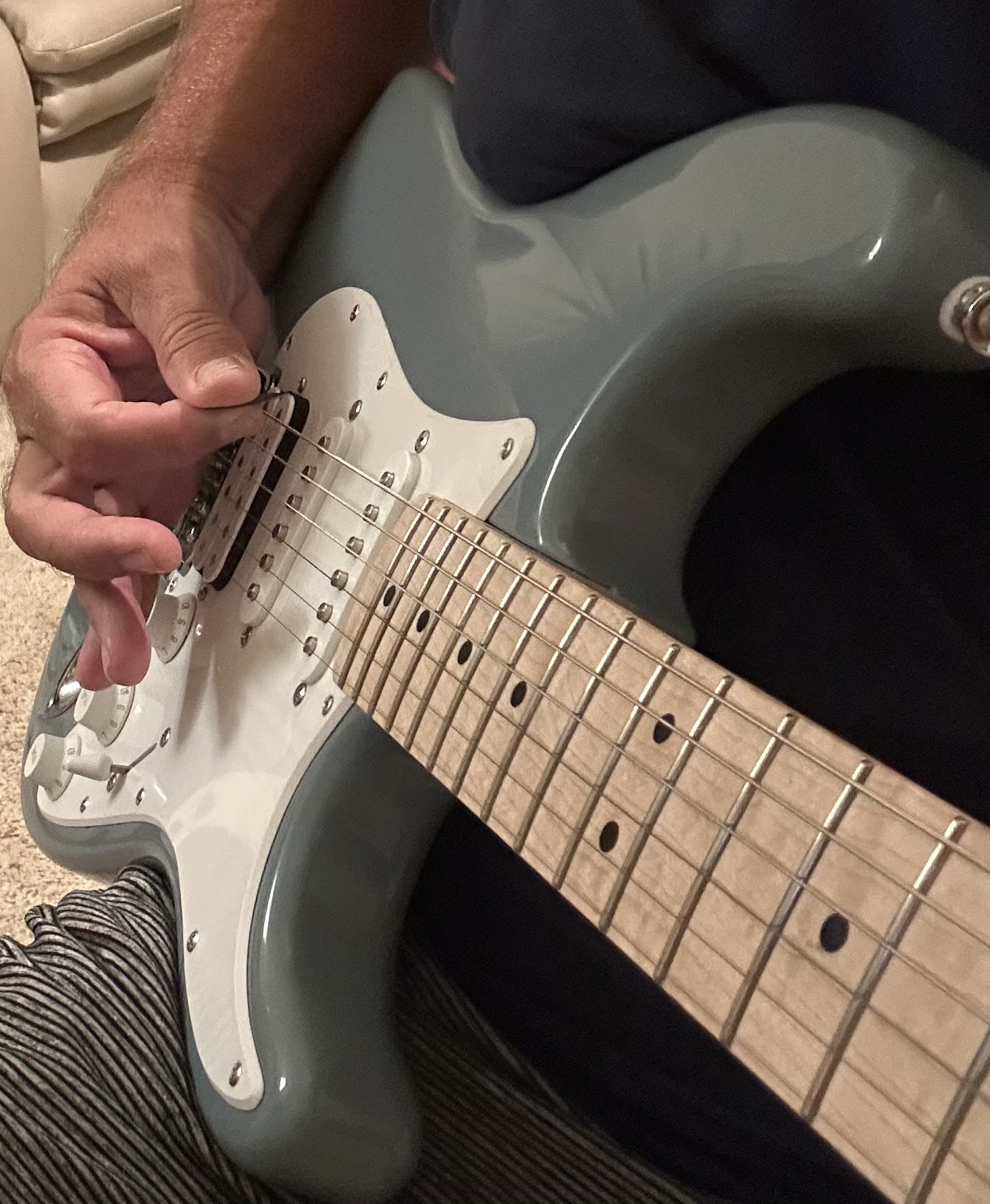
The name “palm muting” can throw you off. You use the side of your palm, not your whole palm laid flat across the strings.
I rest the side of my picking hand lightly against the strings near the bridge saddles as I pick, creating a percussive sound.
On an acoustic guitar, the effect is softer, but the hand position is similar.
This sound is a staple in hard rock and heavy metal, especially in rhythm guitar riffs.
Keep your pick grip your own
I like to let my fingers flap a little while I’m holding the pick. That’s how I play, but you don’t have to copy that finger position to palm mute.
Different ways of holding a guitar pick can work here.
Focus on getting the side of your hand against the strings near the bridge, whatever your grip looks like.
Find the Sweet Spot by Listening

Stay close to the bridge
If you move your picking hand too far up the strings toward the neck, the muted sound gets goofy.
I demonstrate that position first, then move my hand back toward the bridge saddles until I find the sweet spot. (see video)
You can hear the change as my hand moves. Near the bridge, I get the chunky sound I’m after.
I’m using a Strat for this demonstration, which has a fixed bridge. This means it doesn’t move. My Charvel, on the other hand, has a floating bridge(moves up and down), so the bridge setup isn’t the same on both guitars.
Either way, you can use the bridge saddles as a visual landmark. But remember their position and setup vary between guitars. Then listen to find the right position on the guitar you’re holding.
Keep the contact light
Rest the edge of your hand lightly against the strings. Light muting keeps string vibration audible, while heavy muting can kill the note.
Small changes in contact and pressure affect dynamics. Adjust your position until you can still hear the note, but its ringing sustain is shortened.
The sweet spot lets you hear the note while giving it that short, chunky attack. If the sound disappears, ease up on the pressure.
Hear What Palm Muting Does to a Riff
Compare regular chords with muted playing
I play the power chords normally first, then palm mute them. That contrast makes the effect easy to hear.
With the strings ringing freely, you get the regular chord sound.
Once the side of my picking hand touches the strings near the bridge, the rhythm takes on a tighter, chunkier character.
Try firm downstrokes, and you’ll notice the muted version has that ballsy sound you want in heavy metal riffing.
Distortion and overdrive, or excessive amplifier gain, can blur the muted attack. Start clean so you can hear and feel the change clearly.
Think of the rhythm like drums
When I think about rhythm guitar, I think about drums, not lead guitar.
Palm muting gives the guitar a percussive sound, which is what I’m getting at with the rhythm demonstrations in the video.
Listen to how the muted hits carry the beat. You’ll hear that tight attack in plenty of rock music. Keeping each note short creates a staccato effect.
Put the contrast into a simple riff
A useful way to hear this is to play a simple E5 riff twice. Use your fret hand to form the chord, then play it lightly before repeating it with firmer strokes.
Keep the strokes slow and controlled while you find the sweet spot.
Metronome practice will help you build a steady chugging sound.
Use your fret hand to release the chord between hits, and try the low E open string and A string. That open-versus-muted contrast is also part of these rock practice ideas that don’t suck.
Final Thought
Trust your ear and find the hand position that works the best.
Find that sweet spot that will shape your dynamics and create a chunky hard-rock attack.
When you do it right, and at high volume, it should rattle your inner soul a little.
Palm-Muting: FAQs
Frequently Asked Questions
1. Where should I place my hand for palm muting?
Rest the side of your picking hand lightly on the strings near the bridge saddles. The exact sweet spot varies between guitars, so listen as you adjust your hand.
2. How much pressure should I use?
Use light contact so you can still hear the note, but its ringing sustain is shortened. Too much pressure can kill the sound.
3. Does palm muting work on an acoustic guitar?
Yes, the hand position is similar on an acoustic guitar. The effect is softer than on an electric guitar.
4. Should I use distortion when learning palm muting?
Start clean so you can hear and feel the change clearly. Distortion, overdrive, or excessive gain can blur the muted attack.