
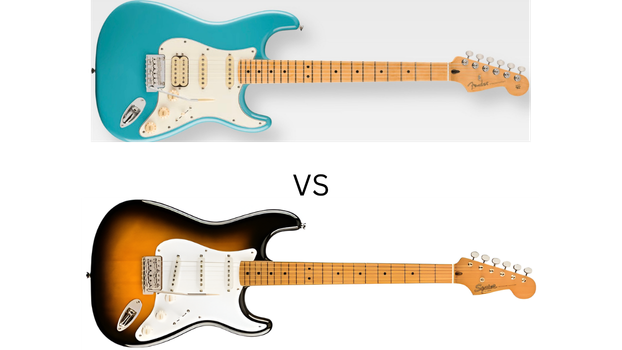
Squier Classic Vibe 60s Stratocaster Review: How It Stacks Up Against the 50s
Transparency Quote: I’ve spent four decades watching beginners and comeback players agonize over this exact choice. I’ve owned original vintage pieces and budget knockoffs that weren’t worth the wood they were carved from. The truth is, the “right” choice depends entirely on the specific era of rock ‘n’ roll living in your head.
What model is right for you? The ’60s model or the ’50s.
You want that iconic Stratocaster bite, the contoured body that fits like a glove, and that classic look that you’ve seen a million times from your rock idols.
On paper, these two guitars look nearly identical. Dig a little deeper and you’ll see they are two different animals.
One snaps with the bright, clean energy of early rock and surf, while the other growls with the warm, bluesy grit of the British Invasion. Let’s look at both models to see which one fits the feel you’re looking for.
⚡️FREE: The 15-Minute Rock Guitar Practice Routine
Stop “practicing” and start playing. Grab the daily blueprint I use to keep my fingers stage-ready in just 15 minutes.
Key Takeaways
- Tone Profiles: The ’50s model uses Alnico III magnets for a bright, clear “snap,” while the ’60s model uses Alnico V for a warmer, punchier “quack.”
- Fingerboard Friction: The ’50s features a one-piece maple neck (snappier), while the ’60s uses Indian Laurel (smoother/warmer).
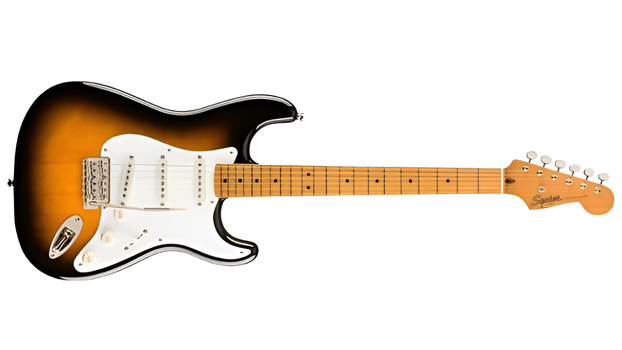
- Era Aesthetics: Choose the ’50s for that 2-tone sunburst and white plastics; go ’60s for 3-tone sunburst and aged “mint green” hardware.
- Hardware Consistency: Both sport a real bone nut and vintage-style split-shaft tuners, providing professional-grade tuning stability.
- The “Sticky” Factor: Both share a thick gloss polyurethane neck finish that may require a quick buff for players with sweaty hands.
| Quick Verdict: Squier CV ’50s vs. Squier CV ’60s Strat | |
|---|---|
| Category | Winner |
| Vintage Snap & Chime | Classic Vibe ’50s |
| Bluesy Warmth & Overdrive Response | Classic Vibe ’60s |
| Visual “Custom Shop” Aesthetic | Classic Vibe ’60s |
| Authentic 50s Clean Tones | Classic Vibe ’50s |
| Overall Winner | Classic Vibe ’60s |
While both models offer an incredible bridge to a professional sound, the Squier Classic Vibe ’60s Stratocaster takes the win for its warmer Alnico V pickups that handle modern rock pedals with much more grace. However, if you are a guitarist chasing that crystalline, glassy snap of early rock and roll, the Classic Vibe ’50s provides an unfiltered clarity that is hard to find at this price point.
Comparison Table: Head-to-Head: Tone, Tech, and True Potential
| Feature | Squier Classic Vibe ’50s | Squier Classic Vibe ’60s |
|---|---|---|
| Pickup Type | Fender-Designed Alnico III | Fender-Designed Alnico V |
| Fingerboard | Maple (One-Piece) | Indian Laurel |
| Tone Character | Bright, Snappy, Crystalline | Warm, Punchy, Round “Quack” |
| Pickguard Style | 1-Ply White (8-Hole) | 3-Ply Mint Green (11-Hole) |
| Best Musical Fit | Surf, Country, 50s Rock | Blues-Rock, Hendrix, 60s Psych |
The Spec Sheet: Beyond the Marketing Fluff
| Technical Spec | Classic Vibe ’50s / ’60s Details |
|---|---|
| Body Wood | Nato (Gloss Polyurethane Finish) |
| Neck Profile | Modern “C” Shape (Tinted Gloss) |
| Fretboard Radius | 9.5″ Radius |
| Nut Material | Real Bone (1.650″ Width) |
| Bridge Type | 6-Saddle Vintage-Style Synchronized Tremolo |
| Hardware Finish | Nickel-Plated (Vintage-Style Tuners) |
Should You Buy the Squier Classic Vibe ’50s or ’60s?
Choosing between these two isn’t about finding the “better” guitar, it’s about deciding which specific era of rock ‘n’ roll you want to live in.
If you’re a beginner or a comeback player, the ’50s model offers a brighter, unforgiving clarity that forces you to be precise, while the ’60s version has a warmer, “broken-in” soul that feels a bit more forgiving under a layer of overdrive.
Think about the sound in your head, is it the clean, bell-like snap of the early days, or the smoky, percussive growl of the British Invasion?
⚡If you’re still weighing your options and aren’t sure if a Strat is the right foundation for your sound, check out my full guide to the best electric guitars for beginners before you pull the trigger.
Buy the ’50s Strat if…
- You chase the “Glass”: You want that ultra-bright, crystalline snap found on early rock and roll and surf records.
- You love the Maple look: You prefer the classic aesthetics and the slightly snappier feel of a one-piece maple neck.
- Clean is your King: You spend most of your time playing clean or with very light “breakup” and need maximum note definition.
Buy the ’60s Strat if…
- You need the “Meat”: You want the warmer, mid-range punch of Alnico V pickups that handle overdrive and fuzz pedals like a pro.
- You want the ” Hendrix” vibe: You’re chasing that percussive “quack” in positions 2 and 4 that defined the late 60s blues-rock scene.
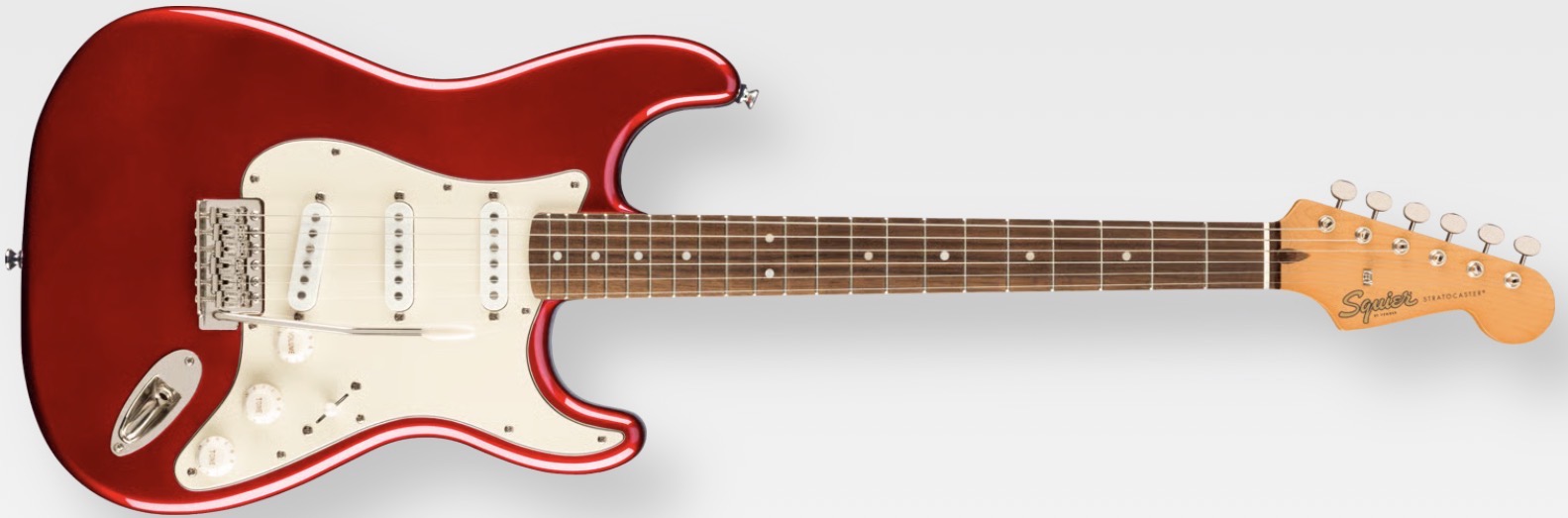
- Aesthetics matter: You dig the “time-capsule” look of aged plastics, mint green pickguards, and the darker Indian Laurel fretboard.
Squier Classic Vibe 60s/ Squier Classic Vibe 50s Price Comparison
You don’t need to drain your bank account or drop Fender Custom Shop cash just to get an inspiring, stage-ready Strat tone into your bedroom.
Both of these guitars provide incredible value at the $500 price point, leaving you plenty of room to grab a solid amp or a gritty overdrive pedal.
Instead of sifting through endless online listings and potentially settling for less-than-ideal options, let’s streamline the process and pinpoint exactly where you can secure your new Squier Classic Vibe Strat.
This ensures you get the best price and the most reliable service, so you can get back to what matters most, learning and creating music.
’60s Strat
| Guitar Model | Amazon Price | Reverb Price |
|---|---|---|
| Squier Classic Vibe ’50s Stratocaster | View on Amazon | View on Reverb |
| Squier Classic Vibe ’60s Stratocaster | View on Amazon | View on Reverb |
Tone Comparison
Squier CV ’50s
Plugged into a clean tube amp, the ’50s model is all about transparency.
It captures every vibration of the strings with a high-end “ping” that reminds you why this design changed music in the first place.
It’s a very honest guitar and doesn’t mask your mistakes, forcing you to develop your picking hand to make it truly sing.
Squier CV ’60s
The ’60s model feels like it already has a touch of compression and warmth built-in. The Alnico V magnets have a rounder low-end that feels “produced” right out of the gate.
When you kick on a fuzz or a heavy overdrive, this guitar holds its composure, providing a woody, resonant foundation that stays musical even when the gain is cranked.
⚡Of course, even the best Alnico pickups need a solid foundation, so I recommend pairing this with one of the amps from my Boss Katana 50 vs. Fender Mustang LT50 review to really unlock that 60s chime.
🤓If you want to geek out on the physics of why these magnets react differently to your touch, WikiAudio has a solid breakdown on how guitar pickups work.
| Squier Classic Vibe ’50s | Squier Classic Vibe ’60s |
|---|---|
|
Pros (The Wins) ✅ Glassy Chime: Alnico III pickups deliver an authentic, crystalline high-end snap. ✅ Maple Response: The one-piece maple neck offers a bright, fast, and classic feel. ✅ Rock-Solid Hardware: A real bone nut and vintage tuners keep your tuning stable. |
Pros (The Wins) ✅ Bluesy “Quack”: Alnico V magnets push a punchy, warm mid-range that loves a tube amp. ✅ Custom Shop Looks: Aged plastics and a 3-ply mint pickguard nail that 1960s aesthetic. ✅ Pedal Friendly: Handles fuzz and heavy overdrive with much more grace and low-end composure. |
|
Cons (The Reality) ⚠️ Sticky Finish: The high-gloss polyurethane neck coating can drag if your hands sweat during long sessions. ⚠️ Unforgiving Clarity: The bright, transparent tone will not mask sloppy technique. ⚠️ Stiff Tremolo: The vintage-style bridge block is thin and not designed for aggressive whammy use. |
Cons (The Reality) ⚠️ Sticky Finish: Shares the same heavy gloss neck, requiring a quick buff with a Scotch-Brite pad to play fast. ⚠️ Thirsty Fretboard: The Indian Laurel board often arrives looking pale and dry, needing a quick oiling. ⚠️ 60-Cycle Hum: These are true-to-era single coils; crank the gain too high, and the hum will get loud. |
Final Verdict: Which One Should You Buy?
Choosing the right Strat isn’t just about reading spec sheets, it’s about finding the instrument that inspires you to put in the practice.
If you want the unapologetic, crystalline snap of early rock and roll, the ’50s Classic Vibe will force you to play with precision and reward you with unmatched clarity.
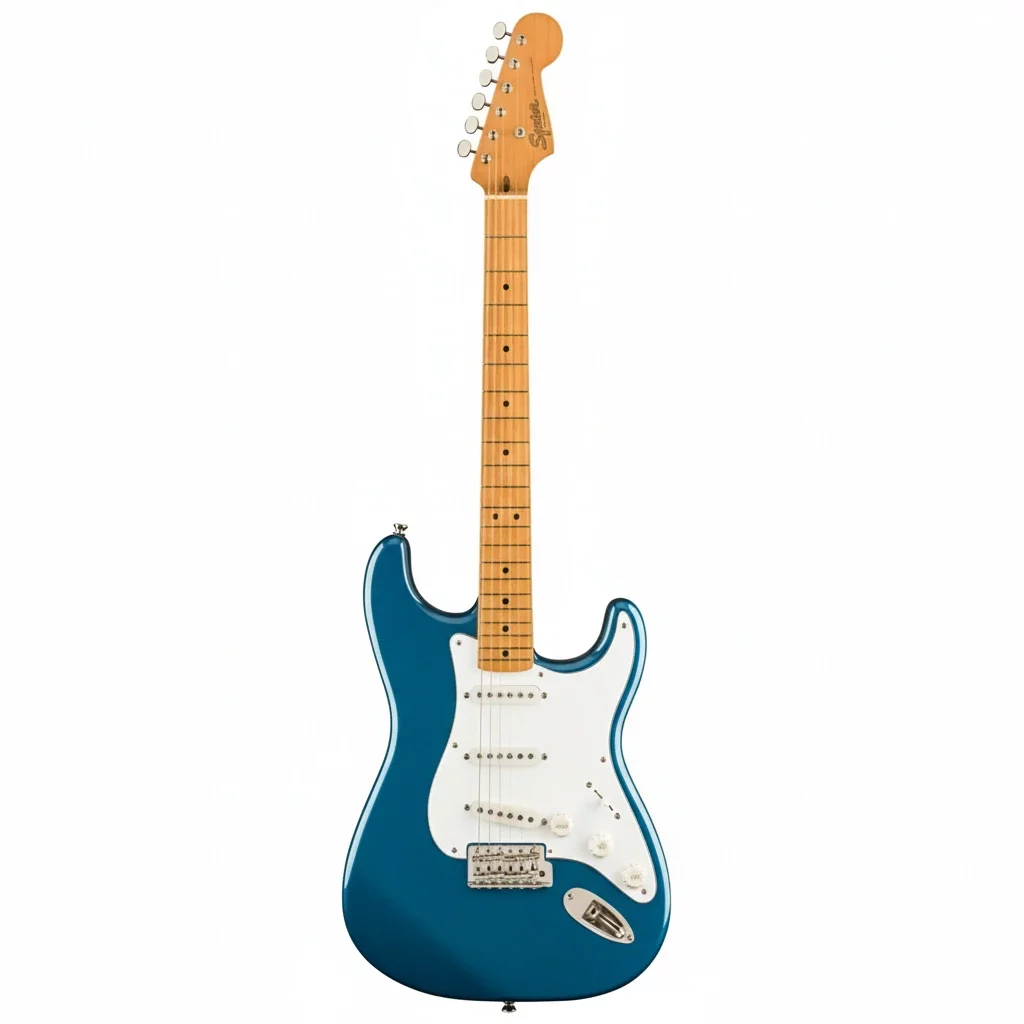
If you’re a lead player in the making chasing that unmistakable blues-rock snarl, the ’60s Classic Vibe is your weapon.
Its Alnico V pickups provide that extra midrange punch to push an overdriven amp right into the sweet spot.
Pick the era that matches the sound in your head, grab a Scotch-Brite pad to take the sticky gloss off the back of that neck, and get to work.
Comparison Review Scores
| Category | Squier CV ’50s | Squier CV ’60s |
| Tone Quality | 9.0/10 | 9.2/10 |
| Playability | 8.5/10 | 8.5/10 |
| Hardware & Build | 8.0/10 | 8.0/10 |
| Aesthetics | 8.5/10 | 9.0/10 |
| Value for Money | 10/10 | 10/10 |
| String Shock Rating | 8.8/10 | 8.9/10 |
How We Tested: The String Shock Comparison Methodology
To cut through the marketing hype and see how these guitars actually perform in the room, I ran both through the String Shock 4-pillar stress test:
- The “Out of the Box” Check: We assess the factory setup, checking fret ends, intonation, and neck relief to see how much immediate work is required before you can comfortably play.
- The Sweat Test: I play both models for 60 minutes straight to see how the thick polyurethane neck finish handles friction and heat during a real-world practice session.
- The Sonic Spectrum: Both guitars are run through a clean tube amp and a high-gain Boss Katana setting to expose the breaking points of the Alnico III versus Alnico V magnets.
- The Tuning Torture: We push the vintage-style tremolo and perform heavy 1.5-step blues bends to test the true stability of the factory-installed bone nut and split-shaft tuners.
| Guitar Model | Amazon Price | Reverb Price |
|---|---|---|
| Squier Classic Vibe ’50s Stratocaster | View on Amazon | View on Reverb |
| Squier Classic Vibe ’60s Stratocaster | View on Amazon | View on Reverb |

Build Your Total Rock Rig
⚡️FREE: The 15-Minute Rock Guitar Practice Routine
Stop “practicing” and start playing. Grab the daily blueprint I use to keep my fingers stage-ready in just 15 minutes.
Frequently Asked Questions
1. Which Squier Classic Vibe Stratocaster is best for beginners?
Both are pro-level foundations, but the ’60s model wins for most. The Alnico V pickups bridge the gap between clean chime and gritty rock, giving you more room to find your sound without the gear fighting back. It’s the more versatile “Find-a-Way” tool for someone starting their journey.
2. Can I play heavy metal on a Classic Vibe Strat?
Not unless you love the sound of a beehive. These single-coils hum like crazy under high gain. They’re forged for blues and classic rock, not modern metal. If you want to grind, look for a humbucker-equipped HSS Strat instead.
3. Do I need to upgrade the hardware right away?
No. Squier didn’t cut corners on the essentials. The bone nut and split-shaft tuners provide professional-grade tuning stability out of the box. Don’t waste money on “upgrades” until you’ve put in enough sweat equity to actually hear the difference.
4. What is the difference between the Alnico III and Alnico V pickups?
It’s all about the magnets. Alnico III (50s) delivers a crystalline “glass” snap that’s ultra-transparent. Alnico V (60s) provides more mid-range meat and a percussive “quack” that captures the grit of a cranked tube amp.
5. Why does the ’60s model have a different fretboard?
Era-authenticity. The ’50s maple board offers a bright, immediate snap that rings out. The ’60s laurel board adds a touch of warmth and feels slightly “softer” under the fingers during those big, expressive blues bends.