
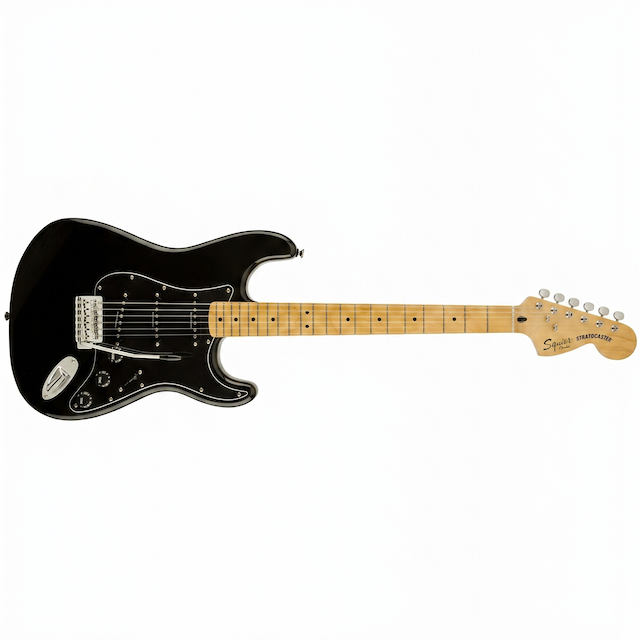
Squier Sonic HSS Review: A Strat That Rocks
Transparency Quote: I’ve played everything from a battered pawn shop Strat to a $4,000 Fender Custom Shop, and I can say that the price tag doesn’t always tell the whole story. The Squier Sonic HSS won’t replace your Classic Vibe, but for under $250, it has absolutely no business being this good.
For the money, the Squier Sonic Stratocaster HSS is a guitar that would have made 1980s-era Steve’s jaw hit the floor.
Back then, a $250 beginner guitar was a plank of wood with strings nailed to it. Today? It’s a legitimate instrument with real Strat DNA.
The Sonic series replaced the old Squier Bullet lineup. Fender kept the price point and raised everything else.
The HSS configuration specifically is the sweet spot of the Sonic range, giving you the glassy single-coil chime of a traditional Strat and a bridge humbucker that can push some actual grit when you need it.
Is it perfect? No. But at this price, “perfect” isn’t the standard. “Inspiring” is. And the Squier Sonic HSS clears that bar with room to spare.
Let’s talk about it.
⚡️FREE: The 15-Minute Rock Guitar Practice Routine
Stop “practicing” and start playing. Grab the daily blueprint I use to keep my fingers stage-ready in just 15 minutes.
Key Takeaways
- HSS Versatility: The bridge humbucker opens up rock and blues-rock tones the SSS simply can’t match without a pedal doing the heavy lifting.
- Lightweight Body: The thinner Poplar body makes this one of the most comfortable beginner guitars to play standing up for long sessions.
- Satin Neck: The slim “C” satin urethane neck is a genuine pleasure, no sticky gloss finish slowing your hand down the fretboard.
- Budget Reality: The ceramic pickups are a step below Alnico and it shows at high gain. The humbucker can get muddy if you push it too hard.
- Upgrade Platform: The Sonic HSS is a fantastic base instrument. A pickup swap later down the road transforms it into a legitimate gigging guitar.
| Quick Verdict: Squier Sonic Stratocaster HSS | |
|---|---|
| Category | The Veteran’s Take |
| Build & Finish | Lightweight Poplar body with a satin maple neck that feels faster and more player-friendly than anything else in this price bracket. |
| Tone Versatility | HSS ceramic pickups deliver genuine Strat chime from the single coils and usable crunch from the humbucker, just don’t push the gain too hard. |
| Playability | Slim “C” neck, 9.5″ radius, and narrow-tall frets make this one of the most comfortable beginner guitars to pick up and actually want to keep playing. |
| Tuning Stability | Chrome sealed die-cast tuners hold up fine for practice and light use, but the tremolo will need attention if you’re using the whammy bar aggressively. |
| Overall Value | At $249.99, the Sonic HSS is the best proof yet that a budget guitar doesn’t have to feel like a punishment. It’s a legitimate instrument, not a toy. |
In 2026, the Squier Sonic Stratocaster HSS sets the standard for what a sub-$250 guitar can be. Lightweight, fast-playing, and versatile enough to grow with a beginner for years, it’s the smartest entry point into the Strat family and a genuine threat to guitars twice its price.
Review Scores
| Category | Score |
|---|---|
| Tone Quality | 7.8/10 |
| Playability | 8.8/10 |
| Hardware & Build | 7.5/10 |
| Aesthetics | 8.5/10 |
| Value for Money | 9.5/10 |
| Total String Shock Rating | 8.4/10 |
Squier Sonic Stratocaster HSS: Price and Value
At $249.99, the Squier Sonic Stratocaster HSS sits in a price bracket that used to mean “barely functional.”
Not anymore.
Fender has effectively moved the needle on what a beginner guitar can deliver, and the Sonic is the proof.
To put it in perspective, when Hendrix was gigging at clubs for $5 a night, his gear cost a week’s wages.
Today, you can get a genuine Strat-style guitar with real Fender DNA for the price of a tank of gas and a decent dinner out. The math on this thing is almost offensive.
The Sonic HSS undercuts the Squier Classic Vibe lineup by $150–$200 and gives up some ground on pickups and hardware.
That’s an honest trade-off. But for a player who’s still learning whether the guitar is going to stick, or a seasoned player looking for a no-guilt travel guitar, the value equation is impossible to argue with.
Pro Tip: If you’re buying the Sonic as a first guitar and you’re serious about sticking with it, budget an extra $50 for a proper setup from a local tech.
A bone nut swap and fret polish will transform this guitar from great to exceptional.
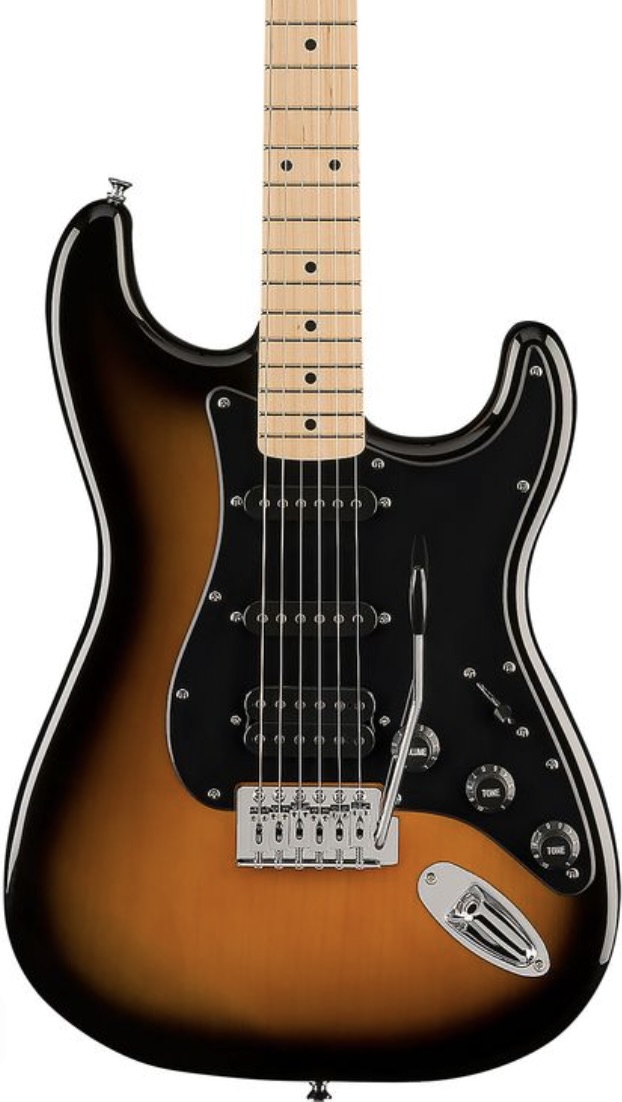
| Platform | Condition | Check Current Price |
|---|---|---|
| Amazon | New | View on Amazon |
| Reverb | Used | View on Reverb |
Squier Sonic Stratocaster HSS: Should You Buy It?
If you’re a beginner or a player who needs a reliable, versatile guitar under $250, yes without hesitation.
The Squier Sonic HSS isn’t trying to be a Classic Vibe. It’s not competing with a Player Series Strat.
It knows exactly what it is, an entry-level instrument that punches well above its weight and it delivers on that promise consistently.
Buy if:
- You’re just starting out and need a quality instrument that won’t fight you while you’re learning
- You want Strat versatility with a clean chime and some grunt from the humbucker, all without buying two guitars
- You’re a gigging player who needs a reliable backup that you won’t cry over if it gets knocked around
Don’t Buy if:
- You’re a serious tone chaser expecting Alnico clarity and warmth. The ceramic pickups are the Sonic’s honest limitation
- You’re planning to run high gain all night. The bridge humbucker gets muddy past a certain threshold
- You’ve already outgrown entry-level and should really be looking at the Squier Classic Vibe ’60s Stratocaster instead
Tone & Versatility
Clean
Plugged into a clean channel on a practice amp like the Orange Crush 20RT, the Sonic HSS single coils genuinely surprise you.
Positions 2 and 4, that classic in-between Strat quack, are present and accounted for.
It’s not the bell-like Alnico chime of the Classic Vibe, but it’s in the same zip code.
Frusciante’s funky clean tones on Californication and Hendrix’s “Little Wing” intro positions? Completely accessible here.
The neck pickup is warm and round, a solid landing spot for slow blues phrases and rhythm work.
Don’t let the budget tag fool you, these single coils have genuine character.
Pro Tip: Roll the tone knob back to about 7 on the neck pickup and you’ll find a warm, almost P-90-adjacent voice that’s surprisingly usable for jazzy rock lines.
Crunch
This is where the HSS earns its keep. Kick on a light overdrive and the bridge humbucker wakes up.
It has more output and thickness than the SSS version’s bridge single coil, which means you can actually push an amp into natural breakup without sounding thin and brittle.
Classic rock rhythm work, think early Clapton, some SRV crunch works well here.
The single coils also hold up nicely under light drive, maintaining their quack and clarity without turning to mush.
High Gain
Here’s where Steve keeps it real with you: the ceramic bridge humbucker starts to struggle under serious gain.
It gets a bit muddy and lacks the tight low-end articulation of an Alnico or a proper passive humbucker.
For bedroom metal? Fine.
For drop-tuned chug and modern high gain? You’ll be fighting the guitar.
If high gain is your primary language, look at the best electric guitars for beginners guide for some more appropriate options or budget for a pickup upgrade down the road.
Comfort & Playability
The slim “C” satin urethane neck is genuinely one of the best things about this guitar.
No sticky gloss finish dragging your thumb along the back of the neck mid-solo. It’s fast, it’s comfortable, and it feels more expensive than it is.
The 9.5″ fingerboard radius is the modern sweet spot. Comfortable for chords, not so flat that single-note bends feel dead.
The 21 narrow-tall frets make note clarity and bending feel natural rather than forced.
The lighter, thinner Poplar body is a real-world win for beginners.
Believe me, after two hours of playing standing up, your shoulder thanks you.
It’s not quite the resonant slab of alder you’d find on a Player Series, but the weight reduction is a genuine quality-of-life improvement for players who are still building stamina.
Pro Tip: The tremolo bridge can arrive slightly stiff from the factory. If the whammy bar feels sticky or doesn’t return to pitch cleanly, removing one of the claw springs in the back cavity fixes it in five minutes.
One real-world flag worth mentioning: some players have reported the 5-way pickup toggle blade can be finicky if not set perfectly in position, occasionally causing a slight signal drop.
Check it on arrival and reseat the blade if needed. Minor issue, easy fix.
Hardware & Electronics
The chrome sealed die-cast tuners are serviceable. They’re not Grover or Sperzel quality, but they hold tune reasonably well once the strings are stretched in properly.
New strings will drift on any budget guitar until they’ve been properly stretched; that’s not a tuner problem, that’s physics.
The 6-saddle vintage-style synchronized tremolo is a step down from the bone nut you’ll find on the Classic Vibe.
It’s a standard budget unit that works fine for light tremolo use but won’t survive aggressive dive-bomb abuse.
Players who are hard on their whammy bar will want to look at a tremolo upgrade eventually or just block it off for stability.
The overall build quality is solid for the price point.
Fret ends have been reported as occasionally rough on some units straight out of the box.
Run your hand along the fretboard edge on arrival and a few minutes with a fret polishing cloth sorts it out if needed.
Pro Tip: On your first string change, polish the fret ends with a little 0000 steel wool or a fret polishing cloth. You’ll feel the difference immediately and it takes less time than tuning the guitar.
| ✅ Pros | ⚠️ Cons |
|---|---|
| ✅ Genuinely Versatile: That HSS layout gives you real Strat *chime* out of the neck and middle single-coils, then the bridge humbucker steps in with the beef for rock and heavier riffs. One guitar, two personalities. | ⚠️ QC Is a Coin Flip: Budget guitar, budget-guitar rules apply, factory setups are all over the map. Don’t be shocked if yours needs a fret level, action tweak, or intonation fix before it plays right. |
| ✅ Comfortable for Days: At roughly 6–6.5 lbs, the *poplar* body and satin-finish neck make this thing disappear on you during long practice sessions. No shoulder fatigue by song three. | ⚠️ Hardware Is Entry-Level: The sealed tuners and trem bridge get the job done, but lean on that bar too hard and you’ll be *retuning* between songs. |
| ✅ Killer Price for the Vibe: You get the iconic Fender look and feel without touching the price tag of the fancier models. Budget-friendly done right. | ⚠️ Pickups Lack Nuance: The ceramic humbucker can get a little muddy under gain, and there’s no coil-split to bring back that quacky single-coil tone when you want it. |
| ✅ A Modder’s Dream: Standard construction means this is a *perfect platform* for upgrades, swap the pickups, tuners, or bridge as your ear (and budget) evolve. | ⚠️ Budget Tonewoods: Poplar body, lower-grade maple neck, it gets the job done, but don’t expect the rich resonance you’d find on pricier Strats. |
How We Tested: The String Shock Methodology
To give you an honest picture of what the Squier Sonic HSS actually delivers in the real world, I ran it through the String Shock 4-pillar stress test:
- The “Out of the Box” Check: Factory setup assessment: fret ends, neck relief, intonation, and action right out of the case before touching anything.
- The Sweat Test: 60 minutes of continuous play standing up to evaluate the satin neck under real-world friction and fatigue conditions.
- The Sonic Spectrum: Clean tube amp, light overdrive, and high-gain Boss Katana settings to expose where the ceramic pickups shine and where they hit their ceiling.
- The Tuning Torture: Tremolo use, aggressive 1.5-step bends, and open chord strumming to test how long the factory tuners and bridge setup hold pitch before drifting.
Spec Recap
| Specification | Detail |
|---|---|
| Body Material | Poplar (thinner profile for lighter weight) |
| Neck Material | Maple |
| Neck Finish | Satin Urethane |
| Neck Profile | Slim “C” Shape |
| Scale Length | 25.5″ (648mm) |
| Fingerboard | Maple or Indian Laurel |
| Fingerboard Radius | 9.5″ |
| Frets | 21 Narrow Tall |
| Pickup Configuration | HSS (Bridge Humbucker + 2 Single Coils) |
| Pickup Type | Ceramic Magnets |
| Controls | Master Volume, 2 Tone Controls |
| Bridge | 6-Saddle Vintage-Style Synchronized Tremolo |
| Tuners | Chrome Sealed Die-Cast |
| Hardware Finish | Chrome |
| Price | $249.99 |
Final Verdict
The Squier Sonic Stratocaster HSS is a genuinely impressive piece of kit for what it costs. It’s lightweight, fast-playing, and covers enough tonal ground to keep a beginner learning for years before they outgrow it.
The ceramic pickups are the honest ceiling here. They’re good enough for clean tones and crunch but start to struggle under serious gain.
That’s not a flaw, it’s just physics and economics. You can’t put Alnico V pickups in a $249 guitar and keep the lights on.
What Fender has done is give you a guitar that plays well, looks great, and gives you real Strat DNA without the Fender tax.
⚡️When you’re ready to step up, the Squier Classic Vibe ’60s Stratocaster is the natural next move, but don’t rush it. The Sonic HSS will take you further than you think.
Get one. Polish the frets. Stretch the strings. And get to work.
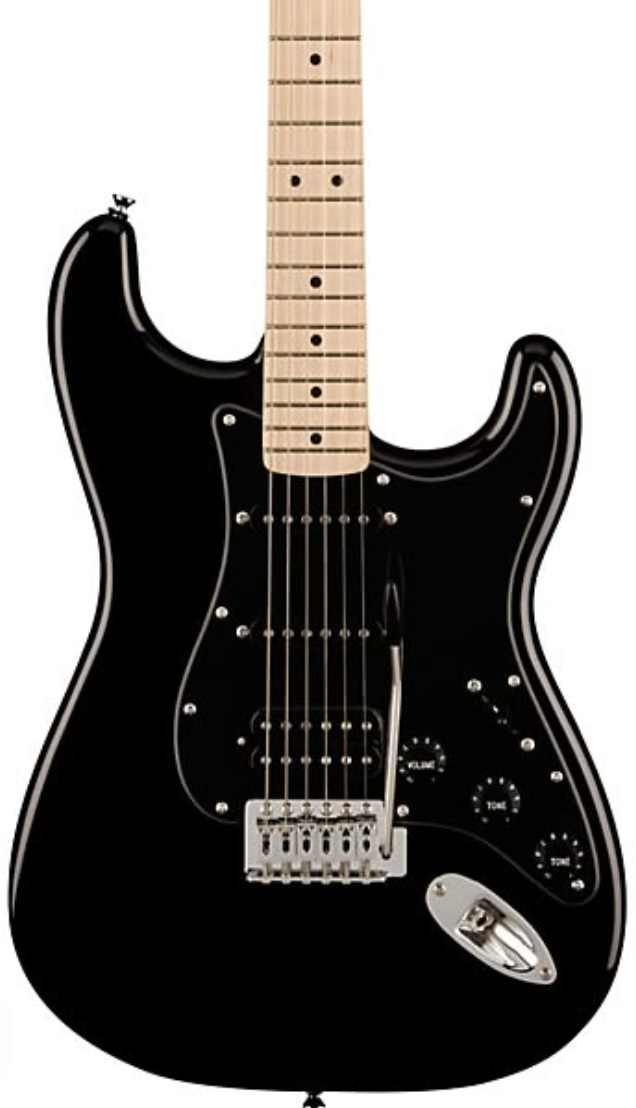
| Platform | Condition | Check Current Price |
|---|---|---|
| Amazon | New | View on Amazon |
| Reverb | Used | View on Reverb |

Build Your Total Rock Rig
⚡️FREE: The 15-Minute Rock Guitar Practice Routine
Stop “practicing” and start playing. Grab the daily blueprint I use to keep my fingers stage-ready in just 15 minutes.
Frequently Asked Questions
1. Is the Squier Sonic Stratocaster HSS good for beginners?
Yes, it’s one of the best beginner guitars on the market at this price point. The lightweight body, satin neck, and HSS versatility give a new player everything they need to find their sound without the instrument getting in the way.
2. What’s the difference between the Sonic HSS and SSS?
The HSS adds a ceramic humbucker at the bridge position, giving you a thicker, higher-output tone for rock and crunch that the three-single-coil SSS version can’t match without a boost pedal. If you play any style that needs some grunt, the HSS is the smarter buy.
3. Can you play metal on the Squier Sonic HSS?
Bedroom metal? Sure. The bridge humbucker has enough output for moderate gain and you can dial in some aggression with the right amp settings. For drop-tuned modern metal and serious high gain, the ceramic pickups will get muddy. Look at an HSS guitar with better humbuckers or budget for a pickup upgrade.
4. How does the Sonic HSS compare to the Squier Classic Vibe?
The Classic Vibe is the clear step up. Alnico pickups, better hardware, and a more refined overall feel. The Sonic HSS gives up those refinements but costs $150–$200 less. If you’re serious about guitar and have the budget, the Classic Vibe is worth the stretch. If budget is the priority, the Sonic HSS won’t let you down.
5. Does the Squier Sonic HSS need a setup out of the box?
Most will play reasonably well straight out of the box after a proper string stretch and tune. For the best possible experience, a $40–$60 setup from a local guitar tech.The fret polish, intonation, action adjustment is money well spent and genuinely transforms the guitar.