
What’s the Best Electric Guitar for Beginners? 8 Pro-Tested Budget Picks
(Updated on 4-15-26)
Transparency Quote: Look, I’ve spent over 40 years with a guitar in my hands, from smoky club stages to professional studios. I’ve seen every ‘revolutionary’ beginner guitar come and go. Most of what you see online is just recycled marketing fluff. This list isn’t about what’s popular; it’s about the 8 guitars I’d actually trust to stay in tune and stay in your hands. No fluff, no theory, just the tools that actually work for a new player.
Buying your first electric guitar can feel overwhelming. There are hundreds of beginner guitars online and many of them look great but feel terrible once you actually start playing.
The wrong guitar can make everything harder. Bad tone, stiff playability, and frustration makes most beginners quit early.
After 40+ years of playing guitar and testing beginner gear, here are 8 beginner electric guitars that are affordable, comfortable, and actually worth your money.
⚡️FREE: The 15-Minute Rock Momentum Routine
Stop “practicing” and start playing. Grab the daily blueprint I use to keep my fingers stage-ready in just 15 minutes.
Quick Picks: Best Electric Guitars for Beginners
| Category | Guitar | Price | Review |
|---|---|---|---|
| Best Overall | Yamaha Pacifica PAC112V Electric Guitar | Check Price | Read Full Review |
| Best for Rock & Metal | Ibanez GIO GRGR221PA Electric Guitar | Check Price | Read Full Review |
| Best Classic Rock Tone | Epiphone Les Paul Studio E1 Electric Guitar | Check Price | Read Full Review |
| Best Strat-Style Beginner Guitar | Squier Classic Vibe ’50s Stratocaster | Check Price | Read Full Review |
Comparison Table
| Guitar | Pickups | Best For | Price |
|---|---|---|---|
| Yamaha Pacifica 112V | HSS (Humbucker/Single Coil) | Most versatile | $359.99 |
| Ibanez GIO GRG220PA1 | HH (Humbuckers) | Rock / metal | $329.99 |
| Epiphone Les Paul E1 | HH (Humbuckers) | Classic rock | $269.00 |
| Squier Classic Vibe 50s Stratocaster | SSS (Single Coils) | Blues / clean | $499.99 |
Key Takeaways
-
Electric guitars are easier for most beginners, thanks to lower string tension, slimmer necks, and adjustable action.
-
Focus on playability first: the guitar should stay in tune, have comfortable action, and resonate well even unplugged.
-
Top beginner picks in the $250-$500 range include the Yamaha Pacifica PAC112V, Ibanez GIO GRGR221PA, Epiphone Les Paul Studio E1, and Squier Classic Vibe 50s Strat.
-
Upgrade when you play songs smoothly and want features that match your style, like different pickups or neck shapes.
Build Your Total Rock Rig
What to Look for in a Beginner Electric Guitar
Some would say that beginner guitars are cheap but I say “cheap” in this context means affordable and playable.
I’m here to help you NOT throw away your wallet when first starting out. Let’s focus on beginner-friendly options that mix affordability with decent quality.
‘Entry level’ electric guitars are usually crafted by big-name brands, aimed specifically at newcomers.
Take, for instance, the Fender Squier. It’s a solid choice and won’t bruise your wallet.
Most major brands like Fender, Gibson, Ibanez, and Yamaha offer similar beginner models, and they’re all about getting a guitar into your hands without needing to take out a loan.
They all have a comfortable neck, stable tuning, good pickup configuration, and are reliable brands you can trust.
If you want a beginner guitar that’s easy to play, stays in tune, and actually sounds like rock right out of the box, these are the ones I recommend starting with.
For a modern take on the budget Strat with a premium roasted maple neck, the Jet JS-400 is one of the strongest options under $300 right now.
Yamaha Pacifica 112V (Best Overall Beginner Guitar)
The Yamaha Pacifica PAC112V is a killer starter guitar that doesn’t feel cheap. It has a comfy C-shaped neck, clean fretwork, and a solid alder body that makes it feel more “real instrument” than beginner toy.
The HSS(humbucker/single coil) pickups and coil split give you a wide range, from gritty rock tones to glassy, Strat-like cleans. The hardware is basic and the trem can drift if you lean on it hard, but for the money it punches way above its price.
Pros
- Excellent value for the money
- Comfy, easy-playing neck with clean fretwork
- Versatile tones (HSS pickups plus coil-split)
- Great clean sounds and gritty rock gain without falling apart
- Lightweight (about 7 lbs), good for long practice sessions
Cons
- Hardware is basic (functional, but not premium)
- Coil-split tone is only average (usable, not magic)
- Tremolo can drift if you use it hard (not built for big dive bombs)
Who it’s for
- Beginners who want a guitar that feels legit right away
- Comeback players who want an affordable guitar that still sounds and plays “real”
- Players who want one guitar for rock, blues, funk, and pop without needing upgrades on day one
Who should skip it
- Collectors or anyone wanting a high-end or vintage instrument
- Players who need a rock-solid trem system for heavy whammy use
Check price here: Yamaha Pacifica PAC112V Price
Read the full review here: Yamaha Pacifica PAC112V Review
Ibanez GIO GRG220PA1 (Best for Fast-Neck Rock and Metal Beginners for Rock)
The Ibanez GIO GRG220PA1 is a strong starter guitar if you want something fun, flashy, and built for riffs and lead playing.
It feels lively, has a fast, comfortable neck with smooth fretboard edges, and gives you punchy humbucker tones that suit rock and darker gain styles. The poplar burl top looks way more expensive than the price, and the tuning stability is better than you’d expect.
It is not the pick for vintage single-coil tones or premium hardware, but as a beginner-friendly rock machine, it delivers.
Pros
- Fast, slim neck that makes riffs and early lead playing feel easier
- Very playable out of the box, with rolled fretboard edges and no sharp fret ends
- Looks more expensive than it is (poplar burl top, transparent finish that pops in the light)
- Punchy rock tone that works great for riffs, chugs, and crunchy rhythm
- Good tuning stability for the price
- Easy high-fret access, so learning solos past the 12th fret is less of a fight
- Simple controls, useful range (5-way switch helps you explore sounds)
Cons
- Not the best choice for vintage or single-coil-style tones
- Hardware is straightforward, not premium (no locking tuners, not a high-end trem)
- Not aimed at heavy gigging or recording-grade needs right away
Who it’s for
- True beginners who want a guitar that feels inspiring on day one
- Players into rock, metal, and blues who want humbucker punch
- Anyone who wants a flashy, “pro-looking” starter guitar with a fast neck
- Weekend jammers who want reliable, fun gear without overspending
Who should skip it
- Players chasing classic vintage clean tones (Strat/Tele-style sparkle)
- Anyone who needs pro-level hardware (locking tuners, higher-end trem) from the start
Check price here: Ibanez GIO GRG220A1 Price
Read the full review here: Ibanez GIO GRG220PA1 Review
Epiphone Les Paul Studio E1 (Budget Les Paul Growl for Beginners)
The Epiphone Les Paul Studio E1 is a low-cost way to get real Les Paul style tone without paying Les Paul money. It delivers thick, mid-focused rock sound from its ceramic humbuckers, with plenty of bite on the bridge and warm blues tones on the neck.
It’s also lighter and more comfortable than many Les Paul style guitars, and the SlimTaper neck makes it beginner-friendly. The big catch is setup: it can be rough out of the box, but once dialed in, it becomes a solid guitar for learning, jamming, and even gigging on a budget.
Pros
- Classic Les Paul style tones (rock, metal, blues)
- Bridge pickup has bite for riffs and leads, neck pickup is warm and round
- Lightweight for a Les Paul, easier on your shoulder
- SlimTaper neck feels fast and friendly for beginners
- Great upgrade platform if you want to mod later
- Can work for gigging if set up properly
Cons
- Setup can be rough out of the box (may need a proper dial-in to play its best)
- Budget hardware and pickups (not premium or boutique)
- Tuning can be less stable with aggressive playing
- Not the guitar for sparkly single-coil tones (no Strat-style chime)
Who it’s for
- Beginners and hobbyists who want classic rock/metal tones on a budget
- Players who want a comfortable, lighter Les Paul style guitar for long practice sessions
- Anyone who is okay doing a setup (or paying for one) to unlock the value
- Guitarists who want a mod-friendly Les Paul platform
Who should skip it
- Players who demand a perfect out-of-the-box setup
- Anyone who needs rock-solid tuning for heavy bending all night
- Players chasing bright, single-coil sparkle over thick humbucker growl
Check price here: Epiphone Les Paul Studio E1 Price
Read the full review here: Epiphone Les Paul Studio E1 Review
Squier Classic Vibe ’50s Stratocaster (Best “Real Strat Chime” Under $500)
The Squier Classic Vibe ’50s Stratocaster is one of the best budget Strats because it sounds and feels closer to a real Fender than most beginner guitars.
You get bright, articulate single-coil sparkle with enough warmth to avoid that thin, icy vibe. It’s lightweight, balanced, and inspiring to play, with a vintage-tinted maple neck and classic 50s looks.
It shines for rock, blues, surf, funk, indie, country, and pop, and it can even handle grittier rock with a pedal. The trem is better for subtle vibrato than wild dive bombs, and the glossy neck is not for everyone.
⚡️While most Strats struggle with heavier rock, the HSS configuration is the ultimate ‘one-guitar’ solution. Check out my full Fender Player Stratocaster HSS review here.
Pros
- Classic Strat chime and sparkle (Alnico single-coils)
- Bright, snappy tone that still has warmth (not muddy, not thin)
- Great feel for the money, more “real instrument” than beginner toy
- Lightweight and comfortable for long practice sessions
- Vintage looks done right (tinted maple neck, clean finish)
- Bone nut is a big win for tuning stability
- Tuners are solid for the price
Cons
- Not ideal if you want humbuckers for metal or modern hard rock
- Trem is for light vibrato, not heavy dive-bomb use
- Gloss neck finish can feel sticky to some players
- Minor quality variation can happen unit to unit (occasional sharp frets reported)
Who it’s for
- Beginners and intermediates who want true Strat style tone without Fender pricing
- Players into blues, classic rock, surf, funk, indie, country, pop
- Anyone who wants a vintage-style Strat that encourages more practice
Who should skip it
- Players who mainly play metal/high-gain and want humbuckers by default
- Anyone who needs super stable trem for aggressive whammy tricks
- Players who strongly dislike glossy necks
Check price here: Squier Classic Vibe ’50s Stratocaster Price
Read the full review here: Squier Classic Vibe ’50s Stratocaster Review
| Guitar Model | Price Range (2025) | Why It’s Great for Beginners | Pros | Cons | Buy |
|---|---|---|---|---|---|
| Squier Affinity Stratocaster | $200–250 | Versatile HSS pickups, slim neck, lightweight; popular for easy playability. | Affordable, durable, sounds great clean or distorted. | Basic amp in kits may need upgrading. | View on Amazon |
| Yamaha Pacifica 112V | $250–300 | Comfortable C-neck, alder body for balanced tone; versatile for blues/rock. | Excellent value, smooth frets, includes tremolo. | Slightly heavier than Squiers. | View on Amazon |
| Epiphone Les Paul Studio | $200-300 (stretch budget) | Mahogany body for warm rock tones; great entry for Gibson-style fans. | Iconic look, pro-level humbuckers. | Shorter scale may feel cramped for some. | View on Amazon |
| Ibanez GRX70QA | $200–250 | Maple neck for fast playing, transparent finish; good for metal/rock. | Stylish, easy access to high frets. | Thinner body might lack sustain. | View on Amazon |
| PRS SE CE 24 | $500+ (premium budget) | Versatile coil-tap pickups; strong long-term value. | Pro build quality, comfortable. | Higher price point. | View on Amazon |
Beginner Electric Guitar (Must-Haves)
- Primarily, you need a guitar that stays in tune. Trust me, there’s nothing more frustrating than a guitar that won’t hold a tune when you’re trying to nail down your favorite riff.
- It should also be easy and comfortable to play. High action (that’s when the strings are too far from the fretboard), can make practicing painful and slow down progress. This lowers your motivation.
You’ll want a bit lower action to make those chord transitions smoother. Not too low and not too high, but just right.
- Now, about the sound. You might wonder, ‘Does an unplugged electric guitar sound matter?’ In my opinion, absolutely.
Give it a strum without an amp. If it resonates well and doesn’t sound like you’re playing a metal lunchbox, chances are, it’ll only get better when amplified.
After all, great tone begins with the guitar itself, not the gear it’s plugged into. The best electric guitars for beginners are the ones that will allow you to freely learn while not going broke!
As you grow more comfortable with your beginner guitar, you will better understand your personal preferences. This will naturally lead to you seeking an upgrade.
When graduating to a better guitar, choose something that aligns with the music you like to play. You’ll know when the time comes.
Acoustic vs Electric
Fun fact: In the very beginning of learning to play the guitar, I started on a cheap acoustic that my mom had won in a raffle.
It made sense to start with this, right? After all, it was just sitting there collecting dust, and it was free of course. My uncle bought a fresh set of strings, which he then put on and tuned for me. Then, I was off to the races!
40+ years later, I still enjoy playing and creating my own brand of original music. I have become a “lifelong musician.”
However, the strings on the acoustic guitar were high off the fretboard, which made it tough on my fingers for a beginner. But again, it was free and it allowed me to learn the basic chord formations and strumming patterns.
Let’s take a look your options:
Why Choose an Acoustic

- Simple setup
- No amplifier required
- Plug-free and hassle-free experience
- Generally cheaper
- Higher string tension builds up finger strength
Why Choose an Electric
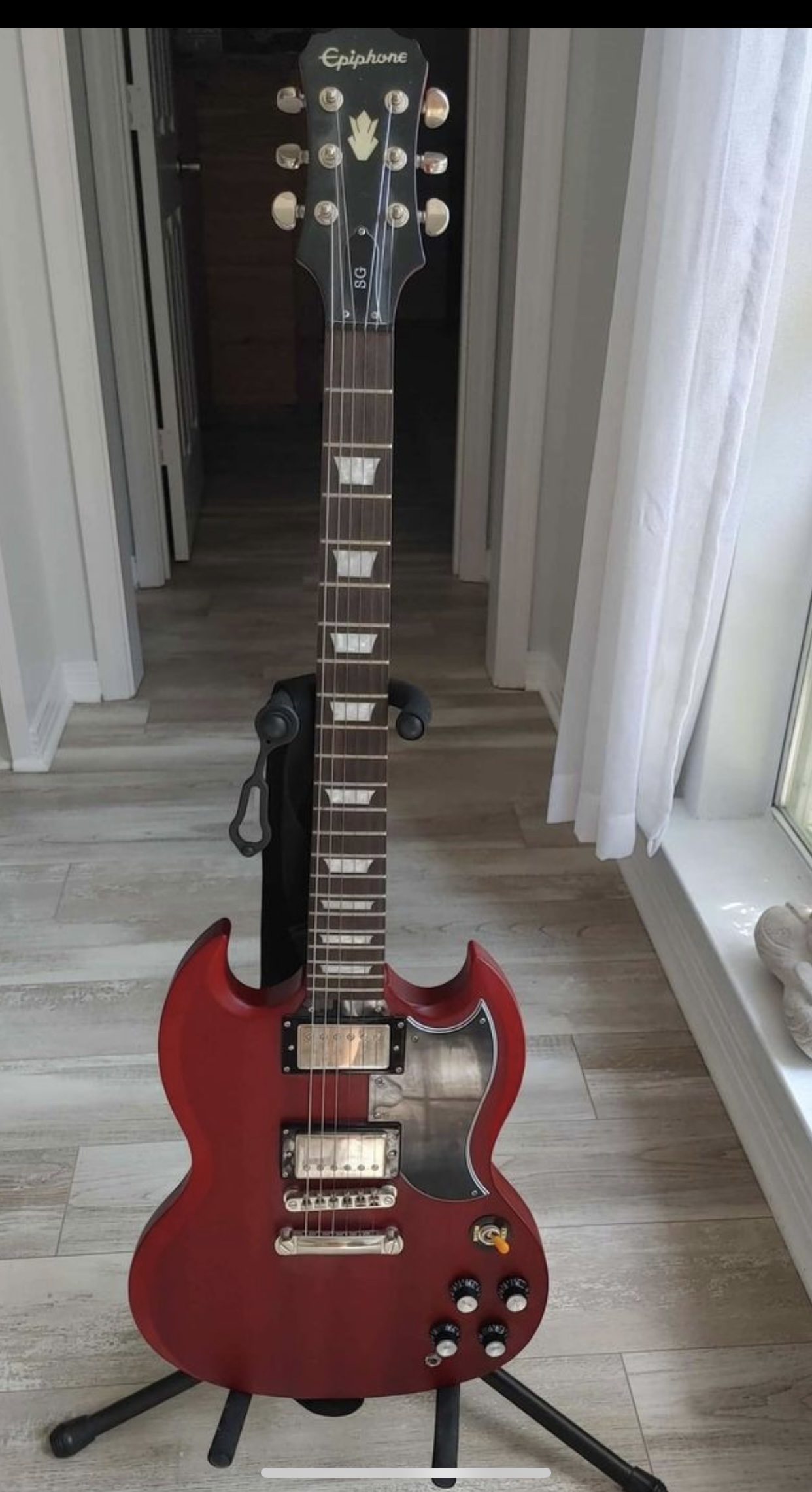
- Lower string tension and lighter gauge strings makes it easier on your fingers(best strings for electric guitar)
- Smaller neck width helps beginners form chord shapes quicker, especially those with smaller hands
- Lower Action-strings are closer to the fretboard and requires less pressure to produce clean notes
- More volume control and can use headphones
- Sound variety using effects pedals, amp settings, and pickup configurations(keeps it exciting!)
- Customization allows for experimenting with tone when exploring different music styles
- Looks way cooler!
If your heart is set on playing crunchy riffs and blazing lead guitar solos, starting out on an electric guitar will keep you motivated way more than the acoustic.
Here’s a Beginner Guitar Checklist to make sure that you have everything you need.
Check out my Gibson vs Epiphone for Beginners comparison review to look at each guitar side by side.
Basic Fundamentals = Unlocking Your Inner Rockstar!

Going through the fundamentals of guitar playing such as how to cradle the instrument , holding a guitar pick, and how to tune the strings, are all part of guitar 101. This also includes building up strength in your fingers, learning basic chords and scales, and getting comfortable with your instrument overall.
You want your guitar to stay ‘mostly‘ in tune. Of course, this is important, but don’t worry too much about the best quality or brand of guitars at this point.
The best starter electric guitar is going to be the one that feels comfortable for YOU.
I said all of this to illustrate that, whether or not you start with a cheap acoustic/electric guitar, going all out on spending isn’t necessary right away. Your first venture into learning guitar is just that, a learning experience.
Now, getting the best electric guitar means finding one that will match up with your current skills. You still want it to be a decent partner in your music-making process, even if it’s not top-tier.
So, while you don’t need to break the bank to get started, you also don’t want to struggle unnecessarily because of a crappy instrument. Do your homework!
Got questions? Send me a message. I’m always here to help a fellow guitarist.
This balance in choosing a beginner-friendly option can massively impact your learning curve and enjoyment. Curious about learning about the best type of pickups for your style of playing? Check out the humbucker vs single coil review.
Guitar straps
- Nefelibata Cool Woven Guitar Strap. There are 20+ designs to choose from.
- Levy’s Leathers 3″ Wide Amped Leather Series Guitar Strap with Foam Padding
If you’re searching for guitars in whatever price range that fits your budget, take a look at these deals at Sam Ash (the musical instrument megastore).
Check out this full Gibson vs Epiphone Les Paul comparison review.
Beginner Electric Guitar Reviews
- (Top Pick)Yamaha Pacifica PAC112V: See if the Pacifica 112V is the smart beginner choice
- Epiphone Les Paul Studio E1: Read the Studio E1 review and decide if it’s worth it
- Fender Squier Telecaster: Read the Squier Telecaster review and hear what you’re really getting
- Ibanez GIO GRG220PA1: See why I’d buy this $350 Ibanez as a starter rock guitar
Again, Sam Ash a great selection if you’re looking for a good beginner electric guitar. In their search bar, type in beginner guitars.
Frequently Asked Questions About Beginner Electric Guitars
Frequently Asked Questions
1. Should a beginner start on acoustic or electric?
Electric is often easier for beginners. Lower string tension, slimmer necks, and lower action help you form chords and play longer with less finger fatigue.
Acoustic can build finger strength, but it may slow early progress due to higher string tension.
2. What features matter most in a beginner electric guitar?
Tuning stability, comfortable action, and basic playability matter most. The guitar should hold tune, have action low enough to press without strain, and sound lively even unplugged.
If it resonates well acoustically, it will likely sound better through an amp.
3. What are solid beginner models under 300 dollars?
The Squier Affinity Stratocaster, Yamaha Pacifica 112V, Epiphone Les Paul Studio, and Ibanez GRX70QA are all strong picks. They balance price, build quality, and versatility for rock, blues, and beginner practice.
4. Are starter kits worth it for first-time players?
Yes, starter kits under 150 dollars can be a fast, affordable way to begin. Expect to upgrade the small practice amp later. Kits include essentials like a strap, cable, gig bag, and picks, which keeps you moving without extra purchases.
5. When should I upgrade from my first guitar?
Upgrade when you can play a few songs cleanly and you know what sound and feel you want. Look for better pickups, improved fretwork, and features that match your style. Try guitars in person, compare tones, and choose based on how it plays in your hands.
Ready to Upgrade?
You might be wondering, when is the right time to step up from your trusty beginner guitar to something a bit more substantial? The truth is, it’s less about time and more about feeling.
When you can play a few songs smoothly, when you’ve got those basic chords down and when making music feels less like a task and more like a passion, that’s a good indicator to start thinking about an upgrade.
Your first electric guitar should be your learning partner, but as you develop, your needs will change.
You’ll start noticing the differences between guitars, and you’ll crave specific sounds and features that better match your emerging style. This is when you should consider investing in a higher-quality guitar.
Here’s my list on Benable for when you’re ready to upgrade to next-level guitar gear.
Are you modifying and curious about choosing the best pickups? Check out this humbucker vs single coil review.
My first real guitar, paid for with my own money, was a 1986 Charvel Model 2 1H with a Jackson locking tremolo bridge and Jackson pickups.(See pic below⬇️)

Since then, I swapped out the pickups with Seymour Duncan ‘George Lynch Screamin Demon’ Humbucker pickups! (blue guitar above) I still enjoy playing this guitar to this very day!
Do your research! Read up on guitar models that catch your eye and fit your playing genre.
But don’t just rely on what’s written, head over to music stores and get those guitars in your hands. See how they feel, how they balance, and most importantly, how they sound.
Trust your instincts, but also seek the opinions of more experienced guitar players. They can offer invaluable insights that you might not have considered.
Budget for a better guitar, but remember, value doesn’t only come from a price tag; it comes from the joy and the enhanced ability to express yourself musically.
Eventually, you’ll find the perfect guitar that matches up with your ambition and that will reflect with your dedication to your craft.
The journey from starter strings to a guitar that feels like an extension of yourself is one of the most exciting aspects of being a musician. As you gain more experience in playing, you will no doubt start modifying your instrument and tailoring it to your specific needs and wants.
So take your time, enjoy the process, and who knows, one day you might find that your upgraded guitar isn’t just better, it feels like a piece of you.
⚡️Consider this: You become one with your guitar — String Shock Steve
Herman says:
Great article! It’s so true that starting out on guitar doesn’t need to break the bank, and I totally agree with the idea that the best beginner electric guitar is the one that feels comfortable to YOU. It’s all about getting those fundamentals down first—like learning to hold the guitar and mastering the basics before worrying about fancy gear. I also really liked the personal story about your first guitar experience. It’s a reminder that we all start somewhere, and the journey is what matters most. I’m curious, have you had any experience with the Ibanez GRX or Yamaha PAC012 for beginners? I’ve heard good things!
Steve says:
Thank you Herman. I’ve played the Ibanez GRX a few times. For the low price, it’s a great starter electric guitar. It’s has easy string action good for beginners but also has fun stuff like the tremolo. The maple fretboard gives it a nice warm tone and it has the versatility of switching between pick-ups to change between sweet and brighter tones.