
The Evolution of Rock: A Complete Timeline of Sub-Genres
Transparency Note: “I’ve spent the last 40 years chasing tone, from smoky bars to massive stages. If there’s one thing I’ve learned, it’s that every new sub-genre of rock wasn’t born from music theory, it was born from someone plugging into an amp, turning a knob they weren’t supposed to, and breaking the rules.”
Rock music isn’t just a timeline of dates and record sales, it’s a living blueprint of rebellion.
From the pristine twang of 1950s rockabilly to the massive walls of fuzz in 90s grunge, the history of rock is the history of the guitar itself evolving.
When you pick up your instrument today, you are tapping into a 70-year legacy of pushing boundaries.
Every sub-genre, whether it’s the reverb-drenched surf rock of the 60s or the aggressive down-tuning of modern metal, was created by a player who needed a new physical way to express their reality.
This timeline isn’t here to serve as a history textbook. It’s here to show you exactly how the gear, the tone, and the attitude shifted decade by decade.
By understanding how the pioneers built their sound, you can steal(borrow) their best techniques, break out of your playing ruts, and finally lock into your own unique musical identity.
Let’s plug in and start from the beginning.
Key Takeaways
- Tone is a Physical Response: Every major shift in rock history happened because players needed a physical solution. The 70s got loud to fill arenas; the 90s got aggressive to rebel against the 80s gloss.
- Gear Dictates Technique: You can’t play 60s surf rock without a heavy pick attack, and you can’t play 80s thrash without locking down your palm muting. Your equipment shapes how your hands move.
- Steal to Build Your Identity: Don’t try to invent a new style from scratch. Find the era of guitar that naturally resonates with the player you want to become, steal their tonal blueprints, and apply them to your own riffs.
Build Your Total Rock Rig
1950s: The Birth of Rock ‘n’ Roll
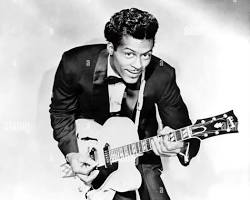
Before the 1950s, the guitar was mostly a background rhythm instrument.
But when players started mixing the emotional grit of blues with the upbeat swing of country and gospel, they needed to be heard over the horns and the drums.
This was the decade the guitar stepped to the front of the stage and demanded attention.
Rock and Roll & Rockabilly
Pioneers like Chuck Berry and Elvis Presley didn’t just invent a genre, they invented a new physical language for the guitar.
Berry’s aggressive use of “double-stops” (playing two strings at once and bending them) became the absolute DNA of rock lead playing.
Meanwhile, artists like Carl Perkins and Johnny Cash were building Rockabilly, a frantic, country-infused hybrid. The defining tone here wasn’t distortion; it was the “slap-back echo.”
Guitarists were using early tape-delay units to create a fast, percussive bounce that made a single hollow-body guitar sound like a runaway freight train.
Check out my review on the hollow-body Ibanez Artcore AFS80T.
Doo-Wop
While Doo-Wop is remembered for its intricate vocal group harmonies and catchy melodies, it provided a massive underlying contribution to rock guitar: the famous I-vi-IV-V chord progression.
These simple, repetitive loops allowed early guitarists to lock into a bulletproof rhythmic groove, shifting the focus away from complex jazz chords and toward a heavy, driving backbeat.
1960s: The British Invasion & The Psychedelic Shift
If the 50s gave the guitar a voice, the 60s gave it teeth.
As amplifier technology evolved, players realized that if you cranked the volume past the breaking point, the tubes would overdrive, creating “distortion.”
What started as an accident quickly became the defining sound of a generation.
Surf Rock & Garage Rock
In California, players like Dick Dale were plugging into massive, stand-alone Fender Reverb units to mimic the sound of crashing waves, creating Surf Rock.
It required aggressive, rapid-fire alternate picking (tremolo picking) on heavy-gauge strings.
But in the Pacific Northwest, bands like The Kingsmen and The Sonics were stripping the music down to its absolute rawest form.
Garage Rock proved that you didn’t need to be a virtuoso to start a band, you just needed a cheap guitar, a loud amp, and a fistful of power chords.
The British Invasion
Across the Atlantic, bands like The Beatles and The Rolling Stones were taking the American blues records they obsessed over, speeding them up, and turning up the volume.
The British Invasion fundamentally changed how bands were structured. It popularized the two-guitar attack, where a dedicated rhythm player and a lead player interlocked their parts to create a massive wall of sound.
Psychedelic & Folk Rock
When Bob Dylan famously plugged in an electric guitar in 1965, Folk Rock was born, proving that loud rock music could still carry heavy, socially conscious lyrics.
By the late 60s, bands like Pink Floyd and The Doors were pushing the boundaries even further into Psychedelic Rock.
This was the dawn of the guitar pedal. With the invention of the Fuzz Face and the Wah-Wah pedal, the guitar was no longer just strumming chords, it was creating mind-altering soundscapes using feedback and modulation.
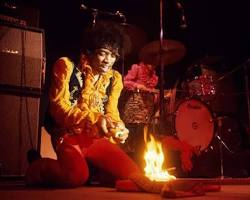
⚡️If you want to see exactly how players like Jimi Hendrix shattered the rules of performance art during this era, check out my breakdown of the most transformative moments in rock guitar history.
1970s: Hard Rock, Punk, & The Arena Era
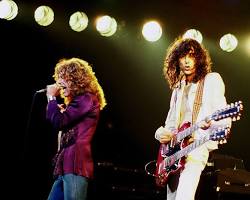
The 1970s took rock out of the clubs and threw it into massive stadiums.
To fill that kind of space, the gear had to get ridiculously loud. This was the era of the “amp wall,” where guitarists started building their entire identity around the physical push of moving serious air.
Hard Rock & Early Heavy Metal
Bands like Led Zeppelin, Black Sabbath, and Deep Purple shifted the focus away from chord progressions and built an entire genre around the almighty “Riff.”
The physical formula here was heavy mahogany guitars (like the Gibson Les Paul) loaded with humbucking pickups, plugged straight into cranked Marshall stacks.
This thick, mid-heavy tone allowed single-note riffs to sound as massive as full chords.
Progressive & Southern Rock
While Hard Rock was busy tearing down the walls, Progressive Rock bands like Yes and Genesis were turning the guitar into an orchestra, experimenting with complex time signatures and extended, atmospheric solos.
Down south, bands like The Allman Brothers and Lynyrd Skynyrd were pioneering the “twin-lead” guitar attack.
Instead of one guy playing rhythm and the other playing a solo, two guitarists would play the exact same melodic lines harmonized in thirds, creating a thick, singing tone that became the signature of Southern Rock.
Punk Rock Rebellion
By the late 70s, many kids felt arena rock had become too bloated and technical.
Punk Rock was the violent course correction.
Bands like The Ramones and The Sex Pistols stripped the guitar back to its bones: power chords, cheap gear, and maximum aggression.
Punk completely rejected the idea of the “guitar hero” solo. Instead, it introduced the physical endurance test of relentless, high-speed, 8th-note down-picking.
⚡️If you want to build this right-hand endurance yourself, start with our guide to 10 easy beginner rock anthems that rely on simple, two-finger power chords.
1980s: Synthesizers, Shredders, & Hair Metal
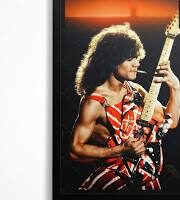
The 1980s split the guitar world right down the middle. On one side, the instrument became a weapon of extreme technical precision. On the other side, guitarists had to figure out how to survive in a mix that was suddenly dominated by synthesizers.
New Wave
With bands like The Police and Talking Heads, the guitar couldn’t just bash out power chords anymore, it would get buried by the keyboards.
New Wave guitarists adapted by using heavy compression and chorus pedals to create a pristine, shimmering tone.
The physical technique shifted to staccato, reggae-influenced upstrokes, specifically designed to leave “empty space” in the music so the synths and bass could breathe.
Hair Metal & Thrash Metal
If New Wave was about leaving space, Metal was about filling every inch of it.
Hair Metal bands like Ratt and Mötley Crüe brought highly flamboyant playing to the mainstream.
This era introduced the Floyd Rose locking tremolo, a piece of hardware that allowed players to execute massive “dive bombs” without the guitar going out of tune.
Meanwhile, the underground was boiling over with Thrash Metal. Bands like Metallica and Slayer built an entire genre on scooped-mid distortion and machine-gun palm muting, turning the rhythm guitar into a percussion instrument.
Alternative & College Rock
As a direct rebellion against the spandex and excess of the Hair Metal scene, bands like R.E.M. and The Replacements started quietly building an underground movement on college radio stations.
Alternative Rock guitarists largely abandoned heavy distortion and shredding solos.
Instead, they focused on “jangle pop” aesthetics, using Rickenbacker guitars and picking through arpeggiated open chords to serve the song rather than the ego.
1990s: The Grunge Explosion & Indie Autonomy
If the 80s were about showing off how many notes you could play, the 90s were about seeing how hard you could hit the strings.
The era of the “guitar god” died overnight, replaced by a raw, unpolished intensity that put the power back in the hands of the average player.
Grunge (The Seattle Sound)
Bands like Nirvana, Pearl Jam, and Soundgarden didn’t care about perfect technique, they cared about dynamics.
The signature of Grunge was the “quiet verse, loud chorus” explosion.
Guitarists traded in their custom shred-guitars for beat-up, offset Fenders (like Jaguars and Mustangs) and plugged them into cheap Boss DS-1 distortion and Big Muff fuzz pedals.
The physical playing style shifted to heavy, aggressive strumming, often utilizing Drop-D tuning to create a sludgy, darker tone that allowed a single guitar to sound like an absolute wall of noise.
Britpop & Post-Grunge
While Seattle was drowning in fuzz, the UK answered with Britpop.
Bands like Oasis and Blur looked backward, reviving the bright, chiming tones of the 60s British Invasion.
They proved that you could still conquer stadiums using semi-hollow body guitars (like the Epiphone Casino) and massive, ringing open chords.
Meanwhile, in the States, Post-Grunge bands (like Alice In Chains, Creed and Nickelback) took the angst of Seattle and polished it for the radio.
They utilized heavily compressed, high-gain Mesa Boogie amplifiers to create a thick, muscular distortion that defined modern rock radio.
Alternative Metal
Bands like Rage Against the Machine and Tool proved that heavy music could have a groove.
Alternative Metal guitarists started treating the instrument like a synthesizer or a DJ turntable.
Players like Tom Morello physically manipulated the guitar using toggle-switch “killswitches,” Wah pedals, and Whammy pedals to create record-scratching noises and siren wails, completely redefining what an electric guitar was “supposed” to sound like.
2000s: The Garage Revival & Digital Age
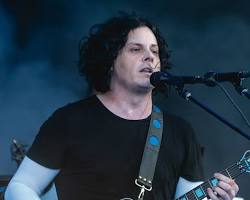
As music recording went fully digital and the internet took over, rock music split again.
You either used the new technology to make your guitar sound impossibly huge, or you rebelled against the computers entirely and stripped your gear down to the bare minimum.
Garage Rock Revival
Bands like The White Stripes and The Strokes launched a massive counter-attack against over-produced studio rock.
The Garage Rock Revival was all about lo-fi punch. Jack White famously used cheap, plastic “Montgomery Ward” airline guitars and pitch-shifting octave pedals to make his guitar sound like a malfunctioning bass.
The technique here was raw, frantic, and purposely sloppy, proving that attitude and a killer riff will always beat expensive gear.
Emo & Pop-Punk
Emo and Pop-Punk bands like My Chemical Romance and Blink-182 took the speed of 70s punk and injected it with massive pop hooks.
The physical demand of this era is brutal on the right hand with relentless, palm-muted 8th notes played at blistering tempos.
Tonally, this era relied on tight, articulate distortion that allowed fast, soaring “octave chord” melodies to cut straight through the mix without sounding muddy.
Nu-Metal
Bands like Korn, Slipknot, and Linkin Park took rock music into the basement.
Nu-Metal fundamentally changed the physical instrument by popularizing the 7-string guitar. By adding that low B-string (and often tuning it down even further to Drop-A), the guitar invaded the frequency space normally reserved for the bass.
The playing style became highly percussive and syncopated, bouncing and locking in perfectly with hip-hop and electronic drum loops rather than traditional rock beats.
2010s to Today: Blurring the Lines
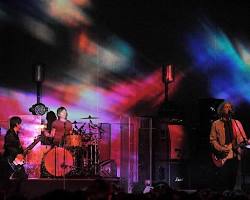
Modern rock is the wild west.
With digital modeling amps and plugins, a kid in a bedroom has access to the exact same tones that used to cost fifty thousand dollars in a professional studio.
The modern era is about cross-pollination, stealing the best elements from the past and pushing them through modern technology.
Indie Folk & Shoegaze Revival
When bands like Mumford & Sons broke through, the acoustic guitar stopped being a campfire instrument and became a stadium weapon.
The physical attack was punishing, relying on thick-gauge strings and heavy, full-arm down-strums.
Shoegaze: term coined by music journalists to describe the performers’ tendency to stand still and stare at their effects pedals (looking at their shoes) while playing.
Original shoegaze bands dating from the late 80s to early 90s, were acts like My Bloody Valentine and Lush. This music is defined by ethereal vocals, heavy guitar effects, and dreamy soundscapes.
The Shoegaze Revival (led by bands like Nothing and DIIV) took the electric guitar in the exact opposite direction.
They started treating the instrument like a synthesizer.
The focus shifted entirely to “gain staging”, stacking multiple delay and massive reverb pedals together so that a single picked note swells and washes over the entire track without ever needing to strum a full chord.
Post-Punk & Modern Experimental Rock
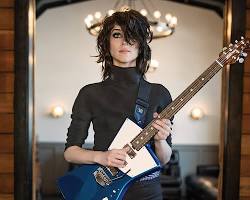
Today, artists like St. Vincent and Fontaines D.C. are taking the raw, driving aggression of 70s punk and filtering it through high-end digital processing.
Modern Experimental Rock relies heavily on angular, dissonant chord voicings rather than traditional power chords.
Players are using fuzz pedals with “voltage starving” features (which mimic a dying battery) to create a sputtering, broken guitar tone that cuts through the heavy electronic elements of modern music production.
⚡️Today, you don’t need a massive budget to access these historical tones. Modern digital modeling amps like the Boss Katana 50 and Fender Mustang LT50 give beginners the ability to dial in everything from 60s surf reverb to 90s grunge fuzz straight out of the box.
Frequently Asked Questions
1. Which era of rock is best for a beginner to start learning?
If you want immediate momentum, start with the 1970s Punk or 1990s Grunge eras. Bands like The Ramones and Nirvana built massive anthems using simple, two-finger power chords. It allows you to build right-hand rhythm and confidence without getting bogged down by complex solos.
2. Do I need a massive pedalboard to play modern rock?
No. While modern experimental rock uses a lot of digital processing, 90% of the rock timeline can be covered with just your amplifier’s built-in overdrive. If you want to expand, start with just two pedals: a good distortion/fuzz pedal for attitude, and a delay pedal to add space and echo to your solos.
3. How do I find my own unique guitar style?
Your style is just the sum of your influences. Don’t force it. Pick three guitarists from entirely different decades on this timeline. Ex. Chuck Berry (50s), Dick Dale (60s), Jimmy Page (70s), Eddie Van Halen (80s), Kurt Cobain (90s), and Jack White (00s). Learn one trick from each of them. When your hands naturally combine those tricks, your signature style is born.