
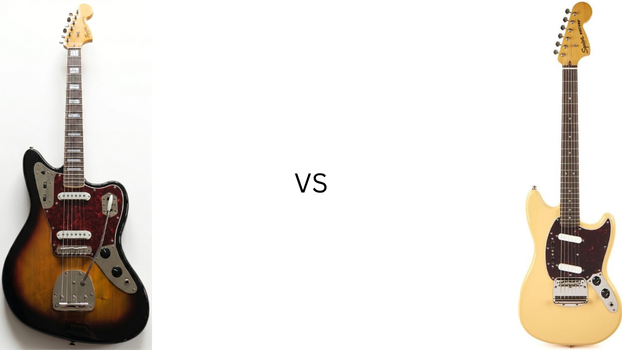
Squier Jaguar vs. Squier Mustang: Best Offset Guitars for Grunge
Transparency Note: “I’ve wrestled with offset guitars on stage and in the studio for decades. Here is the unfiltered truth about chasing the Seattle sound: Nirvana and Mudhoney weren’t playing pristine, three-thousand-dollar custom-shop instruments. They were playing the cheapest pawnshop cast-offs they could find. In the 90s, cheap gear wasn’t a compromise, it was the weapon of choice.”
If you are a beginner trying to capture that raw, aggressive grunge tone, you might feel anxious about buying a “budget” guitar like a Squier. You shouldn’t.
The very foundation of 90s alternative rock was built on taking budget, short-scale offset guitars, specifically Jaguars and Mustangs, and pushing them to their absolute physical limits.
These aren’t polished blues machines, they are designed to fight back.
The shorter scale length makes the strings feel slinkier for massive bends, while the unique pickup switching gives you that hollow, biting tone that cuts straight through a heavy wall of fuzz.
The question isn’t whether a Squier is “good enough” for grunge.
This isn’t just about gear, it’s about a specific era where the ‘student’ guitar became the voice of a generation, a shift Fender’s official history notes as one of the most significant pivots in alternative rock.
The question is whether the chaotic energy of the Jaguar or the stripped-down punch of the Mustang is the right fit for your physical playing style.
Let’s put them head-to-head and find out.
⚡️FREE: The 15-Minute Rock Guitar Practice Routine
Stop fumbling through practice. Get the simple daily routine that keeps your fingers sharp and your playing moving forward, even on your busiest days.
Key Takeaways
-
The Fuzz Tamer vs. The Battering Ram: The Squier Jaguar is designed to control chaotic, high-gain fuzz through its dark rhythm circuit, while the Squier Mustang is built for relentless, plug-and-play power chord aggression.
-
The Short-Scale Physical Advantage: Both guitars utilize a 24-inch scale length, meaning less string tension. This physically lowers the barrier for beginners to execute massive, 90s-style string bends without shredding their fingertips.
-
Hardware Dictates Maintenance: The Jaguar’s floating tremolo creates a brilliant, metallic resonance but requires a proper setup to avoid bridge buzz. The Mustang’s hardtail (or dynamic vibrato) trades that ghost resonance for rock-solid, low-maintenance tuning stability.
-
Weight and Stage Endurance: If shoulder fatigue is a factor for you, the stripped-down, compact body of the Mustang is significantly lighter than the hardware-heavy Jaguar.

Build Your Total Rock Rig
| Quick Verdict: Squier Jaguar vs. Squier Mustang | |
|---|---|
| Category | Winner |
| Aggressive, Plug-and-Play Punch | Squier Mustang |
| Total Fuzz Tone Control | Squier Jaguar |
| Physical Comfort & Weight | Squier Mustang |
| The Authentic Seattle Vibe | Squier Jaguar |
| Overall Winner | Squier Jaguar |
While both offset guitars deliver that iconic 90s alternative aesthetic, the Squier Jaguar edges out the win for pure grunge authenticity thanks to its versatile rhythm circuit that perfectly tames high-gain fuzz pedals. However, if you are a beginner looking for a lightweight, no-nonsense punk rock workhorse, the Squier Mustang offers unbeatable plug-and-play aggression and low-friction playability.
Comparison Table: Head-to-Head: Tone, Tech, and True Potential
| Feature | Squier Jaguar | Squier Mustang |
| The Pickups | Alnico Single-Coils (Biting, metallic, heavily scooped mids) | Ceramic or Alnico Single-Coils (Warmer, mid-heavy, fatter power chords) |
| Bridge System | Floating Tremolo (Great for chaotic warbles, requires setup care) | Hardtail or Dynamic Vibrato (More stable tuning, better sustain) |
| Switching System | Complex (Lead/Rhythm circuits, bass-cut “strangle” switch) | Simple (Basic 3-way toggle or phase sliders) |
| The “In the Room” Vibe | Sounds like a wild, untamed machine that wants to feedback. | Sounds like a straightforward, aggressive punk-rock workhorse. |
The Spec Sheet: Beyond the Marketing Fluff
| Specification | Squier Jaguar | Squier Mustang |
| Scale Length | 24″ (Short scale, easy bends) | 24″ (Short scale, easy bends) |
| Body Wood | Poplar (Lightweight, resonant) | Poplar (Highly resonant, slightly lighter) |
| Neck Profile | “C” Shape (Comfortable modern feel) | “C” Shape (Comfortable modern feel) |
| Frets | 22 Narrow Tall | 22 Narrow Tall |
| Electronics | 2 Single-Coils, Dual Circuits | 2 Single-Coils, Master Vol/Tone |
Should You Buy the Squier Jaguar or Squier Mustang?
Buying a guitar based on looks alone is a rookie mistake. Your instrument needs to match your physical playing style and your personality.
Buy the Squier Jaguar if:
- You are a tonal tinkerer: You love using fuzz and distortion pedals and need the Jaguar’s unique rhythm circuit to instantly darken your tone and tame harsh, high-end feedback.
- You play lead or noise-rock: You rely on chaotic bends, tremolo warbles, and the “sympathetic resonance” (the ringing strings behind the bridge) to create a massive wall of sound.
- You want the ultimate 90s aesthetic: You want the undeniable, complex visual identity of the Seattle underground strapped to your shoulder.
Buy the Squier Mustang if:
- You are an aggressive rhythm player: You treat your guitar like a battering ram. You need a hardtail bridge (or locked vibrato) that won’t go out of tune when you hammer on power chords.
- You want plug-and-play simplicity: You don’t want to think about complex switching systems while singing or performing; you just want a master volume and a selector switch.
- You have a smaller frame: You want an ultra-lightweight, perfectly balanced body that eliminates shoulder fatigue during long rehearsal sessions.
Pair this stripped-down electronics system with a versatile modeling amp, and you can easily dial in a massive wall of sound. If you need the right amplifier to match, read my head-to-head comparison of the Boss Katana 50 vs. Fender Mustang LT50 to complete your beginner rig.
Squier Jaguar vs Mustang (Price Comparison)
Choosing between a Jaguar and a Mustang usually comes down to whether you want a specialized tool or a versatile workhorse.
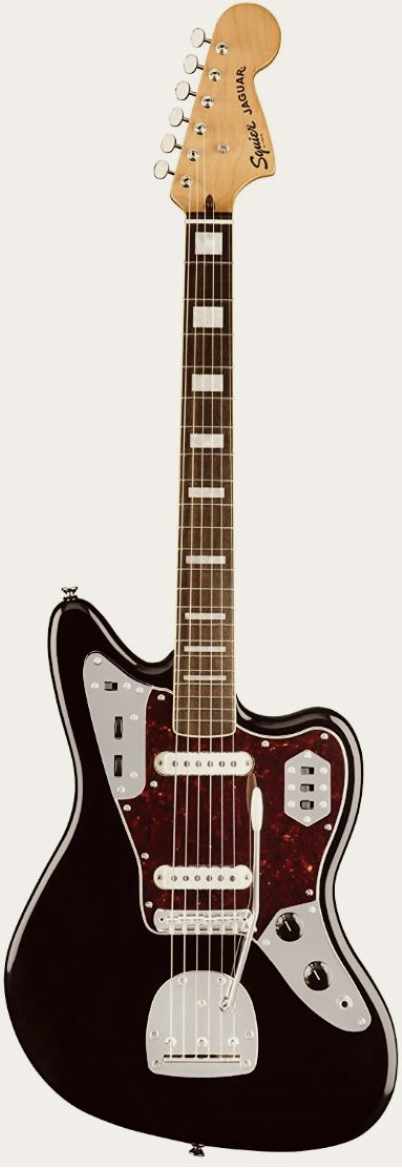
The Jaguar is perfect if you find yourself constantly tweaking knobs and pedals to find a specific atmosphere. It’s dual-circuit layout offers a level of tonal shaping most beginner guitars can’t touch.
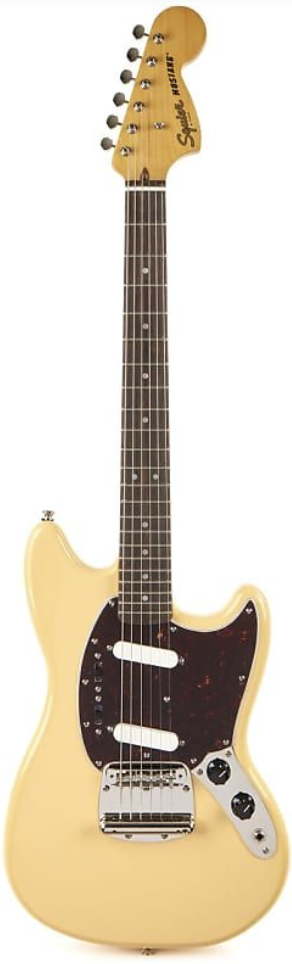
On the other hand, the Mustang’s charm is in its simplicity. It’s a lightweight, “get out of the way” instrument that lets you focus on the energy of your playing rather than the settings on your chrome plates.
The market for these offsets has remained steady, making them accessible entry points for anyone looking to step away from the standard Strat or Tele.
| Model | Buy New (Amazon) | Shop Used (Reverb) |
|---|---|---|
| Squier Jaguar | Check Amazon Price | Check Reverb Price |
| Squier Mustang | Check Amazon Price | Check Reverb Price |
Tone Comparison: Fuzz and Feedback
Squier Jaguar
When you plug a Jaguar into a loud amp and hit a Big Muff pedal, the physical experience is completely unhinged.
The single-coil pickups are naturally bright and metallic, but because of the floating bridge design, the strings actually ring out behind the bridge saddle.
This creates a haunting, metallic overtone, a ghost frequency that bleeds into your distortion.
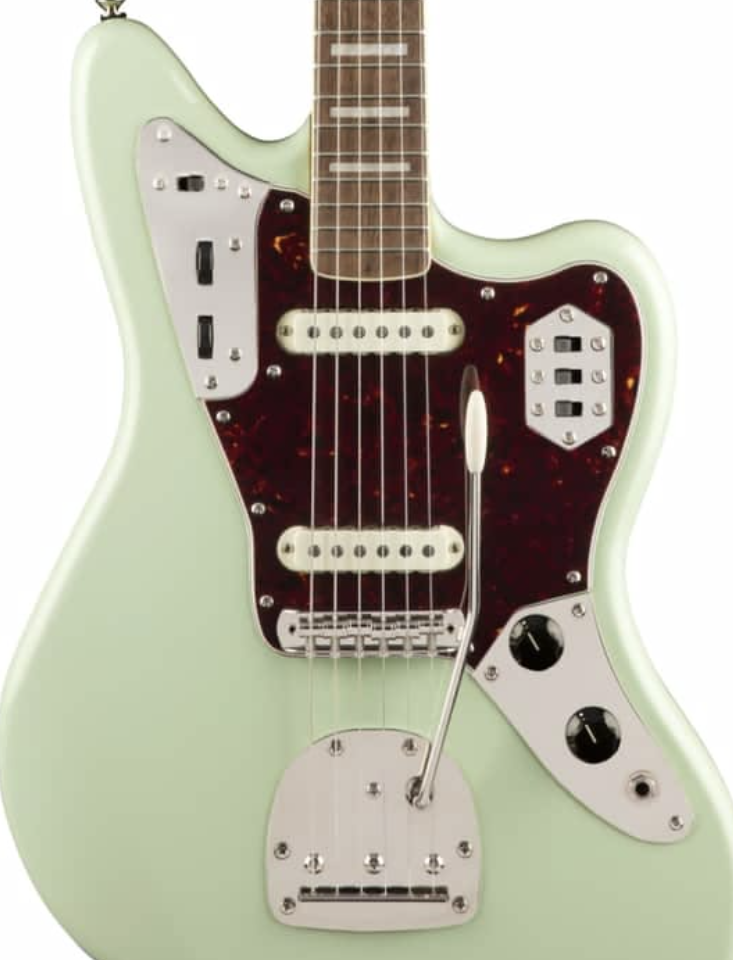
When you switch to the dedicated “rhythm circuit” on the upper horn, it bypasses the bridge pickup, rolls off the harsh treble, and gives you a dark, thick, sludgy tone.
This is the absolute definition of 90s noise-rock. It feels chaotic, alive, and slightly dangerous to play.
That floating bridge is the secret to the chaotic resonance we love, but it can be a headache if it isn’t dialed in; I always recommend new owners bookmark the official Fender Offset Setup Guide to keep the tremolo stable and buzz-free.
Squier Mustang
The Mustang is a completely different animal.
Because the strings are anchored more securely without the long break-angle of the Jaguar, you lose that metallic ghost-ringing, but you gain a massive amount of punch and focus.
In a live mix or a recording session, the Mustang is far easier to control.
It has a pronounced midrange bark that cuts straight through the bass guitar and the cymbals.
If you use the phase switches (available on the Classic Vibe models) to run the pickups out of phase, you get a hollow, nasal “quack” that sounds exactly like Kurt Cobain’s isolated guitar intro on “Smells Like Teen Spirit.”
The Mustang’s journey from a ‘student’ instrument to a grunge icon is a classic case of the right tool meeting the right movement. Read honest opinions about buying a Squier Mustang on Reddit.
It’s a tight, rhythmic weapon that sits perfectly in a produced mix without muddying up the low end.
⚡️If you want to understand exactly how these offset guitars fit into the broader history of the 90s Seattle Sound, check out the complete Evolution of Rock Timeline.
| Squier Jaguar | Squier Mustang |
|---|---|
| The Pros | The Pros |
|
|
| The Cons | The Cons |
|
|
Final Verdict: Which One Should You Buy?
Both the Squier Jaguar and the Squier Mustang are legendary weapons for building a 90s rig, but they serve two completely different types of players. If you’re still deciding between Squier and other brands, my Squier vs. Epiphone comparison breaks down the key differences for rock beginners.
If you want the undisputed visual king of alternative rock and plan on heavily shaping your tone through a massive pedalboard, the Squier Jaguar is your winner.
Its rhythm circuit is the ultimate tool for taming high-gain fuzz, giving you complete control over the chaotic noise that defines the Seattle sound.
However, if you are a high-energy rhythm player who needs a lightweight, low-maintenance workhorse that refuses to go out of tune no matter how physically hard you hit the strings, buy the Squier Mustang.
It is the purest distillation of plug-and-play punk rock attitude.
Step immediately into the identity of the player you are becoming. If your signature sound demands sonic chaos and pedalboard experimentation, grab the Jaguar.
If your identity is built on raw, relentless rhythm and stage energy, strap on the Mustang. Make your choice, plug in, and start building your wall of sound.
Comparison Review Scores
| Scoring Category | Squier Jaguar | Squier Mustang |
| Raw Fuzz Tone & Versatility | 9.0 / 10 | 8.0 / 10 |
| Physical Comfort & Weight | 7.5 / 10 | 9.5 / 10 |
| Hardware & Tuning Stability | 7.0 / 10 | 8.5 / 10 |
| Beginner Plug-and-Play Value | 6.5 / 10 | 9.0 / 10 |
| Authentic 90s Aesthetic | 10.0 / 10 | 8.5 / 10 |
| Overall Score | 8.0 / 10 | 8.7 / 10 |
How We Tested: The String Shock Comparison Methodology
To find out which offset truly handles the grunge aesthetic, we didn’t just look at the spec sheets. We put both the Jaguar and the Mustang through the four pillars of the String Shock Stress Test:
- The High-Gain Fuzz Test: We slammed both guitars into a Big Muff fuzz pedal to see how the single-coils reacted to extreme volume. We evaluated excessive noise, feedback control, and how effectively the Jaguar’s rhythm circuit tamed harsh treble compared to the Mustang’s master tone knob.
- The Physical Friction Test: We strapped both guitars on for extended periods to measure shoulder fatigue, neck dive, and the overall physical resistance of the 24-inch short scale when executing massive, chaotic string bends.
- The Aggressive Rhythm Test: 90s rock isn’t polite. We subjected both bridges to relentless, heavy-handed power chord strumming to see which hardware system held its tuning stability and which one allowed the strings to easily pop out of their saddles under pressure.
- The Live Mix Cut Test: A massive bedroom tone is useless if you disappear on stage. We tested the midrange bark of the Mustang against the metallic, ghost-ringing resonance of the Jaguar over heavy bass and drum backing tracks to see which instrument naturally commanded the sonic space.
Frequently Asked Questions
1. Are short-scale guitars like the Jaguar and Mustang good for beginners?
Absolutely. The 24-inch scale length brings the frets slightly closer together and significantly reduces the tension on the strings. This makes forming your first chords and learning to bend notes physically easier, reducing the initial friction that causes many beginners to quit.
2. Why does the Squier Jaguar have so many switches?
The switches control two entirely separate electronic pathways. The lower hexagonal plate houses the “lead circuit” (individual pickup on/off switches and a bass-cut “strangle” switch for piercing highs).
The upper horn houses the “rhythm circuit,” which bypasses the bridge pickup entirely, rolls off the treble, and utilizes its own volume and tone rollers. Originally designed for jazz players to switch tones instantly, but grunge guitarists realized it was the perfect built-in tool for taming harsh distortion pedals.
3. Which guitar is better if I want to upgrade the pickups later?
The Mustang is far easier to modify. Its simple wiring harness means you can swap in high-output single-coils or even drop-in humbuckers without a degree in electrical engineering.
Upgrading a Jaguar is entirely possible, but routing new wires through its dual-circuit maze requires significantly more soldering experience and patience.