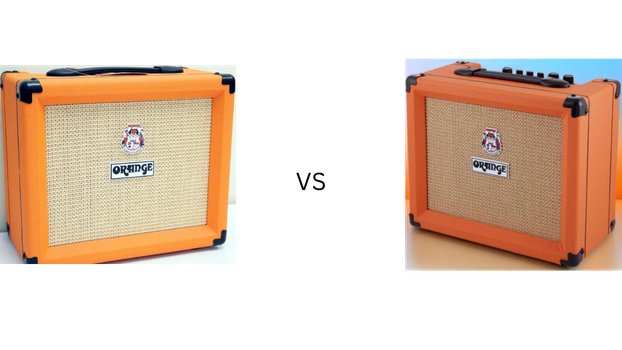
Orange 20 vs. Orange Crush 20RT: Is the Extra $80 Worth It?
Transparency Quote:
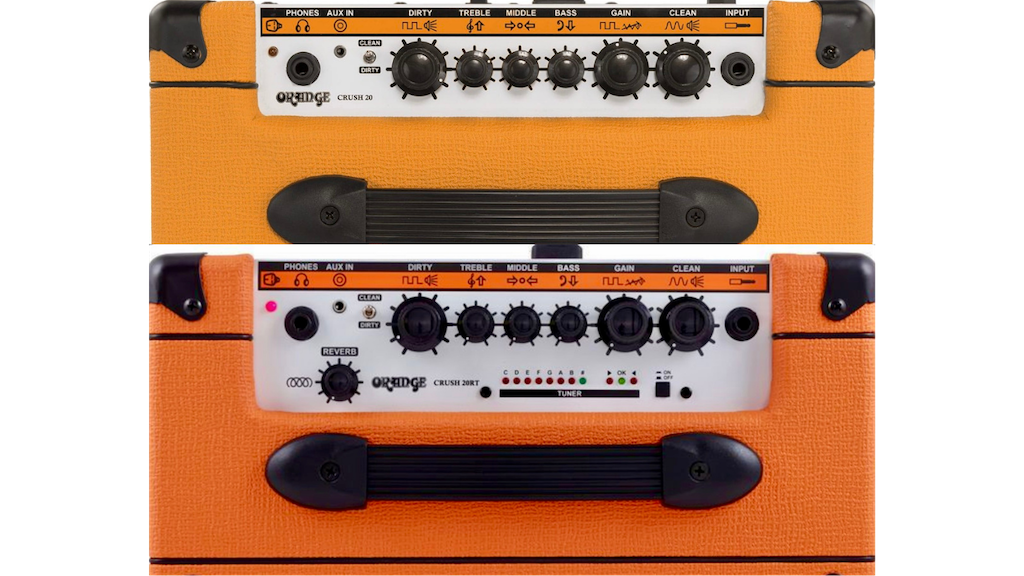
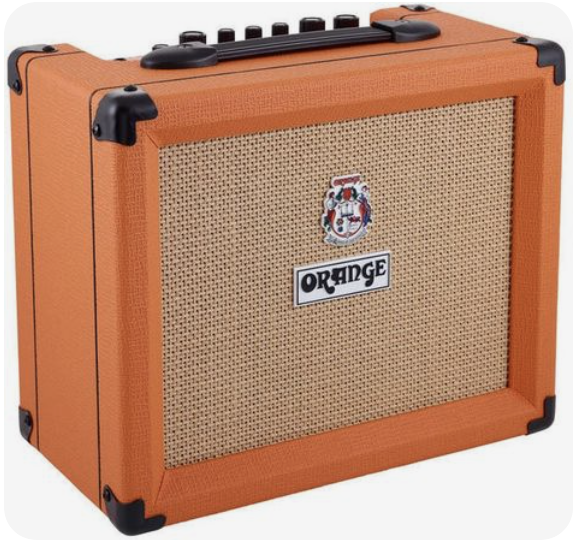
The Crush 20 and Crush 20RT are basically the same amp with two different price tags. The 20RT includes reverb and a tuner, which is what the ‘RT’ means. So here’s the HONEST breakdown of what that extra $80 with the RT actually gets you.
Here’s the question I get in my DMs at least twice a week: “Steve, do I really need the RT version, or am I just paying for a logo?”
Fair question.
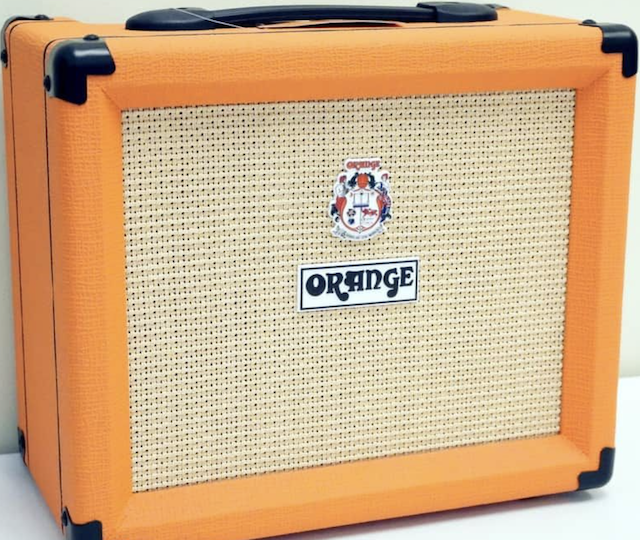
Orange makes this decision annoyingly easy to overthink because both amps look almost identical sitting on a shelf.
Same cabinet, same 8″ speaker, same tank-like build quality Orange is known for.
But there’s an $80 gap between them, and $80 either buys you two genuinely useful features or it buys you a sticker that says “RT” on the front panel.
I’ve spent real time with both, so let’s settle this one for good.
If you’re still amp-shopping in general, it’s worth a look at how these two stack up against the field in our best amps for rock guitar under $300 roundup.
⚡️FREE: The 15-Minute Rock Guitar Practice Routine
Stop “practicing” and start playing. Grab the daily blueprint I use to keep my fingers stage-ready in just 15 minutes.
Key Takeaways
- The Crush 20 and Crush 20RT share the exact same amp platform: 20 watts, analog solid-state, dual channel, 8″ Voice of the World speaker, CabSim headphone output
- The only real difference is that the 20RT adds a built-in digital spring reverb and a chromatic tuner. That’s what the “RT” stands for
- Price gap is roughly $149 vs. $229, an $80 premium for those two features
- Neither amp has an effects loop, and both share a single 3-band EQ across channels, that limitation carries over no matter which one you buy
- For most beginners and comeback players, the 20RT’s built-in tuner and reverb pay for themselves versus buying a tuner pedal and reverb pedal separately
| Quick Verdict: Orange Crush 20 vs. Orange Crush 20RT | ||
|---|---|---|
| Category | Orange Crush 20 | Orange Crush 20RT |
| Tone | Same warm, analog Orange grind, no compromise here just because it’s the cheaper model. | Identical tone to the standard 20, plus reverb to add depth and space. |
| Feature Set | Clean/Dirty channels, CabSim headphone out, footswitchable, no reverb, no tuner. | Everything the 20 has, plus built-in reverb and a chromatic tuner. |
| Playability | Dead simple, plug-and-play, nothing to fuss with. | Just as simple, with one extra reverb knob to learn. |
| Build & Portability | Same rugged, one-hand-carry cabinet. | Same rugged, one-hand-carry cabinet. |
| Overall Value | Great if you already own a tuner and don’t need reverb. | Better value once you price out a tuner pedal + reverb pedal separately. |
Both amps deliver the exact same Orange DNA, so the choice comes down to whether you’re willing to pay $80 for a built-in tuner and reverb. For most players, that math works out in the Crush 20RT’s favor.
Comparison Table
| Feature | Orange Crush 20 | Orange Crush 20RT |
|---|---|---|
| Price | $149 | $229 |
| Power Output | 20 Watts | 20 Watts |
| Technology | Analog Solid-State | Analog Solid-State |
| Channels | 2 (Clean/Dirty, footswitchable) | 2 (Clean/Dirty, footswitchable) |
| Speaker | 1 x 8″ Voice of the World | 1 x 8″ Voice of the World |
| EQ | 3-Band, shared between channels | 3-Band, shared between channels |
| Reverb | ❌ Not included | ✅ Digital spring reverb |
| Tuner | ❌ Not included | ✅ Built-in chromatic tuner |
| Headphone Out | 1/4″ with CabSim | 1/4″ with CabSim |
| Aux In | 3.5mm | 1/8″ |
| Effects Loop | ❌ | ❌ |
Spec Sheet
| Specification | Orange Crush 20 | Orange Crush 20RT |
|---|---|---|
| Output Power | 20 Watts | 20 Watts |
| Speaker | 1 x 8″ Custom “Voice of the World” | 1 x 8″ “Voice of the World” |
| Channels | 2 (Clean and Dirty) | 2 (Clean and Dirty) |
| EQ | 3-Band (Bass, Middle, Treble), shared | 3-Band (Bass, Middle, Treble), shared |
| Effects | None onboard | Digital Spring Reverb |
| Tuner | Not included | Built-in chromatic tuner |
| Connectivity | 1/4″ Instrument In, 3.5mm Aux In, 1/4″ Headphone/CabSim Out | 1/4″ Instrument In, 1/8″ Aux In, 1/4″ Headphone/CabSim Out, 1/4″ Footswitch Jack |
| Weight & Dimensions | 15 lbs (comparable cabinet) | 15.9 lbs | 14.76″ x 12.8″ x 7.8″ |
| Price | $149 | $229 |
Orange Crush 20 or the Orange Crush 20RT: Which One to Buy?
Buy the Crush 20 if:
You already own a clip-on or pedal tuner and don’t lean on reverb for your playing style.
You want the cheapest legitimate entry into real Orange tone, full stop.
You’re building a minimalist practice setup and would rather add your own pedals one at a time.
Buy the Crush 20RT if:
You want one box that handles tuning, reverb, and tone without reaching for a pedalboard.
You’re a beginner or comeback player who’d otherwise be buying a separate tuner pedal ($20-30) and reverb pedal ($50-80) anyway.
My full Orange Crush 20RT review gets into how those additions feel in real at-home practice.
The short version is easy: reverb makes playing more inspiring, and the tuner removes one more excuse to stop.
You want the CabSim headphone output to sound a little more finished for silent practice or recording.
Reverb helps a dry DI tone feel less sterile.
⚡️Pair either one with the Ibanez Artcore AS73! ⬅️ (See review)
Skip Both if:
You’re chasing pristine, high-headroom cleans for jazz or ambient work, that shared EQ and the amp’s inherent voicing aren’t built for it.
You already run a pedalboard with delay and modulation stacked after your dirt pedals.
The missing effects loop on both models is going to bug you either way.
⚡️Note: Currently, the Amazon price for the ’20’ is less than the Reverb price.
| Model | Buy New (Amazon) | Shop Used (Reverb) |
|---|---|---|
| Orange Crush 20 | Check Amazon Price | Check Reverb Price |
| Orange Crush 20RT | Check Amazon Price | Check Reverb Price |
Orange Crush 20 vs. Orange Crush 20RT Tone Comparison
Here’s the thing that trips people up: the tone is identical.
Orange didn’t nerf the standard Crush 20 to push people toward the RT.
Same preamp voicing, same 8″ speaker, same Dirty channel that delivers that thick, harmonically dense growl Orange has been known for since the Hendrix era.
Roll the gain up on either amp and you get the same classic rock crunch with real note definition, not the mushy blob you’d expect from a budget solid-state combo.
Push further into high-gain territory and both hold their own for practicing riffs in the Sabbath-to-Metallica range.
The only tonal difference is the 20RT’s reverb, and it’s not subtle in the best way.
A little spring reverb takes that same dirty channel and gives it space, rock crunch stops sounding like it’s coming out of a shoebox and starts sounding like it’s in a room.
Pro Tip: If you go with the standard Crush 20 and miss the reverb, a cheap reverb pedal in front of the amp gets you 90% of the way there, just don’t expect it to feel as seamless as having it built in.
The Clean channel behaves the same on both: warm and vintage-voiced at low volumes, breaking up naturally as you push it, closer to a blues amp’s clean than a modern scooped clean.
Players chasing pristine, glassy headroom will hit the same ceiling on either model.
| Orange Crush 20 | Orange Crush 20RT |
|---|---|
| The Pros | The Pros |
|
|
| The Cons | The Cons |
|
|
Final Thoughts
Both of these amps are the same animal wearing slightly different feature sets, and that’s actually good news.
This means you can’t make a wrong choice on tone.
The Crush 20 is the smarter buy if you already have a tuner in your gig bag and don’t care about reverb.
You’re not sacrificing an ounce of that Orange growl to save $80.
The Crush 20RT is the smarter buy for almost everyone else.
Once you factor in what a tuner pedal and a decent reverb pedal actually cost, that $80 gap basically disappears.
You’re left with a cleaner setup and one less cable on your pedalboard.
My honest take after spending time with both: unless you have a specific reason not to, spend the extra $80 and get the RT.
It’s the difference between a good practice amp and a complete one.
Comparison Review Scores
| Category | Orange Crush 20 | Orange Crush 20RT |
|---|---|---|
| Tone | 8.5 / 10 | 8.5 / 10 |
| Playability | 8 / 10 | 8 / 10 |
| Build & Hardware | 8 / 10 | 8 / 10 |
| Features for the Price | 7 / 10 | 9 / 10 |
| Value | 8 / 10 | 9 / 10 |
| Overall | 7.9 / 10 | 8.5 / 10 |
How We Tested: The String Shock Methodology
Every String Shock comparison runs through the same four-pillar stress test; no exceptions, no shortcuts.
1. Tone Across Pickup Types
Ran both amps through the same Epiphone SG and Squier Strat to confirm humbucker and single-coil response matched between models.
2. Channel Behavior Under Pressure
Pushed the Dirty channel on each amp from light crunch to full gain, then A/B’d the 20RT’s reverb on and off to isolate exactly what it adds to the tone.
3. Real-World Usability
Tested the CabSim headphone output on both amps through headphones and directly into a recording interface, then compared how the added reverb changed the recorded feel on the 20RT.
4. Accuracy and Reliability
A/B’d the 20RT’s built-in tuner against a standalone clip-on tuner to confirm it’s genuinely reliable and not just a spec-sheet checkbox.
⚡️Read more gear reviews at the String Shock Gear Zone.
⚡️Note: Currently, the Amazon price for the ’20’ is less than the Reverb price.
| Model | Buy New (Amazon) | Shop Used (Reverb) |
|---|---|---|
| Orange Crush 20 | Check Amazon Price | Check Reverb Price |
| Orange Crush 20RT | Check Amazon Price | Check Reverb Price |
Build Your Total Rock Rig
⚡️FREE: The 15-Minute Rock Guitar Practice Routine
Stop “practicing” and start playing. Grab the daily blueprint I use to keep my fingers stage-ready in just 15 minutes.
Frequently Asked Questions
1. What’s the actual difference between the Orange Crush 20 and Crush 20RT?
The 20RT adds a built-in digital spring reverb and a chromatic tuner. Everything else, the amp platform, speaker, wattage, and tone, is identical.
2. Is the Orange Crush 20RT worth the extra $80 over the standard Crush 20?
For most players, yes. A separate tuner pedal and reverb pedal would typically cost more than $80 combined, so the RT usually works out to better value. Note: You might find new ’20’ models for less money.
3. Do the Crush 20 and Crush 20RT sound the same?
Yes, aside from reverb. Both share the same analog preamp and 8″ speaker, so the Dirty and Clean channel tones are effectively identical before reverb is added.
4. Can I add my own tuner and reverb pedal to the standard Crush 20 instead?
Yes. A tuner pedal and a reverb pedal in front of the amp will get you close to what the 20RT offers built in, just with an extra cable or two on your board.