

Squier Classic Vibe 60s Stratocaster Review: Honest Take vs. Fender Quality
Transparency Quote: I’ve spent four decades watching beginners agonize over this exact choice. I’ve played $150 pawn shop specials and $5,000 Custom Shop masterpieces. The truth is, the gap between a high-end Squier and a standard Fender has never been smaller, but for the serious player, that ‘small’ gap is exactly where the magic happens.
In this article, I’m going to share my honest Squier Classic Vibe ’60s Stratocaster review for guitarists wondering whether it’s still worth buying in 2026.
The Stratocaster is one of those guitars every rock player runs into sooner or later. Hendrix, Clapton, Gilmour, Blackmore, Malmsteen, and plenty of modern players all built huge sounds around some version of a Strat.
But the big question for beginner and comeback guitarists is simple: Do you need to spend Fender money to get a real Strat feel?
That’s where the Squier Classic Vibe ’60s Stratocaster gets interesting.
It gives you the vintage Strat look, Fender-designed Alnico pickups, a comfortable modern neck radius, and classic single-coil tones at a much lower price than a Fender Player Series Strat.
I’ll break down how it performs in tone, comfort, durability, features, and overall value, so you can decide if this is the right Strat-style guitar for you.
Let’s plug in and dive right in!
⚡️FREE: The 15-Minute Rock Momentum Routine
Stop fumbling through practice. Get the simple daily routine that keeps your fingers sharp and your playing moving forward, even on your busiest days.
Key Takeaways
- Authentic Alnico V Tone: These “Fender-Designed” pickups provide the bell-like chime and “quack” essential for classic rock and blues, outperforming the harsh ceramic magnets found on cheaper models.
- Player-Friendly Neck: The 9.5″ radius and modern “C” shape profile bridge the gap between vintage looks and modern ease-of-use, making it perfect for beginners and returning players alike.
- Premium Foundation: High-end details like a real bone nut and vintage-style split-shaft tuners offer tuning stability usually reserved for guitars in the $700+ price bracket.
- Vintage Aesthetics: The tinted gloss neck and aged plastics give you the “time-capsule” feel of a 1966 Strat without the massive investment.
- The “Sticky” Trade-off: While visually stunning, the high-gloss neck finish can feel “grabby” for players with sweaty hands; a quick buff with a grey Scotch-Brite pad is a common veteran fix.
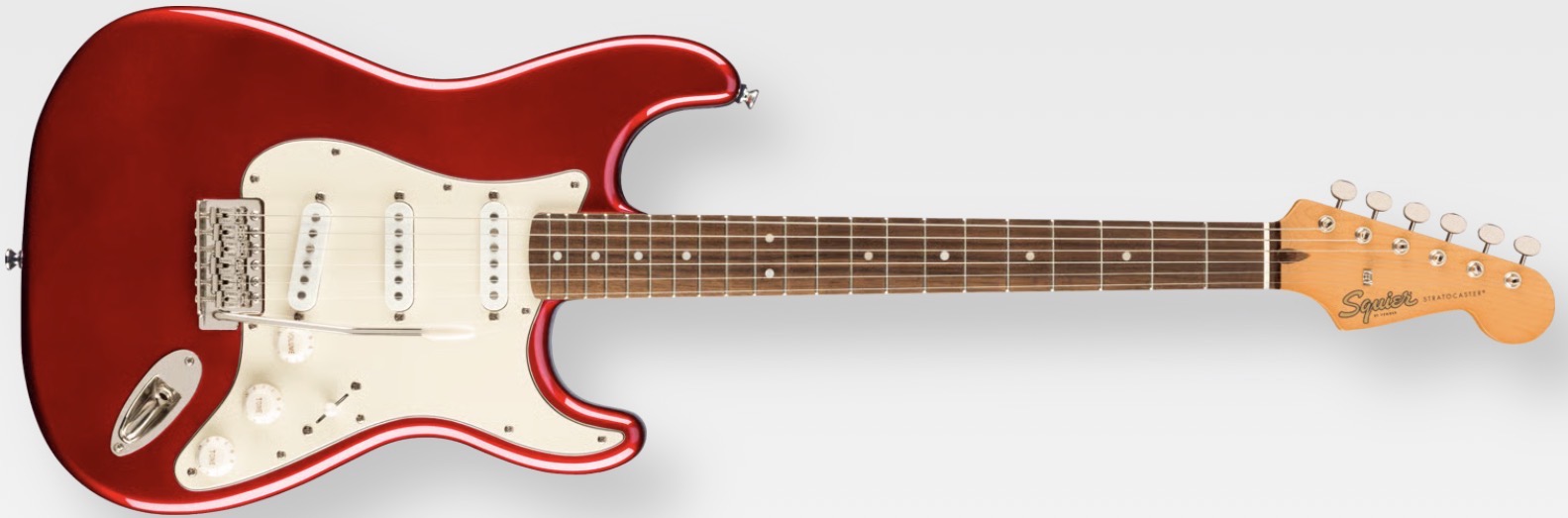
| Quick Verdict: Squier Classic Vibe ’60s Stratocaster | |
|---|---|
| Category | The Veteran’s Take |
| Build & Finish | Nyatoh body with a stunning vintage-tinted gloss finish that looks twice its price. |
| Tone Versatility | Alnico V single-coils deliver authentic, glassy 60s “quack” but lack high-gain punch. |
| Playability | Comfortable Modern “C” neck, though the heavy gloss finish can feel sticky with sweaty hands. |
| Tuning Stability | Vintage-style split-shaft tuners hold up well, but the 6-saddle bridge struggles with heavy whammy use. |
| Overall Value | One of the strongest budget vintage-style guitars for beginners, comeback players, and modders. |
In 2026, the Squier Classic Vibe ’60s Stratocaster remains one of the best budget Strat-style guitars for beginners and comeback players. It delivers the vintage look and bright single-coil chime players expect, without pushing you into Fender Player Series pricing.
Review Scores
| Category | Score / 10 |
| Tone Quality | 9/10 |
| Playability | 8/10 |
| Build Quality | 8.5/10 |
| Value for Money | 10/10 |
| Total String Shock Rating | 8.9/10 |
Squier Classic Vibe ’60s Stratocaster Price & Value
The Classic Vibe ’60s is more than a basic budget guitar. It is a serious foundation for beginners, comeback players, and Strat fans on a tighter budget.
Many entry-level guitars come with harsh pickups and basic hardware. The Classic Vibe gives you Fender-designed Alnico pickups, a bone nut, and better vintage-style details than most guitars in this price range.
The real value is the confidence boost this guitar gives you. It doesn’t feel like a toy. It feels like a real Strat-style guitar that makes you want to practice longer.
Whether you keep it stock or use it as a mod platform later, the value is hard to beat.
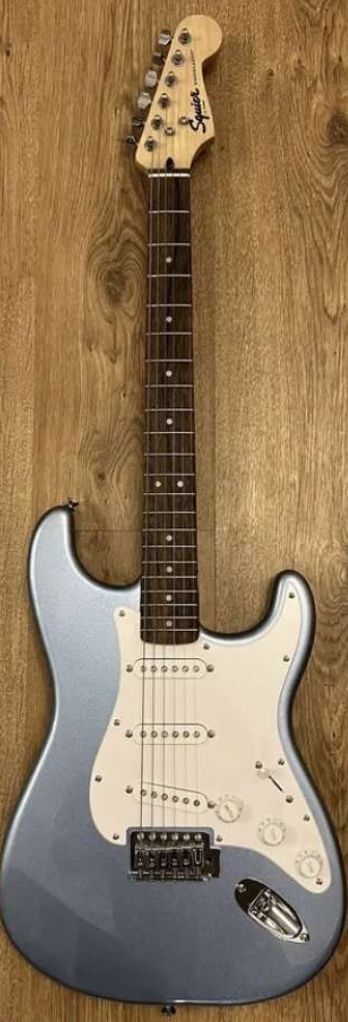
⚡️Check out my Vibe 50s strat vs. Vibe 60s strat review.
| Platform | Condition | Check Current Price |
|---|---|---|
| Amazon | New | View on Amazon |
| Reverb | New & Used | View on Reverb |
If you’re still undecided on whether a Strat is the right foundation for your sound, check out my Squier vs. Epiphone comparison guide to see how these two budget giants stack up against each other.
Should You Buy the Squier Classic Vibe ’60s Stratocaster?
This guitar isn’t about being “perfect” for every player on the planet, it’s about the grit required to bridge the gap between where you are and where you want to be.
For the guitarist picking the instrument back up after twenty years or the “lead player in the making” who needs a rig that growls right out of the gate, this is the winning formula to finally capture the sound in your head.
Buy this if…
- You want the classic “SRV” or “Hendrix” tone without a Fender-sized credit card bill.
- You prefer a slimmer neck that makes forming chords easier for smaller hands.
- You love the vintage aesthetic (tinted necks, aged plastics, and vibrant finishes).
Don’t buy this if…
- You have “sweaty hands” (the thick gloss finish on the neck can feel “sticky” to some).
- You are looking for a heavy metal machine (the single-coils will hum under high-gain).
- You prefer the look of dark Rosewood (the Indian Laurel fingerboard is lighter and can look “dry”).
If you decide that a vintage-style Strat isn’t the right fit for your hands or your budget, take a look at my Ibanez GIO review for a more modern, high-performance alternative that punches way above its weight class.
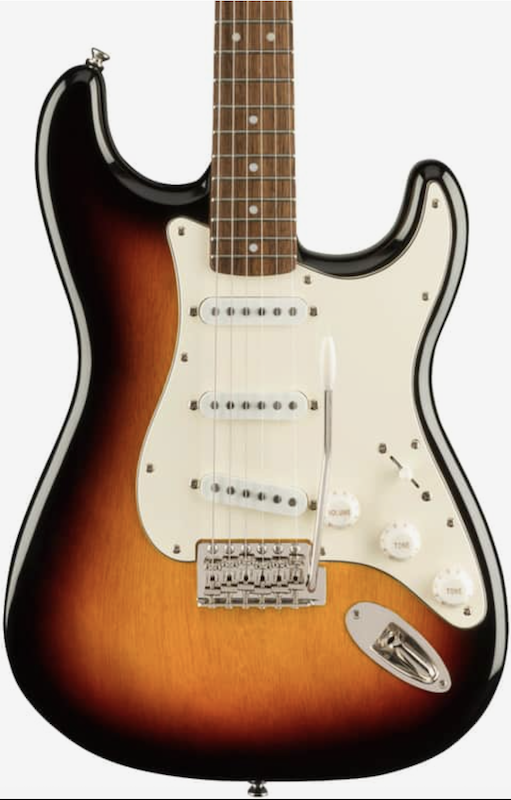
Tone & Versatility: The “In the Room” Experience
When you plug this Strat into a tube amp (or a solid modeler), the first thing you’ll notice is the bright, glassy Strat character.
Most “budget” guitars are loaded with cheap ceramic magnets that scrape against your ears with a harsh, “ice-pick” bite. These Fender-designed Alnico single-coils are different.
They’ve got a softer attack and a sweet top end that lets your notes breathe.
It’s the difference between a guitar that fights you and one that helps you capture that smooth chime you’ve been chasing since you first picked up a pick.
- The “Quack”: In positions 2 and 4 on the pickup selector, you get that unmistakable “out-of-phase” chirp that defined the 1960s. It’s the sound of Layla and Sultans of Swing.
- The Bridge Pickup: Often the weak point on cheap Strats, this one holds its own. It’s bright and biting without being shrill, perfect for cutting through a band mix.
- The Low End: Because of the Nato body and Alnico magnets, the neck pickup has a “tubby” resonance. It’s warm, woody, and responds beautifully to how hard you pick the strings.
Of course, even the best Alnico pickups need a solid foundation, so I recommend pairing this with one of the amps from my Boss Katana 50 vs. Fender Mustang LT50 review to really unlock that 60s chime.
In a small room, you can feel the body vibrate against your ribs. It doesn’t feel like a hollow plastic toy, it has a responsive feel that wants to be played.
Comfort & Playability: Great Neck, Glossy Feel
The “Classic Vibe” name isn’t just marketing. The neck profile is a slim “C” that feels familiar the moment you wrap your hand around it.
The neck is coated in a thick, vintage-tinted polyurethane. Out of the box, it looks great. But if your hands tend to sweat during a long practice session, that gloss can feel a bit “grabby” or sticky.
Pro Tip: If the gloss slows you down, don’t panic. A thirty-second “buff” with a piece of 0000 steel wool or a grey Scotch-Brite pad will take that sticky sheen down to a smoother satin-like feel without ruining the look.
The Laurel Factor
With Rosewood being reserved for higher-tier Fenders, Squier uses Indian Laurel. Some purists complain it looks “dry” or light in color.
Functionally? It feels nearly identical. A quick hit of lemon oil during your first string change usually darkens it up and gives it that rich, professional look beginners crave.
The 9.5″ fingerboard radius is the “Goldilocks” zone.
It’s round enough to make barre chords comfortable at the nut, but flat enough that your strings won’t “choke out” when you start practicing those big 1.5-step blues bends at the 12th fret.
Hardware & Electronics: Budget, but Functional
This is where many “entry-level” guitars fall apart, but the Classic Vibe series holds its ground. Instead of the cheap plastic nuts found on most sub-$500 guitars, Squier uses a real bone nut.
Why does that matter? It means better tuning stability and more “ring” on your open strings. It’s a small detail that makes the guitar feel like feel more dependable.
- The Tuners: These are “Vintage-Style” split-shaft tuners. Beginners love these because the sharp end of the string is tucked down inside the post. No more poked fingers or scratched gig bags. They are surprisingly stable, even with heavy blues bending.
- The Tremolo: It uses a 6-saddle vintage-style bridge. It’s functional and stays in tune for light vibrato. However, the internal “tremolo block” is thinner than what you’d find on a high-end Fender. This reduces sustain slightly, but for a beginner’s first three years of playing, it is a non-issue.
- The Pots & Switches: The 5-way selector switch feels “clicky” and intentional, not loose or wobbly. The volume and tone knobs have a smooth resistance, allowing you to “roll off” some of the high end for a jazzier tone.
Sound Test: Clean, Crunch & High Gain
Clean (The “Bell” Tone)
In the neck position, this guitar is pure glass. It has that deep, rounded bass and shimmering highs.
Using position 4 (neck and middle) gives you the perfect “Lenny” style clean tone—airy and incredibly responsive to your touch.
Crunch (The “Texas Flood” Grit)
When you add a bit of overdrive, the Alnico V magnets show their teeth. The middle pickup is surprisingly punchy here.
It provides a “percussive” snap that is perfect for rhythm playing. You can get that gritty, soulful breakup without the sound becoming “muddy.”
High Gain (Where It Struggles)
Let’s be real: these are single-coil pickups. If you crank the gain for heavy metal, you will hear a “60-cycle hum.” It’s part of the vintage experience.
While it handles hard rock and “punky” distortion well, this isn’t a dedicated metal machine. If you want silence under high gain, you’d need to look at something with humbuckers.
Squier Classic Vibe ’60s Stratocaster: Pros and Cons
| Pros (The Wins) | Cons (The Reality) |
|---|---|
| ✅ Fender-designed Alnico V Pickups deliver authentic, bell-like vintage tones that easily rival much more expensive models. | ⚠️ Sticky Neck Finish: The high-gloss polyurethane coating can cause friction and slow you down if your hands sweat during practice. |
| ✅ Premium Hardware: The inclusion of a real bone nut and split-shaft vintage tuners provides rock-solid tuning stability. | ⚠️ Thirsty Fretboard: The Indian Laurel fingerboard can arrive looking visually dry and usually requires immediate oiling to darken up. |
| ✅ Resonant Foundation: The Nato body provides a surprisingly warm, woody, and balanced acoustic response before you even plug it in. | ⚠️ Thin Tremolo Block: Uses a smaller internal block than true vintage specs, which slightly reduces your overall maximum sustain. |
| ✅ Player-Friendly Neck: The 9.5″ radius and modern “C” shape profile bridge the gap perfectly between vintage aesthetics and modern playability. | ⚠️ Component Consistency: Being a budget line, some units may require a minor setup or slight fret-end dressing straight out of the box. |
| ✅ Strong Value: Delivers 90% of the authentic Fender playing experience for a fraction of the cost, eliminating the “beginner gear” struggle. | ⚠️ High-Gain Hum: The true-to-era single-coil pickups will produce a noticeable 60-cycle hum under heavy distortion or metal settings. |
How We Tested: The String Shock Methodology
I’ve spent thousands of hours on stage and in the studio, and if there’s one thing those decades have taught me, it’s that a spec sheet never tells the whole story.
To see if the Squier Classic Vibe ’60s Stratocaster actually delivers on its vintage promise, I put it through the String Shock four-pillar stress test.
This is designed to mimic the high-pressure environment of a real session. I don’t just “try” these guitars, I push them until their true character and their flaws come to the surface.
- The “Out of the Box” Check: We assess the factory setup. Does it play well immediately, or does it need a professional’s touch?
- The Sweat Test: We play for 60 minutes straight to see how that neck finish and tuning stability hold up under real-world “gig” conditions.
- The Sonic Spectrum: We run the pickups through everything from a clean “Twin” style circuit to a high-gain British stack to find the tonal breaking point.
- Hardware Stress: We abuse the tremolo bar and check for “burrs” or sharp edges on the frets that might hinder a beginner.
Spec Recap
| Feature | Specifications |
|---|---|
| Body Material | Nato with Gloss Polyurethane Finish |
| Neck Shape | “C” Shape with Tinted Gloss Urethane Finish |
| Fingerboard | Indian Laurel (9.5″ Radius) |
| Frets | 21 Narrow Tall |
| Bridge Pickup | Fender-Designed Alnico Single-Coil |
| Middle/Neck Pickup | Fender-Designed Alnico Single-Coil |
| Bridge | 6-Saddle Vintage-Style Synchronized Tremolo |
| Nut Width | 1.650″ (42 mm) |
| Scale Length | 25.5″ (648 mm) |
Final Verdict: Is It Worth It?
The Squier Classic Vibe ’60s Stratocaster is the bridge between “learning to play” and “becoming a guitar player.” It eliminates the technical barriers that usually frustrate beginners—poor tuning, thin sound, and high action—and replaces them with an instrument that inspires you to keep practicing.
If you can look past the “Squier” logo on the headstock, you are getting 90% of the Fender experience for 40% of the cost. It’s not just a budget guitar; it’s a foundational piece of gear that you likely won’t feel the need to “upgrade” for years.
⚡️The Stratocaster is one of those guitars every rock player runs into sooner or later. Hendrix, Clapton, and Gilmour all built their legacies on this design, a design so revolutionary that it’s now preserved as a piece of American history at the Smithsonian.
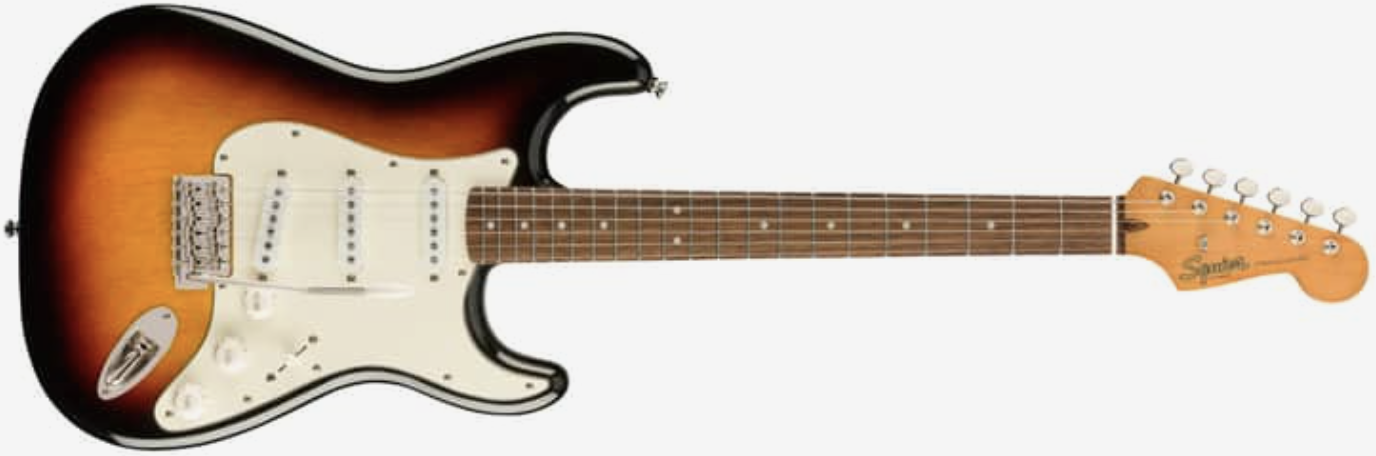
| Platform | Condition | Check Current Price |
|---|---|---|
| Amazon | New | View on Amazon |
| Reverb | New & Used | View on Reverb |

Build Your Total Rock Rig
⚡️FREE: The 15-Minute Rock Momentum Routine
Stop fumbling through practice. Get the simple daily routine that keeps your fingers sharp and your playing moving forward, even on your busiest days.
Frequently Asked Questions
1. Is the Squier Classic Vibe ’60s Stratocaster good for beginners?
Yes, but with a caveat. It’s beginner-friendly in playability and comfort, but it’s not a “cheap starter guitar.” This is the kind of guitar you grow into, not out of, which actually makes it a smarter long-term investment.
2. What’s the difference between the Squier Classic Vibe ‘60s Strat and a Fender Strat?
The biggest differences come down to branding, pickups, and finish details. Fender models typically use higher-end components and U.S. or Mexican craftsmanship, but the Classic Vibe line gets surprisingly close in tone and feel, especially for the price.
3. Is the Squier Classic Vibe ’60s Stratocaster worth the money in 2026?
For most players, yes. It consistently punches above its price range, offering vintage tone, solid build quality, and reliability. Unless you specifically need pro-level upgrades, it’s one of the best value guitars available.
4. Is the Squier Classic Vibe ’60s Stratocaster better than other beginner electric guitars?
In many cases, yes. Compared to entry-level models, it offers better tone, feel, and overall quality, making it a strong step-up option for serious beginners.
5. What styles of music is it best for?
It shines in: Classic rock, Blues, Indie, and Funk.
It’s less ideal for heavier genres unless paired with pedals or amp settings to compensate.
6. Does the Squier Classic Vibe ’60s Stratocaster stay in tune well?
Generally yes, but like most guitars in this price range, it benefits from a proper setup. Once dialed in, tuning stability is solid for everyday playing and practice.