

What are the Benefits of Playing Guitar: Free Your Anxiety
Playing guitar has become a go-to outlet for many people dealing with anxiety, myself included.
The act of strumming chords and creating melodies can quickly switch my focus away from spiraling thoughts and bring some much needed calm into my day.
In my life, listening to music, but especially playing guitar, offers a safe way to handle the racing mind and physical tension from anxious moments.
Here, I’ll break down why picking up a guitar can make a real difference for anyone trying to cope with anxiety, drawing from scientific research and my own direct experiences.
Key Takeaways
- Playing guitar activates your parasympathetic nervous system, the same system responsible for slowing your heart rate and pulling you out of fight-or-flight mode.
- You don’t need to be good at it. The anxiety relief comes from the physical, present-moment act of playing, not from technical skill or progress.
- Consistency beats duration. Five minutes a day does more for anxiety than an occasional hour-long session.
- Guitar fits into real-life anxious moments; before a hard conversation, before bed, before public speaking. Not just as a scheduled “practice session.”
- Neuroplasticity backs up what musicians already feel. Regular playing literally rewires the brain toward calmer stress responses over time.
How Playing Guitar Calms the Mind and Body
Strumming on a guitar can do more than just pass the time. It can truly help relax both the mind and body.
When I’m feeling tense, the physical act of pressing strings and working through chord changes actually grounds me. It’s not just a distraction, it brings me fully into the present, moving my focus away from negative thoughts.
Research shows that playing guitar (or any musical instrument) can activate the parasympathetic nervous system, which is responsible for slowing the heart rate and calming the stress response.
This is the opposite of the “fight-or-flight” mode that anxiety likes to trigger. I’ve also noticed my breathing slows, my shoulders drop, and a general feeling of calm begins after just a few minutes of playing.
- Release of Feel-Good Chemicals: Scientific studies confirm that musicmaking raises brain chemicals like dopamine and endorphins; these are the natural mood boosters that can balance out stress and anxiety.
- Lowering Stress Hormones: Consistent playing has been shown to decrease cortisol, which is the main hormone involved in anxiety and chronic stress (Source: PMC3734071).
- Sensory Grounding: The physical vibrations of the instrument, combined with the repetitive movement required when playing, create a strong sense of grounding. Even if my mind is racing, sensations in my hands keep some part of me rooted in the here and now.
Along with these benefits, I find that simply picking up the guitar sometimes stops a bout of worry before it gets out of hand. The instrument becomes a tool I can rely on, not just for fun but for health.
⚡️FREE: The 15-Minute Rock Guitar Practice Routine
Stop “practicing” and start playing. Grab the daily blueprint I use to keep my fingers stage-ready in just 15 minutes.
The Mental Health Benefits of Learning Guitar
Learning new chords or practicing my favorite riffs takes up a lot of mental bandwidth.
I notice that focusing on the complexity of finger placement, rhythm, and timing doesn’t leave much room for ruminating or worrying. Instead, my thoughts get redirected into a creative and productive task.
This switch helps block out the static of anxiety, even if just for a little while. As I work through new techniques, my mind becomes engaged in the kind of challenge that feels rewarding instead of overwhelming.
According to experts, music training strengthens the brain in key areas connected to focus, memory, and emotional control.
Resonant research from sources like the Journal of Neuroscience reports that musicians develop stronger neural pathways involved in attention and motor planning.
Even adults just picking up the guitar for the first time can see improvements in mood and mental clarity after months of regular practice.
- Distraction from Worry: Playing guitar draws attention away from anxiety-causing thoughts through the challenge and enjoyment of learning something new.
- Building Confidence: Every step of progress, like smoother chord transitions or learning a song, offers a real boost in self-esteem.
- Mindfulness in Action: Focusing on music naturally creates a flow state, pushing away fears about the past or the future for a while.
For many, making even small amounts of progress can make a big difference over time. It’s a reminder that effort, no matter how simple, yields positive change.
The Science: What Happens in Your Brain When You Play?
On a neurological level, playing guitar lights up several parts of the brain at once.
Whether sight-reading, improvising, or simply strumming patterns, you’re activating the auditory cortex (hearing), the motor cortex (movement), and the prefrontal cortex (planning and decision-making).
Researchers Herholz and Zatorre found in a foundational study that continued engagement with instruments encourages neuroplasticity (Source: PubMed).
This is the brain’s way of rewiring itself in response to learning and experience, which may explain why learning and practicing music is linked to sharper thinking and better mood regulation, even as you get older.
- Improved Focus: Because playing involves reading, movement, and listening at the same time, the brain has to coordinate multiple actions, building resilience and better attention span.
- Positive Distraction: The process blocks out anxious loops and gives your mind a break from negative thinking patterns.
- Neural Rewiring: Repeated practice creates new pathways in the brain, making it easier over time to find a sense of calm while holding the guitar.
It’s fascinating how neuroplasticity backs up what many musicians report anecdotally.
Consistent practice not only strengthens skills but also produces real psychological shifts, such as calmer reactions to stress or the ability to recover from anxious periods more quickly.
Everyday Tips for Using Guitar as Anxiety Relief
Using the guitar as a tool for anxiety doesn’t require expert skills.
Over time, I’ve picked up some practical strategies to boost the calming effects, whether playing a full song or just quietly strumming. Here are some tips based on my experience and research:
- Create a Relaxing Environment: Set up a spot at home where the guitar is always within reach, with soft lighting and maybe a favorite chair. The easier it is to access, the more likely I am to use it when anxious thoughts show up.
- Start Simple: Even a slow, repetitive chord progression can provide relief. There’s no need for complexity. Playing familiar rhythms helps take pressure off performance and keeps focus on relaxation.
- Include Breathwork: I sync finger movements with slow, deep breaths. Coordinating these actions can make the calming effect even stronger. Focusing on breathing helps settle the mind just as much as making music.
- Don’t Worry About Mistakes: This is my biggest tip. The goal isn’t a perfect performance. Using the guitar for stress relief is about enjoying the sensation and the sound, not about playing flawlessly.
It helps to remember that the process is the point, not perfection. Each session is an act of self-care, no matter how simple or short.
3 Common Hurdles and How to Handle Them
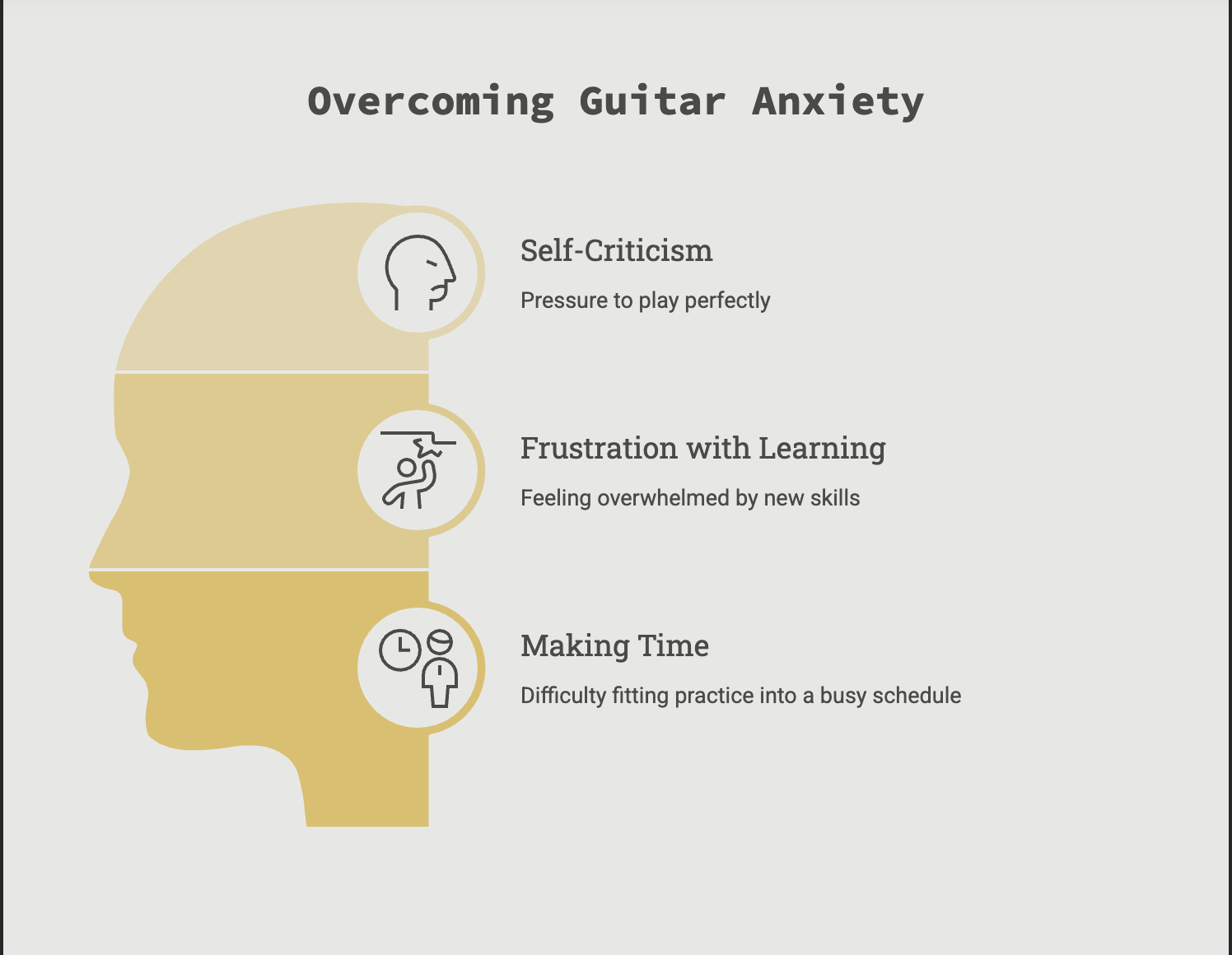
There are a few familiar obstacles that can make using guitar as anxiety relief a little tricky at first. Recognizing these hurdles ahead of time makes sticking with the habit much easier:
- Self-Criticism: Feeling pressure to play well or to progress quickly can get in the way. I remind myself that every practice session is useful, even if it’s just strumming one chord.
- Frustration with Learning: When new skills feel overwhelming, I take it slow, working on finger placement for a single chord if that’s all I can handle in a day.
- Making Time: Life gets busy. I try to keep my guitar easy to reach, so I can pick it up for even five minutes when I need a break. This habit brings the instrument into daily life instead of saving it for rare occasions.
1. Self-Criticism
The biggest mistake most beginners make is struggling with negative self-talk. This is very common.
Focusing on the calming experience, rather than technical mastery, helps ease internal pressure. I always say that making mistakes is how you learn.
Recording short private practice sessions (just for myself) is one way to monitor progress and shift attention away from criticism.
2. Learning Plateaus
Sometimes progress feels slow, but I see value even when stuck reviewing the basics.
Even small bursts of practice gradually combine to make skills stronger and to reestablish a sense of control over anxiety.
3. Inconsistency with Practice
It’s easy to skip practice on tough days, yet those are often when picking up the guitar helps the most.
Setting a reminder or pairing guitar time with a relaxing routine, like making tea, helps me keep up the habit until it becomes second nature.
Finding small moments of joy and sticking with the routine can make all the difference in using guitar as everyday anxiety support.
It’s not about grinding through hours of practice.
It’s more about building a routine that supports mindfulness and peace.
Advanced Approaches for Deeper Relaxation
Once you’re comfortable with the basics, taking your practice further can deepen the relaxation and sense of presence:
Explore Improvisation: Letting go of structure and simply playing whatever comes to mind, even random notes, often feels freeing.
Improvising lets me express emotions I might not have words for, which can be soothing during anxious moments.
Experiment with Tunings: Playing in open or alternate tunings creates fresh sounds and new physical sensations, sometimes sparking renewed enjoyment and flow that breaks anxious patterns.
Combine With Journaling or Mindfulness: Sometimes after playing a calming melody, I write down the feelings that come up.
This helps me process emotions and offers clarity after anxiety spikes.
Mixing music with other mindful practices can help the benefits expand over time.
The more I personalize my guitar routine and connect it with wellness habits, the more helpful it becomes.
Practical Applications and Everyday Scenarios
The guitar isn’t just for solo practice at home, it’s useful in plenty of real-life situations where managing anxiety is tricky:
- Before Public Speaking: Playing a song for ten minutes in private eases my nerves before heading into big meetings or presentations.
- During Difficult Conversations: Taking a break after a challenging discussion, picking up my guitar, and playing a few soothing chords helps reset my emotions before rejoining the conversation.
- Winding Down Before Bed: Gentle fingerpicking at night helps tone down stress and preps my mind for restful sleep.
- In Social Gatherings: Quietly playing in a group, or even just holding the instrument when I feel out of place, gives me something grounding to focus on.
Whether alone or around others, my guitar acts as a “reset button” during the day whenever tension rises or stress shows up unexpectedly.
Starting Your Adventure

Making guitar part of your plan for anxiety relief comes down to consistency and giving yourself permission to enjoy the experience, imperfections and all.
With regular playing, I’ve found the relief both immediate and cumulative.
The sounds, the vibrations, and the little milestones accumulate into better days and more tranquil nights.
Whether you’re trying the guitar for the first time or picking up an old hobby, both science and lived experience point to musicmaking as a powerful way to deal with anxiety.
If you’re struggling with stress or anxiety, picking up the guitar for just a few minutes might brighten your mood and give your mind the break it needs.
I hope others will give it a shot and stumble upon some peace, one string at a time.
Frequently Asked Questions
1. Can playing guitar actually help with anxiety?
Yes. Playing guitar engages the parasympathetic nervous system, lowers cortisol, and shifts focus away from anxious thoughts and onto the physical task of playing. It’s not a replacement for treatment, but it’s a real, research-backed coping tool.
2. Do I need to be good at guitar for it to help with anxiety?
No. The calming effect comes from the act of playing, not from skill level. A beginner strumming one chord slowly gets the same grounding benefit as an advanced player working through a solo.
3. How long should I play guitar to feel calmer?
Even five to ten minutes can help. Consistency matters more than session length, so short daily sessions tend to work better for anxiety relief than occasional long ones.
4. What’s the best way to start using guitar for stress relief?
Keep the guitar somewhere easy to reach, start with simple repetitive chord progressions, and let go of any goal beyond enjoying the sound. Pairing playing with slow breathing can deepen the effect.
5. Is there scientific research on music and anxiety?
Yes. Studies on music-making show reduced cortisol levels and increased neuroplasticity in regular players, supporting better attention, mood regulation, and stress recovery over time.