Guitar Confidence Comes From Doing, Not More Tutorials
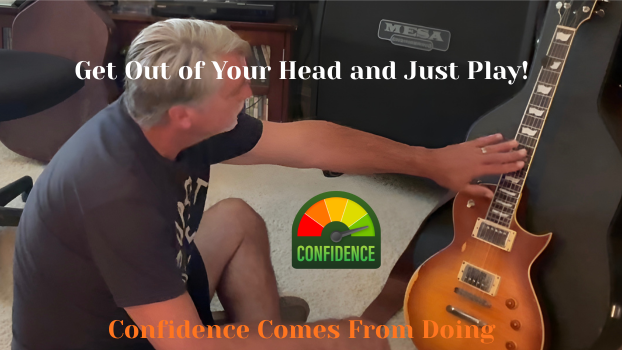
You don’t build guitar confidence by staring at your guitar across the room.
You build it when you grab the neck, fret a chord that buzzes like a busted lawn mower, adjust your hand, and hit it again.
Tutorials can help, sure.
But if you’re watching ten videos, reading three articles, and saving twenty more clips while your guitar sits on the stand, you’re not building hands, ears, or confidence.
You, my friend, are stuck in the learning loop.
Key Takeaways
- Confidence isn’t a feeling you wait for, it’s proof you collect every time you play
- Watching tutorials is useful, but it’s not the same as practicing
- The learning loop keeps you stuck, consuming information without ever touching the guitar
- The physical barrier is real, but the only way through it is repetition
- A short, focused session beats an hour of bouncing between YouTube videos
- Your guitar doesn’t judge you, it just responds to what you put in
⚡️FREE: The 15-Minute Rock Guitar Practice Routine
Stop “practicing” and start playing. Grab the daily blueprint I use to keep my fingers stage-ready in just 15 minutes.
Confidence Has to Be Earned With Your Hands
Confidence comes from doing. That’s it.
If you’ve been thinking about learning guitar, coming back after years away, or dreaming about ripping a lead through a cranked amp, you need evidence that you can do it.
That evidence only shows up when your fingers touch the strings.
Thinking about playing is not the same thing as playing.
Watching someone else nail a riff can get you fired up, but it doesn’t build the calluses, timing, or muscle memory needed to play it yourself.
Pro Tip: Going over chord shapes and scales in your mind is still beneficial during the gaps of not playing. But, this shouldn’t replace you getting your hands dirty.
Action Gives You Real Proof
Pick up the guitar. Make one chord shape. Hit the strings. Maybe it sounds rough. Maybe a string is muted. Maybe your pick catches on the wrong string.
Good. Now you have something real to work with.
Every attempt gives you information your hands can use:
- You feel where the neck sits in your palm.
- You figure out how hard you need to press without squeezing the life out of the fretboard.
- You hear what happens when a note rings clean versus when it chokes out.
Confidence isn’t a feeling you wait around for. It’s the proof you collect every time you play through something awkward and keep going.
What Counts as Action?
You don’t need a perfect practice space, a pile of expensive pedals, or a master’s degree in music theory. Action can be simple:
- Pick up the guitar and make a few clean chord formations.
- Run a basic major or minor scale slowly, one note at a time.
- Plug into an amp, hit a power chord, and listen to what your hands are actually doing.
- Play a riff badly, then play it again with a little more control.
That is how the gap gets bridged between wanting to be a guitarist and becoming one.
The Learning Loop Can Keep You Stuck

When I was learning guitar, we didn’t have the internet. Yep, I’m that old.
I learned from magazines, books, and records. I’d listen to my favorite bands and try to scrape the riffs out by ear.
If you got lucky, a neighbor’s cousin came down the street and showed you a lick or a chord shape. That was a big deal.
Now you’ve got YouTube, TikTok, Instagram, Google, ChatGPT, tabs, backing tracks, slow-down apps, isolated tracks, and more guitar lessons than anyone could finish in a lifetime.
That’s awesome, but it can also bury you.
Information Isn’t the Same as Practice
The “learning loop” is when you keep consuming guitar information without putting that information into your hands.
You watch tutorials. You compare guitars. You read about scales. You save videos for later. Meanwhile, the guitar is sitting there collecting dust.
Here’s the difference:
| Learning about guitar | Doing guitar |
|---|---|
| Watching a chord tutorial | Making the chord shape yourself |
| Reading about major and minor scales | Playing the notes on the fretboard |
| Saving a riff lesson | Working through the riff, mistakes and all |
| Watching gear demos | Plugging in and hearing your own pickup output |
Learning is useful. I still learn all the time after 41 years of playing. But more information doesn’t always mean more action.
If you need a simple place to put your hands to work, start with these beginner tips. Then close the browser for a while and play them.
Don’t Let Preparation Become a Hiding Place
There’s always one more video you could watch before you start.
One more review. One more article telling you what strings, picks, pedals, pickups, or amp you should use.
But your hands don’t care what you saved to a playlist.
They care about repetition.
They care about the friction of the string under your fingertip.
They care about learning the feel of a neck profile, the distance between frets, and the pressure it takes to make a note speak cleanly.
At some point, you have to stop preparing and make some noise.
The Physical Barrier Is Real
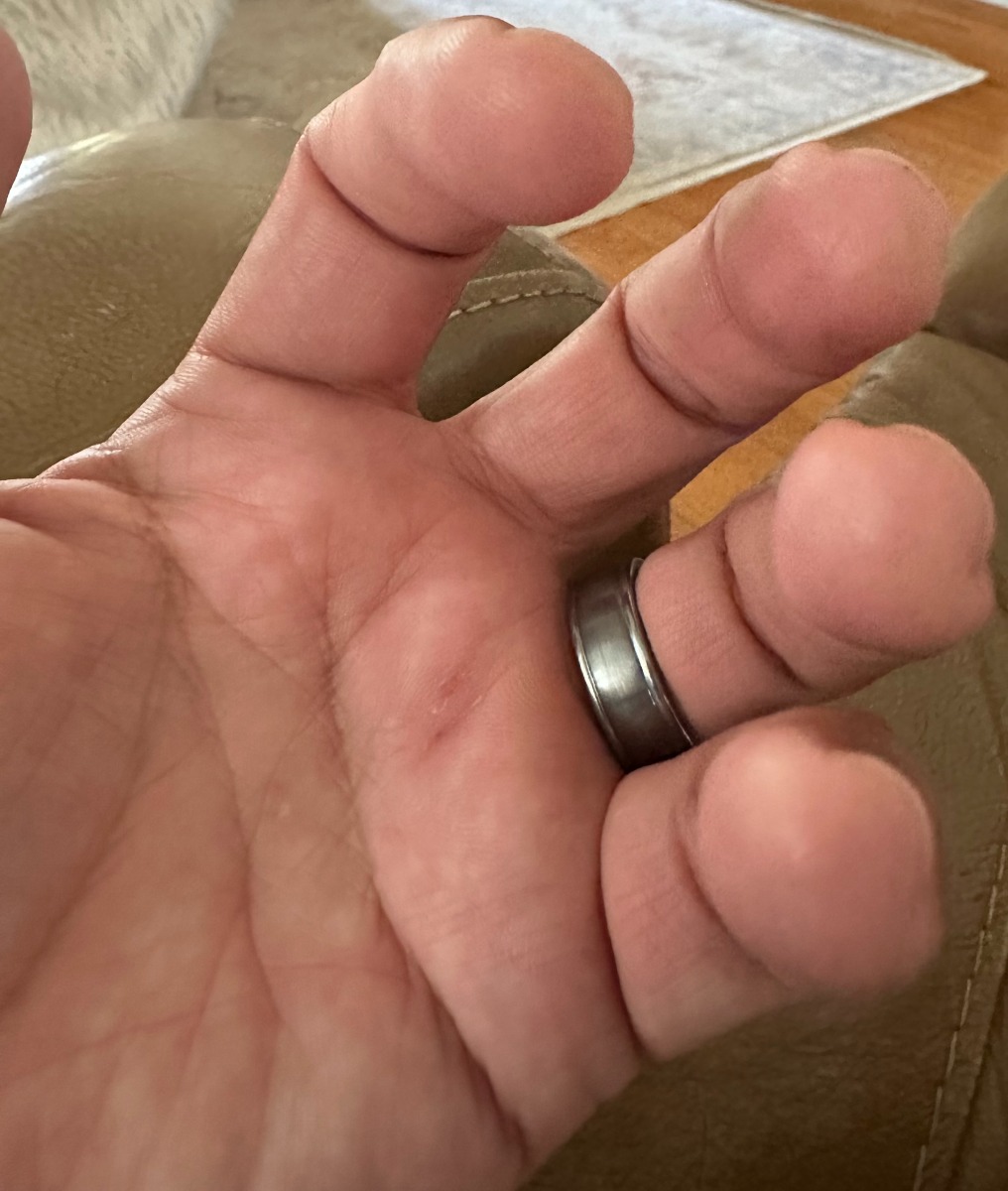
Guitar is tough at first because there is a physical wall you have to push through.
Pressing a string down hard enough to get a clean note can hurt.
Your fingertips get sore. Your fretting hand cramps up. Your wrist may feel weird.
You might hear buzzing, clanking, dead notes, and a whole lot of sounds that don’t feel remotely rock and roll.
I know. I’ve been there.
The Early Struggle Is Real and Normal
Your fingertips will probably hate you for a little while. That’s part of the deal.
A guitar doesn’t care if you’re excited, frustrated, tired, or convinced you should’ve been good by now.
It responds to where your fingers land, how your pick hits the string, and whether your instrument is in tune.
A quick reality check helps:
- Sore fingertips are normal when you’re getting playing time in.
- Hand tension can make chord shapes feel harder than they need to be.
- Buzzing notes happen while you learn clean fretting pressure.
- Bad sounds are part of getting to the good sounds.
If the guitar feels brutally hard to play, check the obvious stuff too.
Old strings can feel rough and dull.
A guitar with high action can turn a simple chord into a wrestling match.
Tuning that drifts every time you bend a string can kill the mood fast.
For comeback guitarists, I always say fix the friction first.
A dead cable, nasty strings, or a guitar that won’t stay in tune can make you think your hands forgot everything.
Sometimes the old rig simply needs some love.
Start With the Stuff That Builds Hands
Don’t try to learn every scale, every mode, and every flashy solo this week. That’ll fry your brain and keep you right back in the learning loop.
Start with chord formations. Learn a basic major scale. Learn a basic minor scale. Move slowly enough that you can hear each note.
If you’re looking for a no-nonsense foundation, this beginner electric guitar lesson gives you basic chords and scales to get under your fingers.
The goal isn’t to impress anybody. The goal is to make your hands and the guitar stop feeling like strangers.
Practice Turns Into a Relationship
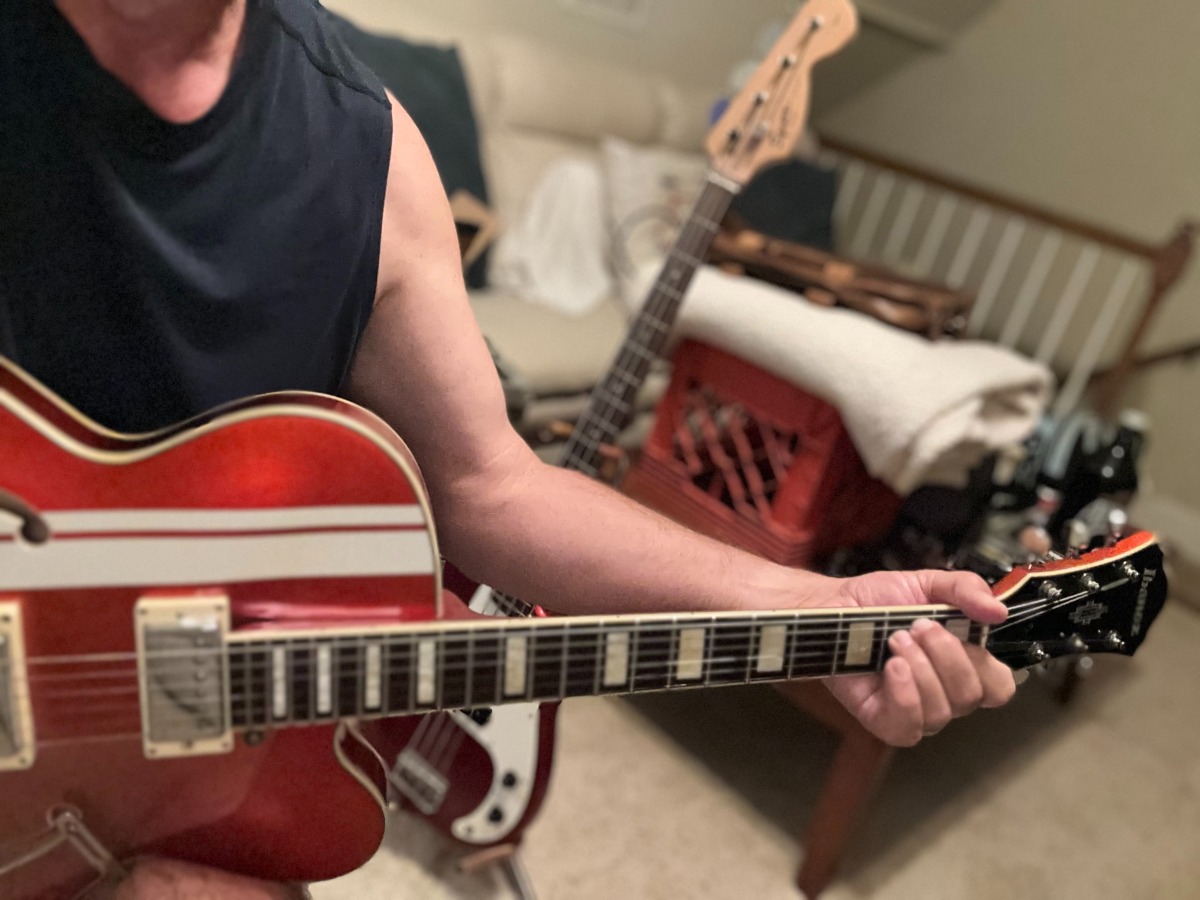
At some point, guitar stops feeling like homework. It becomes a relationship.
I know that might sound a little out there, but hear me out.
The more time you spend with your guitar, the more you understand how it reacts.
- You know how the strings feel when they’re fresh.
- You know where the fret edges catch your fingers.
- You know how hard you can bend before the tuning starts fighting you.
The Guitar Meets You Where You Are
I remember playing when I was happy. I also remember picking up the guitar when I was sad or angry. It was always there.
The instrument doesn’t judge you.
It doesn’t care if you missed practice yesterday or if your last attempt at a riff sounded terrible. It responds to whatever you put into it.
Plug into an amp with a little gain, hit a big power chord, and you’ll feel it.
- The strings push back under the pick.
- The neck settles into your hand.
- The pickups bite harder when you dig in. (That physical feedback is why guitar gets its hooks into people.)
A riff you loved when you were younger can hit hard too.
Music has a way of dragging old memories back into the room.
For a comeback guitarist, that first familiar chord often doesn’t feel like starting over. It feels like coming home.
Time Builds the Bond
I have been playing for 41 years, and I’m still learning.
The difference is that I’ve kept playing the whole time, in bands, out of bands, whatever. I play nearly every day.
That’s where the bond forms. Your hands sync up. Your fingertips toughen up. Your picking gets more natural. Muscle memory kicks in.
You don’t need to play for hours every day to start that process.
A short, real session beats an hour of bouncing between tutorials.
If you want a simple way to stay consistent, check out my real guitar practice routine.
Keep it practical, keep it moving, and make room for something FUN too.
Keep Playing Through the Ugly Sounds
You will make mistakes. You will sound bad sometimes.
You might hit the wrong string, forget the next chord, or bend a note so far out of tune it sounds like the guitar is begging for help. LOL.
Don’t panic. Get it out of your system.
Mistakes Mean Your Hands Are Working
A mistake made while playing gives you something you can fix. A mistake you avoid by never picking up the guitar gives you nothing.
- When a chord buzzes, look at your fretting hand.
- When a scale falls apart, slow it down.
- When your rhythm gets shaky, don’t fake your way through it.
Grind the pattern at a speed where it stays solid.
Rock guitar isn’t about being polished every second.
Punk proved that years ago with cheap gear, power chords, fast downstrokes, and pure attitude.
A killer riff with conviction will always beat a pile of unused theory notes.
Pick Up the Guitar Before Another Tutorial
Here’s the move when you feel yourself falling into the loop: pick up the guitar before you open another video.
Give yourself a few minutes with one chord, one scale, or one riff.
No pressure to be amazing. No need to post it. No need to turn it into a big production.
Just play.
The more often you repeat that move, the less intimidating the guitar becomes.
Then the tutorials become what they should be, tools you use after you’ve gotten your hands dirty, not a replacement for playing.
Keep Building Proof With Every Session
Learning is great, but doing is what makes you an actual guitarist.
You don’t need to wait until you know enough.
You don’t need a perfect guitar, a giant pedalboard, or a stack of theory books.
Pick up what you’ve got. Tune it up. Put your fingers on the strings. Make some noise.
Every session gives you another piece of proof that you can do this. The more you play, the better it gets.
Frequently Asked Questions
1. How do I stop overthinking and just start playing guitar?
Pick up the guitar before you open another video. Give yourself five minutes with one chord, one scale, or one riff. No pressure, no audience. Just hands on strings.
2. How long does it take to build guitar confidence?
It’s not about time, it’s about sessions. Every time you play through something awkward and keep going, you collect proof that you can do it. That proof is confidence.
3. Is it okay to learn guitar from YouTube tutorials?
Absolutely, but use them as tools, not a substitute for playing. Watch, then immediately put it in your hands. The loop breaks the second you start doing instead of just watching.
4. Why do my fingers hurt when I first start playing guitar?
Totally normal. Your fingertips need time to toughen up and build calluses. The soreness fades, but only if you keep playing through it.
5. How much should I practice guitar each day?
More isn’t always better. A focused 15-minute session where you’re actually playing beats an unfocused hour of noodling and distraction. Consistency beats marathon sessions every time.